Overview
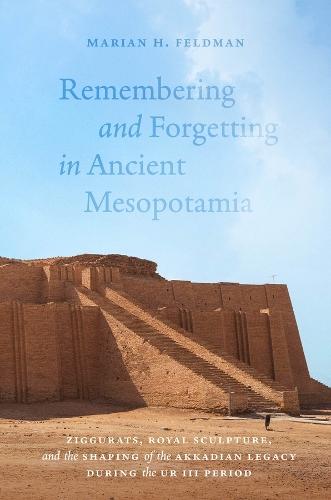
A study of how our understanding of Akkadian history has been shaped by subsequent dynasties. In this innovative new study of ancient Mesopotamian art and architecture, Marian H. Feldman examines the complex legacy of the Akkadian dynasty, which spanned ca. 2350-2150 BCE in the region now known as southern Iraq. The Akkadian state played an essential role in the formation and expression of subsequent political entities in the region, yet our understanding of this period is based primarily on the historical lens of their successors, in particular the rulers of the Third Dynasty of Ur (ca. 2100-1000 BCE). Focusing on four remaining ziggurats in Ur, Eridu, Uruk, and Nippur, as well as surviving statues and steles, Feldman examines how the Ur III rulers selectively curated and erased Akkadian structures and monuments to serve their own political ambitions. Analyzing the archaeological evidence of Ur III building practices and the display of Akkadian royal sculpture, she considers the role of sacred spaces in our knowledge of the period and imagines how the cultivation of the Akkadian narrative helped the Ur III dynasty centralize its power. In so doing, this book proposes a new way to understand the impact of the survival—or erasure—of architectural and artistic remains on collective and historical memory.
Full Product Details
Author: Marian H. Feldman
Publisher: The University of Chicago Press
Imprint: University of Chicago Press
Weight: 0.454kg
ISBN: 9780226842851
ISBN 10: 0226842851
Pages: 184
Publication Date: 21 January 2026
Audience:
Professional and scholarly
,
Professional & Vocational
Format: Hardback
Publisher's Status: Forthcoming
Availability: Awaiting stock

Reviews
“Feldman convincingly argues that the Akkadian period has been described as memorable precisely because of the efforts of Ur III rulers to preserve it in a reshaped form. She successfully weaves together several different methodologies—including archaeological analysis of stratigraphy, art historical analysis of architecture, materiality, and form, and literary or textual analyses—and supports them with careful step-by-step arguments. Original and meticulously researched, Remembering and Forgetting in Ancient Mesopotamia adds novel and important contributions to the study of the Mesopotamian past.” -- Augusta McMahon, The University of Chicago
Author Information
Marian H. Feldman is the W. H. Collins Vickers Chair in Archaeology and holds a joint appointment in the Departments of the History of Art and Near Eastern Studies at Johns Hopkins University. She is the author of Diplomacy by Design: Luxury Arts and an “International Style” in the Ancient Near East, 1400–1200 BCE and Communities of Style: Portable Luxury Arts, Identity, and Collective Memory in the Iron Age, both published by the University of Chicago Press.