Overview
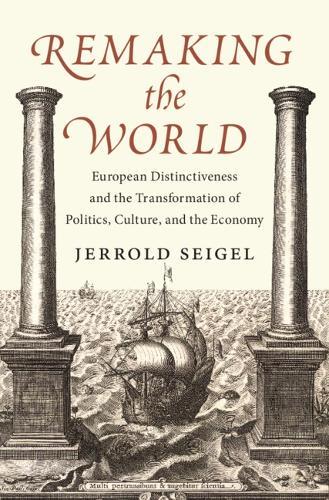
How should we understand Europe's special role in world history, and the enduring impact it made on the rest of the globe? Jerrold Seigel traces both the positive and negative sides of the continent's special role to its absence of effective central authority, the division and competition between its states and peoples, and its propensity for developing autonomous spheres of activity. Remaking the World analyzes how these features fostered Europe's characteristic preoccupation with a politics of liberty, its evolution of an aesthetic sphere animated by values specific to itself, its singular capacity to revolutionize scientific understanding, and its ability to prepare and carry out the first transition to a modern industrial economy. Extended and substantive comparisons with Africa, India, China, and the lands that came under the rule of the Ottomans demonstrate the absence of similar phenomena elsewhere, whereas in Europe they also helped generate the malign force of imperial expansion.
Full Product Details
Author: Jerrold Seigel (New York University)
Publisher: Cambridge University Press
Imprint: Cambridge University Press
Dimensions:
Width: 16.10cm
, Height: 3.40cm
, Length: 23.50cm
Weight: 0.690kg
ISBN: 9781009541664
ISBN 10: 1009541668
Pages: 378
Publication Date: 19 December 2024
Audience:
General/trade
,
General
Format: Hardback
Publisher's Status: Active
Availability: Manufactured on demand

We will order this item for you from a manufactured on demand supplier.
Reviews
'A work of breathtaking scope and erudition, this is macrohistory at its best, an original answer to the classic question of why Europe came to dominate the world. Europe's advantages, Seigel convincingly shows, emerged from no inherent superiority but from the autonomous spaces for innovation that the continent's political and religious disunity opened up.' Edward Berenson, New York University 'Jerrold Seigel's new book is an intriguing intervention in the long-running and often heated debate about the place of Europe in the history of the world.' Jonathan Sperber, University of Missouri
‘A work of breathtaking scope and erudition, this is macrohistory at its best, an original answer to the classic question of why Europe came to dominate the world. Europe’s advantages, Seigel convincingly shows, emerged from no inherent superiority but from the autonomous spaces for innovation that the continent’s political and religious disunity opened up.’ Edward Berenson, New York University ‘Jerrold Seigel’s new book is an intriguing intervention in the long-running and often heated debate about the place of Europe in the history of the world.’ Jonathan Sperber, University of Missouri
Author Information
Jerrold Seigel is the William R. Kenan, Jr., Professor of History Emeritus at New York University. His work ranges from intellectual and cultural history to the evolution of society and politics. Previous publications include The Idea of the Self: Thought and Experience in Western Europe Since the Seventeenth Century (2005), and Modernity and Bourgeois Life: Society, Politics and Culture in England, France, and Germany since 1750 (2012), which won the 2014 Laura Shannon Prize.