Overview
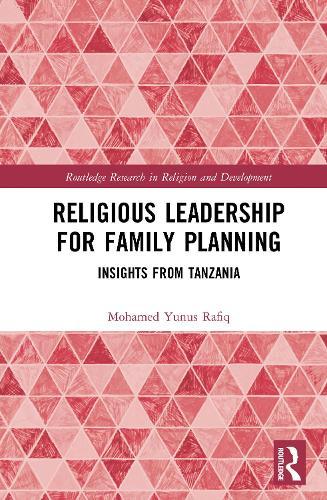
Over the last 30 years, religious leaders in Tanzania have increasingly been recruited to participate in sensitive health programs like family planning. This book considers what happens when religious leaders, often envisaged as central to a project’s success, are unavailable. Based on extensive ethnographic research, the book argues that in those situations, public health Non Governmental Organization (NGOs) often create and co-opt religious leaders from religiously adjacent figures such as healers, marriage counsellors, and Quran teachers. These newly crafted religious leaders then in turn actively adapt and reshape their roles in ways that accommodate and sometimes diverge from the project’s intentions. Challenging the conventional view of development as a linear process between developer and developee, this book reveals development as a layered and dynamic process shaped by intersecting visions and competing desires for spatio-temporal transformation. The book uses the Kiswahili concept kujiendeleza [to make oneself go] to capture the awkward, unequal, and creative connections between NGOs and the Muslim and Christian religious leaders they work with for the implementation of their plans. Far from being passive or disengaged, local actors actively engage with family planning and development projects in ways that reflect both their agency and the complexities of their socio-political contexts. Providing an innovative and nuanced theorization of development, religion, and health, this book will be an important read for researchers of African studies, and of faith-based development.
Full Product Details
Author: Mohamed Yunus Rafiq
Publisher: Taylor & Francis Ltd
Imprint: Routledge
Weight: 0.550kg
ISBN: 9781041085362
ISBN 10: 1041085362
Pages: 200
Publication Date: 08 December 2025
Audience:
College/higher education
,
Professional and scholarly
,
Tertiary & Higher Education
,
Professional & Vocational
Format: Hardback
Publisher's Status: Active
Availability: Manufactured on demand

We will order this item for you from a manufactured on demand supplier.
Reviews
""With a novelist’s eye for detail and unparalleled depth of local understanding, Mohamed Yunus Rafiq offers a brilliant portrait of religious leadership in the NGO age. He traces how ordinary Muslim teachers and counselors are drafted into a family planning campaign, imbued with moral authority, and ultimately transformed as they mediate the frictions of global heath in a Tanzanian village. An innovative and theoretically sophisticated work, Religious Leadership for Family Planning brims with insights into the paradoxes of participatory development and its new configurations of governance, spirit, and personhood in 21st century African worlds."" Mike Degani, University of Cambridge, Assistant Professor of Environmental Anthropology, UK. “An engaging insight into the work of community intermediaries connecting global health with local realities in rural Tanzania. This sensitive ethnography sheds light on the everyday work of local religious leaders in managing these relationships and their own reputations in the complex world of village politics and vested interests in an economy dominated by international health interests."" Maia Green, Professor of Social Anthropology, University of Manchester, UK. ""What is a community, a religious leader, a tradition? Religious Leadership for Family Planning recognizes how these categories are not epistemic constants but, for better or worse, products of intervention in the face of an overwhelming public health need. Mohamed Yunus Rafiq does not speculate about how the social is remade in the imagination of international health and development schemes––his is a fine-grained account made in the midst of that remaking."" Todd Meyers, Professor and Marjorie Bronfman Chair in Social Studies of Medicine, McGill University Canada.
Author Information
Mohamed Yunus Rafiq is Assistant Professor of Anthropology, New York University Shanghai, China. He lives and works in Bagamoyo, Tanzania, and Shanghai, China.