Overview
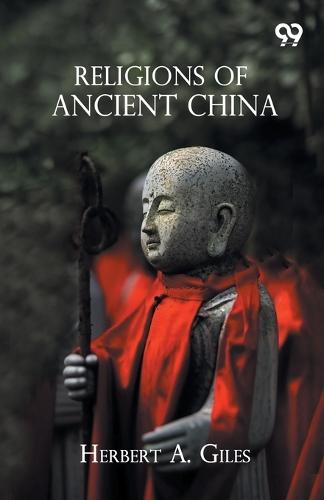
Religions of ancient China provides a detailed exploration of the spiritual and philosophical traditions that shaped early Chinese civilization. The book begins by examining foundational monotheistic beliefs, highlighting reverence for a singular divine presence and the natural world, which inspired practices such as sacrifices and ancestral veneration. It then traces the emergence of Confucianism, emphasizing moral guidance, social harmony, and ethical living over supernatural concerns. The narrative further explores the rise and integration of Taoist and Buddhist thought, showing how these systems influenced and intertwined with earlier religious practices. Through careful analysis, the work illustrates how ritual, philosophy, and belief evolved in response to cultural, political, and social developments, providing continuity while allowing adaptation and synthesis. Early sections present a framework for understanding the interplay between doctrine and daily life, revealing the dynamic nature of spiritual expression and the ways communities negotiated morality, devotion, and cosmology. Giles' account offers a coherent vision of ancient Chinese religion as a living, evolving tradition that balances tradition with innovation.
Full Product Details
Author: Herbert A Giles
Publisher: Double 9 Books
Imprint: Double 9 Books
Dimensions:
Width: 14.00cm
, Height: 0.30cm
, Length: 21.60cm
Weight: 0.059kg
ISBN: 9789375550532
ISBN 10: 9375550532
Pages: 42
Publication Date: 01 November 2025
Audience:
General/trade
,
General
Format: Paperback
Publisher's Status: Active
Availability: Available To Order

We have confirmation that this item is in stock with the supplier. It will be ordered in for you and dispatched immediately.
Author Information
Herbert Allen Giles was born in Oxford in 1845 to John Allen Giles and a mother whose name is not widely recorded, growing up in an environment shaped by scholarship and linguistic study. His early education at Charterhouse School helped form the disciplined approach that later defined his academic and diplomatic work. After completing his schooling, he entered the British diplomatic service in China, where years of practical engagement with language, culture, and political structures gave him an unusually deep understanding of the region. This experience laid the groundwork for his later contributions to the study of Chinese history, literature, and translation. Giles eventually became Professor of Chinese at the University of Cambridge, holding the position for more than three decades and shaping the development of sinology in Britain. Giles spent his later years continuing his research and writing in Cambridge, remaining active in scholarly discussions until his death in 1935. His career reflects a sustained dedication to bridging linguistic and cultural understanding between China and the West.