Overview
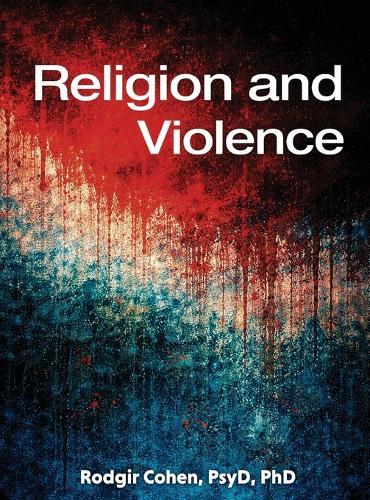
Why do the same religious traditions produce both Gandhi and the Crusades? Both Desmond Tutu and apartheid theology? Both the Open Letter against ISIS and ISIS itself? Religion and Violence is a graduate-level textbook that refuses the two easy answers - that religion is uniquely violent, or that ""real"" religion is always peaceful - and asks the harder question instead: through what specific mechanisms do religious beliefs, institutions, and hermeneutical practices contribute to particular forms of violence, and what equally specific resources do those same traditions provide for resistance, peacemaking, and healing? Drawing on Scott Appleby's thesis of the ambivalence of the sacred, Dr. Rodgir Cohen develops a rigorous comparative framework across sixteen chapters organized in three analytical movements. The first movement (Chapters 1-8) builds the theoretical toolkit: foundational definitions of religion and violence; the classical frameworks of Durkheim, Weber, Girard, Freud, Otto, Eliade, Juergensmeyer, and Appleby; a hermeneutical analysis of how communities weaponize sacred texts; the warrior-God traditions of the Hebrew Bible and Quran in juxtaposition with the peace passages of the New Testament; a full typology of pacifism with extended treatments of Gandhi, King, Day, Nhat Hanh, Tutu, Jägerstätter, and Khan; and the contemporary debates that complicate everything - Cavanaugh's genealogical challenge to the very category of religious violence, religious nationalism, dehumanization theory, and structural and slow violence. The second movement (Chapters 9-12) develops a sustained four-tradition comparative analysis of just war and nonviolence in Christianity, Islam, Judaism, and Buddhism and Jainism - from Augustine, Aquinas, Vitoria, and Grotius through the siyar framework, milchemet mitzvah and Maimonides' limiting moves, ahimsa and the First Precept, and the theology of detached action in the Bhagavad Gita. The movement closes with a comprehensive comparison table that serves as a working reference throughout the rest of the book. The third movement (Chapters 13-16) brings these tools to bear on the most consequential and most underanalyzed forms of religiously connected violence: genocide, including a sustained engagement with the Holocaust as the hardest case and the Armenian, Rwandan, Bosnian, and Yazidi genocides; rape and sexual violence, including institutional clergy abuse, purity culture, and survivor theology; apocalypticism and end-times violence from Peoples Temple and the Branch Davidians through Aum Shinrikyo, ISIS, and contemporary Christian nationalism; and sacrifice, ritual, and sacred violence - the ancient theological logic in which killing is not a violation of sacred norms but their most direct expression. What distinguishes this textbook is its commitment to equal critical scrutiny across traditions, its insistence on distinguishing text from tradition from practice, and its refusal of false equivalence in the name of even-handedness. Each chapter closes with discussion questions designed to generate genuine analytical disagreement rather than to elicit a single correct answer, and the comparative tables throughout are designed for both lecture use and individual reference. Subjects are treated with the seriousness and content sensitivity their gravity demands. Designed for upper-level undergraduate and graduate courses in religious studies, theology, ethics, political science, conflict and peace studies, and related fields, Religion and Violence equips readers with the analytical precision necessary to understand how religious communities have come to believe that some lives matter less - and how those same communities have produced the most powerful resistances to that belief. Both sides of that history, this textbook insists, deserve our full analytical attention.
Full Product Details
Author: Rodgir Cohen
Publisher: Humanities Academic Publishers
Imprint: Humanities Academic Publishers
Dimensions:
Width: 21.60cm
, Height: 1.90cm
, Length: 27.90cm
Weight: 1.030kg
ISBN: 9781988557571
ISBN 10: 1988557577
Pages: 320
Publication Date: 11 May 2026
Audience:
General/trade
,
General
Format: Hardback
Publisher's Status: Active
Availability: Temporarily unavailable

The supplier advises that this item is temporarily unavailable. It will be ordered for you and placed on backorder. Once it does come back in stock, we will ship it out to you.