Overview
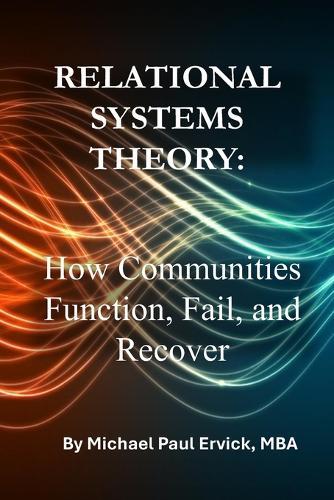
This work did not begin as a theory. It began as an observation. Over time, across different environments-disaster response operations, nonprofit collaboration, faith-based engagement, and community organizing-I began to notice a consistent pattern: The systems that appeared strongest were not always the ones that performed best. And the systems that performed best were often the least formal. In disaster response, this contrast becomes impossible to ignore. Formal systems mobilize through structure-plans, protocols, and chains of command. They provide scale, resources, and sustained capability. Their role is essential. But before those systems fully activate, something else happens. Communities move. Neighbors check on one another. Volunteers organize without assignment. Faith-based networks open their doors. Informal leaders emerge. No directive is issued. No structure is imposed. And yet, coordination begins. Not perfectly. Not completely. But immediately. This pattern repeats-across regions, across disasters, across organizations. It raised a fundamental question: What is actually driving this response? The answer was not structure. It was relationship. From Observation to Framework As these patterns became more visible, so did the gaps. Organizations with clear missions struggled to coordinate. Teams with shared goals operated in isolation. Communities with strong identity showed declining participation. At the same time, loosely connected networks-often informal, sometimes overlooked-were able to act quickly, adapt continuously, and sustain engagement over time. The difference was not resources. It was not intent. It was not even leadership in the traditional sense. It was the presence-or absence-of trust, participation, and relational connection. This realization led to the development of what is presented in this book as the Relational Systems Theory of Community. Systems do not succeed because they are well-structured. They succeed because they are well-connected. Why This Matters The challenges facing communities today are increasingly complex. They cross institutional boundaries. They evolve rapidly. They require coordination between systems that were not designed to work together. In these conditions, structure alone is not enough. Plans alone are not enough. Authority alone is not enough. What determines whether a system can respond is not how it is designed- But how it is connected. What This Book Offers This book is an attempt to make those connections visible. To describe: What community actually is How it functions in practice Why it fails in predictable ways And how it can be strengthened It is not intended as a critique of institutions. Nor is it an argument for replacing structure with informality. It is an effort to understand how relational systems and structural systems interact-and how they can be aligned. An Ongoing Work This framework is not final. It is evolving. Like the systems it describes, it is shaped by continued observation, application, and refinement. Its value will not be determined by how it is written- But by how it is used. A Final Perspective If there is a single idea that underlies this work, it is this: Community is not something we create through design. It is something that emerges through relationship. And when those relationships are strong- People do not wait. They move.
Full Product Details
Author: Michael Paul Ervick
Publisher: Independently Published
Imprint: Independently Published
Volume: 1
Dimensions:
Width: 15.20cm
, Height: 0.30cm
, Length: 22.90cm
Weight: 0.095kg
ISBN: 9798257828669
Pages: 60
Publication Date: 17 April 2026
Audience:
General/trade
,
General
Format: Paperback
Publisher's Status: Active
Availability: Available To Order

We have confirmation that this item is in stock with the supplier. It will be ordered in for you and dispatched immediately.