|
|
|||
|
||||
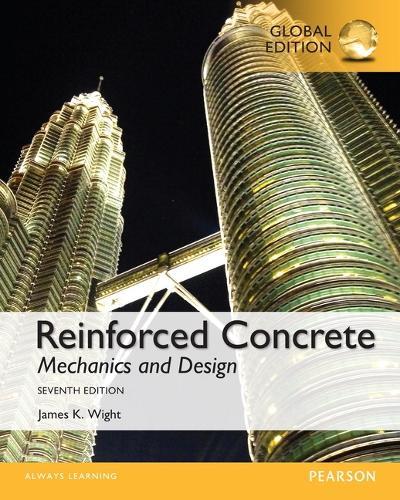
OverviewFor courses in architecture and civil engineering. Reinforced Concrete: Mechanics and Design uses the theory of reinforced concrete design to teach students the basic scientific and artistic principles of civil engineering. The text takes a topic often introduced at the advanced level and makes it accessible to all audiences by building a foundation with core engineering concepts. The 7th Edition is up-to-date with the latest Building Code for Structural Concrete, giving students access to accurate information that can be applied outside of the classroom. Students are able to apply complicated engineering concepts to real world scenarios with in-text examples and practice problems in each chapter. With explanatory features throughout, the 7th Edition makes the reinforced concrete design a theory all engineers can learn from. Full Product DetailsAuthor: James Wight , James G. MacgregorPublisher: Pearson Education Limited Imprint: Pearson Education Limited Edition: 7th edition Dimensions: Width: 20.60cm , Height: 5.40cm , Length: 25.40cm Weight: 2.100kg ISBN: 9781292106007ISBN 10: 129210600 Pages: 1168 Publication Date: 19 May 2016 Audience: College/higher education , Professional and scholarly , Tertiary & Higher Education , Professional & Vocational Format: Paperback Publisher's Status: Active Availability: Available To Order We have confirmation that this item is in stock with the supplier. It will be ordered in for you and dispatched immediately. Table of ContentsChapter 1: Introduction Chapter 2: The Design Process Chapter 3: Materials Chapter 4: Flexure: Behavior and Normal Strength of Beam Sections Chapter 5: Flexural Design of Beam Sections Chapter 6: Shear in Beams Chapter 7: Torsion Chapter 8: Development, Anchorage, and Splicing of Reinforcement Chapter 9: Serviceability Chapter 10: Continuous Beams and One-Way Slabs Chapter 11: Columns: Combined Axial Load and Bending Chapter 12: Slender Columns Chapter 13: Two-Way Slabs: Behavior, Analysis, and Design Chapter 14: Two Way Slabs: Elastic and Yield-Line Analyses Chapter 15: Footings Chapter 16: Shear Friction, Horizontal Shear Transfer, and Composite Concrete Beams Chapter 17: Discontinuity Regions and Strut-and-Tie Models Chapter 18: Walls and Shear Walls Chapter 19: Design for Earthquake Resistance Appendix A: Design Aids Appendix B: Notation IndexReviewsAuthor InformationTab Content 6Author Website:Countries AvailableAll regions |
||||