Overview
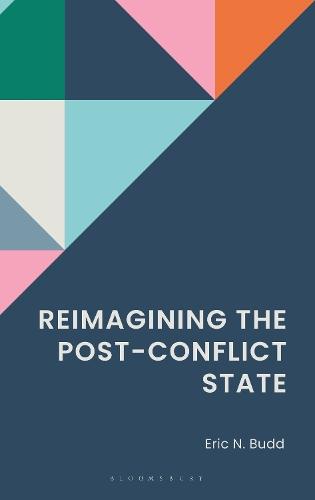
To achieve peace and reconciliation, the post-conflict state must reimagine itself, changing power dynamics and incorporating new voices into the national narrative. While the literature on post-conflict states has focused on state-building, it has been largely silent when it comes to nation-building. In Reimagining the Post-Conflict State, Eric N. Budd argues that these states need to fundamentally redefine themselves—who they are and who is part of their “imagined community.” On both the macro and micro levels, this work explores whether post-conflict states have fundamentally changed—altered their power dynamics, incorporated the voices of all societal groups in the national narrative, and acknowledged the disparate memories of the past, including “inconvenient truths.” Through an in-depth exploration of the peace agreements that ended the conflicts, as well as of the nations’ constitutions and efforts at constitutional change, their educational systems, curriculum reform efforts, and the history textbooks used after the conflict ends, this book examines the challenges post-conflict states face as they try to transcend their violent past and achieve peace and reconciliation.
Full Product Details
Author: Dr. Eric N. Budd
Publisher: Bloomsbury Publishing Plc
Imprint: Bloomsbury Academic
ISBN: 9798216369219
Pages: 152
Publication Date: 14 May 2026
Audience:
Professional and scholarly
,
Professional & Vocational
Format: Hardback
Publisher's Status: Forthcoming
Availability: Manufactured on demand

Reviews
Eric Budd’s Reimagining the Post-Conflict State draws from the analysis of several cases (Northern Ireland, the Philippines, Bosnia, Rwanda, and Sri Lanka) of post-conflict states and societies in order to help us think about the kinds of changes in power, voice, and memory that are needed for reconciliation to usher in sustainable peace. While a great deal of scholarship exists to explain the causes of conflicts, there is less work that provides accessible frameworks in the way that Budd does, for understanding and explaining the conditions that enable sustainable peace in states that have undergone often brutal forms of intra-state conflict. -- Brian Mello, Professor of Political Science, Muhlenberg College, US Reimagining the Post-Conflict State is a well-written introduction to the challenges of building a shared sense of community after intense violent conflict. Eric Budd shows that the amount of freedom, constitutional proscriptions and protection of some identities, and the massification of national narratives via educational curricula must be taken seriously in order to have an authentic reconciliation. This analysis, particularly through the diverse cases explored, sets this book apart as foundational for someone trying to understand the fraught and critical time that follows the photos of signed treaties, receipt of prizes for negotiators, and return of arms to the armories. -- Tony Spanakos, Professor of Political Science and Law, Montclair State University, US
Reimagining the Post-Conflict State is a well-written introduction to the challenges of building a shared sense of community after intense violent conflict. Examining cases in Europe (Northern Ireland, Bosnia and Herzegovina), SubSaharan Africa (Rwanda), South Asia (Sri Lanka), and Southeast Asia (the Philippines), Dr. Budd shows that the amount of freedom, constitutional proscriptions and protection of some identities, and the massification of national narratives via educational curricula must be taken seriously in order to have an authentic reconciliation. This analysis, particularly through the diverse cases explored, sets this book apart as foundational for someone trying to understand the fraught and critical time that follows the photos of signed treaties, receipt of prizes for negotiators, and return of arms to the armories. -- Tony Spanakos, Professor of Political Science and Law, Montclair State University, US
Author Information
Eric N. Budd is Professor of Political Science at Fitchburg State University, US.