Overview
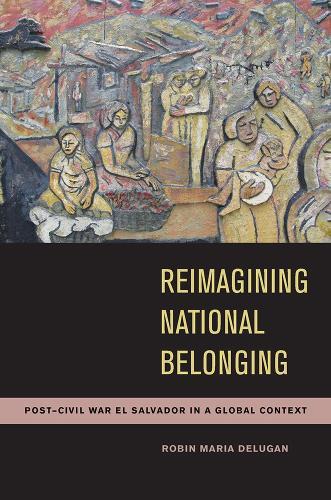
Reimagining National Belonging is the first sustained critical examination of post–civil war El Salvador. It describes how one nation, after an extended and divisive conflict, took up the challenge of generating social unity and shared meanings around ideas of the nation. In tracing state-led efforts to promote the concepts of national culture, history, and identity, Robin DeLugan highlights the sites and practices—as well as the complexities—of nation-building in the twenty-first century. Examining events that unfolded between 1992 and 2011, DeLugan both illustrates the idiosyncrasies of state and society in El Salvador and opens a larger portal into conditions of constructing a state in the present day around the globe—particularly the process of democratization in an age of neoliberalism. She demonstrates how academics, culture experts, popular media, and the United Nations and other international agencies have all helped shape ideas about national belonging in El Salvador. She also reveals the efforts that have been made to include populations that might have been overlooked, including indigenous people and faraway citizens not living inside the country's borders. And she describes how history and memory projects have begun to recall the nation's violent past with the goal of creating a more just and equitable nation. This illuminating case study fills a gap in the scholarship about culture and society in contemporary El Salvador, while offering an """"ethnography of the state"""" that situates El Salvador in a global context.
Full Product Details
Author: Robin Maria DeLugan
Publisher: University of Arizona Press
Imprint: University of Arizona Press
Edition: 3rd ed.
Dimensions:
Width: 14.90cm
, Height: 1.00cm
, Length: 22.60cm
Weight: 0.238kg
ISBN: 9780816531011
ISBN 10: 0816531013
Pages: 168
Publication Date: 28 February 2014
Audience:
Professional and scholarly
,
Professional & Vocational
Format: Paperback
Publisher's Status: Active
Availability: Temporarily unavailable

The supplier advises that this item is temporarily unavailable. It will be ordered for you and placed on backorder. Once it does come back in stock, we will ship it out to you.
Reviews
An excellent addition to the literature on El Salvador, postconflict societies, indigenous issues, and transnationalism. It is essential reading for any scholar doing work on El Salvador and provides a useful framework for analyzing nation-building efforts in postconflict settings. --American Ethnologist In a recent explosion of scholarship on El Salvador, DeLugan offers an original analysis, presenting the first sustained focus on the theme of contemporary nation building after civil war. --Ellen Moodie, author of El Salvador in the Aftermath of Peace: Crime, Uncertainty and the Transition to Democracy The study offers a compelling and comprehensive analysis of the state's construction of memory, with a specific focus on contestation over the (re)presentation of El Salvador's indigenous past and present, as well as the legacy of the civil war. The evocation of nationalism as a transnational project is especially persuasive. --Jonathan Fox, author of Accountability Politics: Power and Voice in Rural Mexico The study offers a compelling and comprehensive analysis of the state s construction of memory, with a specific focus on contestation over the (re)presentation of El Salvador s indigenous past and present, as well as the legacy of the civil war. The evocation of nationalism as a transnational project is especially persuasive. Jonathan Fox, author of Accountability Politics: Power and Voice in Rural Mexico
An excellent addition to the literature on El Salvador, postconflict societies, indigenous issues, and transnationalism. It is essential reading for any scholar doing work on El Salvador and provides a useful framework for analyzing nation-building efforts in postconflict settings. American Ethnologist
The study offers a compelling and comprehensive analysis of the state's construction of memory, with a specific focus on contestation over the (re)presentation of El Salvador's indigenous past and present, as well as the legacy of the civil war. The evocation of nationalism as a transnational project is especially persuasive. --Jonathan Fox, author of Accountability Politics: Power and Voice in Rural Mexico
Author Information
Robin Maria DeLugan is an assistant professor of anthropology in the School of Social Sciences, Humanities, and Arts at the University of California, Merced.