Awards
- Runner-up for IndieFab awards (Drama/Theater) 2004
Overview
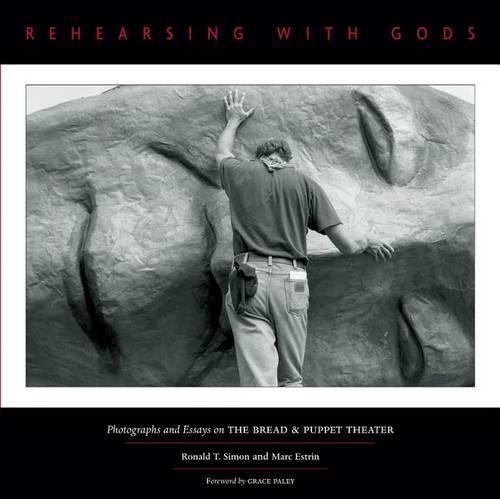
The long-lived Bread & Puppet Theater, the invention of Peter Schumann, featured epic plays carried out with large volunteer casts of puppeteers, many on stilts, who performed using mythic, often huge masks and puppets in the fields near Glover, Vermont. Simon, a photographer, and Estrin, a writer based in Burlington, Vermont, have compiled a perso
Full Product Details
Author: Ronald T., 1959- Simon ,
Marc Estrin
Publisher: Chelsea Green Publishing Co
Imprint: Chelsea Green Publishing Co
Dimensions:
Width: 25.40cm
, Height: 1.00cm
, Length: 25.40cm
Weight: 0.544kg
ISBN: 9781931498197
ISBN 10: 1931498199
Pages: 240
Publication Date: 01 May 2004
Audience:
General/trade
,
General
Format: Hardback
Publisher's Status: Out of Print
Availability: Out of stock

Reviews
<p>Publishers Weekly-The Bread and Puppet Theater, which started in the early '60s on New York's Lower East Side, migrated some years later to its present location in Vermont, and the wide open spaces obviously serve its expansive, anarchic being well. Photographer Simon has conducted a 20-year study of Theater founder Peter Schumann, and Simon's 145 duotone photos show the influences of ancient theater and religions, particularly in the gravity of the massive faces of the puppets, made initially from straw, clay and, according to some alleged medieval German formula, beer. The book is organized around the eight archetypical themes of Death, Fiend, Beast, Human, World, Gift, Bread and Hope; however, like Bread and Puppet itself, which combines the creative with the mysterious, themes eddy into other themes. Estrin (Insect Dreams: The Half Life of Gregor Samsa) makes the strong social activist component of the theater clear, in tones that are by turns humorous and revealing, informational and awestruck (especially when it comes to Schumann). But the stars here are the enormous, fantastical creatures that enact possible freedoms each season.
Publishers Weekly-The Bread and Puppet Theater, which started in the early '60s on New York's Lower East Side, migrated some years later to its present location in Vermont, and the wide open spaces obviously serve its expansive, anarchic being well. Photographer Simon has conducted a 20-year study of Theater founder Peter Schumann, and Simon's 145 duotone photos show the influences of ancient theater and religions, particularly in the gravity of the massive faces of the puppets, made initially from straw, clay and, according to some alleged medieval German formula, beer. The book is organized around the eight archetypical themes of Death, Fiend, Beast, Human, World, Gift, Bread and Hope; however, like Bread and Puppet itself, which combines the creative with the mysterious, themes eddy into other themes. Estrin (Insect Dreams: The Half Life of Gregor Samsa) makes the strong social activist component of the theater clear, in tones that are by turns humorous and revealing, informational and awestruck (especially when it comes to Schumann). But the stars here are the enormous, fantastical creatures that enact possible freedoms each season.
Author Information
Ronald T. Simon is a Canadian photographer whose 20-year study of the work of Peter Schumann remains his most important documentary project to date. His photographs have appeared in Orion Afield, American Theater, and The Globe and Mail. He has also worked for the National Film Board of Canada and CBC Radio. Ronald lives in Montreal. Visit his web site, fineprintphoto.com, to learn more. Marc Estrin is a writer, cellist, and activist from Burlington, Vermont. His recent novel, Insect Dreams: The Half Life of Gregor Samsa, recently won a New York Public Library award as one of the 25 extraordinary books of 2002 and was dubbed ""a pivotal literary landmark"" by the Library Journal.