Overview
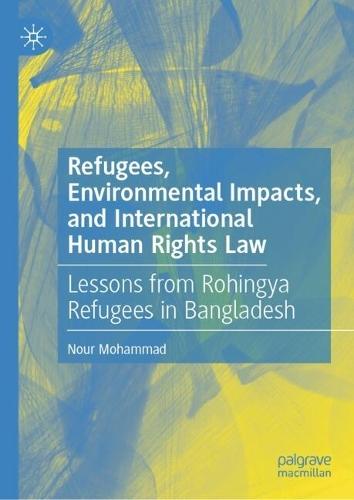
This book examines the intersection of environmental challenges and human rights in the context of the Rohingya refugee crisis in Bangladesh. It highlights how the mass displacement of refugees impacts the environment and, in turn, affects both displaced populations and host communities. Through a rights-based approach, the book explores the legal, ethical, and policy considerations necessary to address these challenges. By analyzing the environmental consequences of large-scale refugee movements, this book provides insights into international law, sustainability practices, and human rights protections. It discusses the responsibilities of governments, international organizations, and policymakers in mitigating environmental degradation while ensuring the rights and well-being of refugees. The book also offers practical recommendations for more effective policy development and implementation at local, national, and global levels. A key focus of this book is its multidisciplinary approach, bridging the gap between refugee law, environmental law, and human rights frameworks. It examines the implications of environmental degradation caused by displacement and explores ways to balance humanitarian assistance with ecological sustainability. The Rohingya crisis serves as a case study, providing valuable lessons for future refugee crises worldwide. This book is a useful resource for scholars, policymakers, activists, and humanitarian organizations looking to understand the complex relationship between environmental challenges and human rights in displacement scenarios. It underscores the role of the international community in ensuring long-term solutions that are both just and sustainable. While centered on Bangladesh, its findings and recommendations hold relevance for addressing refugee and environmental issues in other regions, making it an important contribution to global discussions on refugee law and human rights.
Full Product Details
Author: Nour Mohammad
Publisher: Springer Verlag, Singapore
Imprint: Palgrave Macmillan
ISBN: 9789819575138
ISBN 10: 9819575133
Pages: 242
Publication Date: 09 May 2026
Audience:
Professional and scholarly
,
Professional & Vocational
Format: Hardback
Publisher's Status: Forthcoming
Availability: Not yet available

This item is yet to be released. You can pre-order this item and we will dispatch it to you upon its release.
Author Information
Dr. Nour Mohammad is a faculty member in the Department of Law at Premier University, Chattogram, Bangladesh, and a visiting scholar at national and international institutions, including the Polytechnic Institute in Australia. He holds an LLM in Human Rights from the University of Hong Kong (2015) and a PhD in Law from Western Sydney University, Australia (2024). His research expertise includes environmental law, international human rights law, refugee law, and business and corporate law. He has received international academic recognition from institutions such as the United Nations, the Hague Academy of International Law, and the WIPO–WTO. He has published widely in national and international journals and serves as a reviewer for several leading academic publishers and journals.