Overview
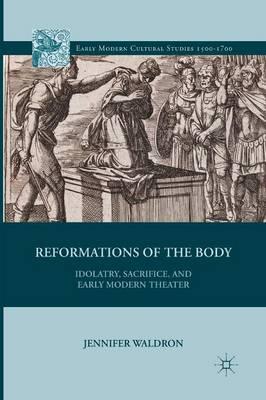
This project takes the human body and the bodily senses as joints that articulate new kinds of connections between church and theatre and overturns a longstanding notion about theatrical phenomenology in this period.
Full Product Details
Author: J. Waldron ,
J Waldron
Publisher: Palgrave Macmillan
Imprint: Palgrave Macmillan
Edition: 1st ed. 2013
Dimensions:
Width: 15.20cm
, Height: 1.70cm
, Length: 22.90cm
Weight: 0.475kg
ISBN: 9781349440290
ISBN 10: 1349440299
Pages: 296
Publication Date: 15 February 2013
Audience:
Professional and scholarly
,
Professional & Vocational
Format: Paperback
Publisher's Status: Active
Availability: Manufactured on demand

We will order this item for you from a manufactured on demand supplier.
Reviews
Waldron's book gives us a refreshing and new account of the relations between Protestantism and Renaissance theater. She makes human liveliness central to both Protestant accounts of the reformation of the body and to the plays of Kyd, Marlowe, and especially Shakespeare. Taking issue with recent accounts of disenchantment and secularization she shows how Protestantism intensified rather than rejected some of the Christological and incarnational aesthetic theologies of Catholicism. This book deserves a very broad readership and will constitute an important contribution to current interests in religion and theater. - Sarah Beckwith, Professor of English, Theater, and Religion, Duke University, USA In this timely and nuanced study, Waldron argues that the Protestant body transposes the incarnational aesthetics of medieval Christianity into new forms of connection and relationship that reinvest the world with divine presence and regenerative potential. She demonstrates how the body and the senses join the reformed church to the public theater, both of which rely on lively images to transmit truths and create community. Eschewing easy narratives of supercession and progress, Waldron discloses the tremulous assemblages of thought, feeling, and practice at the heart of English Renaissance literature, in order to deliver an integrated vision of bodily experience in Reformation art, religion,and life. - Julia Reinhard Lupton, Professor of English, University of California, Irvine, USA and author of Thinking with Shakespeare: Essays on Politics and Life 'Waldron has written a powerful, perceptive study of the ways in which Protestant discussions of the body complicate our sense of what was either divine or fallen about the flesh in early modern English culture. Those who read Waldron's book will be forced to think carefully about what early modern theater, filled as it was with lively bodies, would have meant to those who praised or attacked it. This is an important book.' - Michael Witmore, Director of the Folger Shakespeare Library, USA and author of Landscapes of the Passing Strange: Reflections from Shakespeare, with Rosamond Purcell
Waldron's book gives us a refreshing and new account of the relations between Protestantism and Renaissance theater. She makes human liveliness central to both Protestant accounts of the reformation of the body and to the plays of Kyd, Marlowe, and especially Shakespeare. Taking issue with recent accounts of disenchantment and secularization she shows how Protestantism intensified rather than rejected some of the Christological and incarnational aesthetic theologies of Catholicism. This book deserves a very broad readership and will constitute an important contribution to current interests in religion and theater. - Sarah Beckwith, Professor of English, Theater, and Religion, Duke University, USA In this timely and nuanced study, Waldron argues that the Protestant body transposes the incarnational aesthetics of medieval Christianity into new forms of connection and relationship that reinvest the world with divine presence and regenerative potential. She demonstrates how the body and the senses join the reformed church to the public theater, both of which rely on lively images to transmit truths and create community. Eschewing easy narratives of supercession and progress, Waldron discloses the tremulous assemblages of thought, feeling, and practice at the heart of English Renaissance literature, in order to deliver an integrated vision of bodily experience in Reformation art, religion,and life. - Julia Reinhard Lupton, Professor of English, University of California, Irvine, USA and author of Thinking with Shakespeare: Essays on Politics and Life 'Waldron has written a powerful, perceptive study of the ways in which Protestant discussions of the body complicate our sense of what was either divine or fallen about the flesh in early modern English culture. Those who read Waldron's book will be forced to think carefully about what early modern theater, filled as it was with lively bodies, would have meant to those who praised or attacked it. This is an important book.' - Michael Witmore, Director of the Folger Shakespeare Library, USA and author of Landscapes of the Passing Strange: Reflections from Shakespeare, with Rosamond Purcell
""Waldron's book gives us a refreshing and new account of the relations between Protestantism and Renaissance theater. She makes human liveliness central to both Protestant accounts of the reformation of the body and to the plays of Kyd, Marlowe, and especially Shakespeare. Taking issue with recent accounts of disenchantment and secularization she shows how Protestantism intensified rather than rejected some of the Christological and incarnational aesthetic theologies of Catholicism. This book deserves a very broad readership and will constitute an important contribution to current interests in religion and theater."" - Sarah Beckwith, Professor of English, Theater, and Religion, Duke University, USA ""In this timely and nuanced study, Waldron argues that the Protestant body transposes the incarnational aesthetics of medieval Christianity into new forms of connection and relationship that reinvest the world with divine presence and regenerative potential. She demonstrates how the body and the senses join the reformed church to the public theater, both of which rely on lively images to transmit truths and create community. Eschewing easy narratives of supercession and progress, Waldron discloses the tremulous assemblages of thought, feeling, and practice at the heart of English Renaissance literature, in order to deliver an integrated vision of bodily experience in Reformation art, religion,and life."" - Julia Reinhard Lupton, Professor of English, University of California, Irvine, USA and author of Thinking with Shakespeare: Essays on Politics and Life 'Waldron has written a powerful, perceptive study of the ways in which Protestant discussions of the body complicate our sense of what was either divine or fallen about the flesh in early modern English culture. Those who read Waldron's book will be forced to think carefully about what early modern theater, filled as it was with lively bodies, would have meant to those who praised or attacked it. This is an important book.' - Michael Witmore, Director of the Folger Shakespeare Library, USA and author of Landscapes of the Passing Strange: Reflections from Shakespeare, with Rosamond Purcell
Waldron's book gives us a refreshing and new account of the relations between Protestantism and Renaissance theater. She makes human liveliness central to both Protestant accounts of the reformation of the body and to the plays of Kyd, Marlowe, and especially Shakespeare. Taking issue with recent accounts of disenchantment and secularization she shows how Protestantism intensified rather than rejected some of the Christological and incarnational aesthetic theologies of Catholicism. This book deserves a very broad readership and will constitute an important contribution to current interests in religion and theater. - Sarah Beckwith, Professor of English, Theater, and Religion, Duke University, USA In this timely and nuanced study, Waldron argues that the Protestant body transposes the incarnational aesthetics of medieval Christianity into new forms of connection and relationship that reinvest the world with divine presence and regenerative potential. She demonstrates how the body and the senses join the reformed church to the public theater, both of which rely on lively images to transmit truths and create community. Eschewing easy narratives of supercession and progress, Waldron discloses the tremulous assemblages of thought, feeling, and practice at the heart of English Renaissance literature, in order to deliver an integrated vision of bodily experience in Reformation art, religion,and life. - Julia Reinhard Lupton, Professor of English, University of California, Irvine, USA and author of Thinking with Shakespeare: Essays on Politics and Life 'Waldron has written a powerful, perceptive study of the ways in which Protestant discussions of the body complicate our sense of what was either divine or fallen about the flesh in early modern English culture. Those who read Waldron's book will be forced to think carefully about what early modern theater, filled as it was with lively bodies, would have meant to those who praised or attacked it. This is an important book.' - Michael Witmore, Director of the Folger Shakespeare Library, USA and author of Landscapes of the Passing Strange: Reflections from Shakespeare, with Rosamond Purcell
Author Information
Jennifer Waldron is an assistant professor at the University of Pittsburgh, USA.