Overview
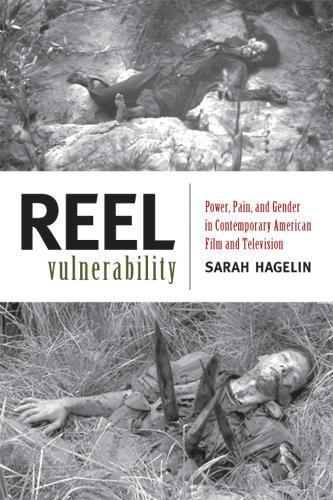
Wonder women, G.I. Janes, and vampire slayers increasingly populate the American cultural landscape. What do these figures mean in the American cultural imagination? What can they tell us about the female body in action or in pain? Reel Vulnerability explores the way American popular culture thinks about vulnerability, arguing that our culture and our scholarship remain stubbornly invested in the myth of the helplessness of the female body. The book examines the shifting constructions of vulnerability in the wake of the cultural upheavals of World War II, the Cold War, and 9/11, placing defenseless male bodies onscreen alongside representations of the female body in the military, in the interrogation room, and on the margins. Sarah Hagelin challenges the ways film theory and cultural studies confuse vulnerability and femaleness. Such films as G.I. Jane and Saving Private Ryan, as well as such post-9/11 television shows as Battlestar Galactica and Deadwood, present vulnerable men who demand our sympathy, abused women who don’t want our pity, and images of the body in pain that do not portray weakness. Hagelin’s intent is to help scholarship catch up to the new iconographies emerging in theaters and in living rooms-images that offer viewers reactions to the suffering body beyond pity, identification with the bleeding body beyond masochism, and feminist images of the female body where we least expect to find them.
Full Product Details
Author: Sarah Hagelin
Publisher: Rutgers University Press
Imprint: Rutgers University Press
Dimensions:
Width: 15.20cm
, Height: 1.50cm
, Length: 22.90cm
Weight: 0.456kg
ISBN: 9780813561042
ISBN 10: 0813561043
Pages: 226
Publication Date: 25 July 2013
Audience:
General/trade
,
General
Format: Hardback
Publisher's Status: Active
Availability: Temporarily unavailable

The supplier advises that this item is temporarily unavailable. It will be ordered for you and placed on backorder. Once it does come back in stock, we will ship it out to you.
Reviews
Probing and insightful prose combined with brilliant textual analysis makes Reel Vulnerability a welcome and original addition to gender film criticism. --Dennis Bingham author of Whose Lives Are They Anyway: The Biopic as Contemporary Film Genre (08/16/2012)
Probing and insightful prose combined with brilliant textual analysis makes Reel Vulnerability a welcome and original addition to gender film criticism. <br>--Dennis Bingham author of Whose Lives Are They Anyway: The Biopic as Contemporary Film Genre (08/16/2012)
By challenging the assumption that the suffering body is vulnerable, Hagelin creates an alternate logic for feminist scholars that demands that we rethink Hollywood's uses of pain and victimization as entrees to gender. <br>--Susan Jeffords University of Washington (04/16/2013)
“Probing and insightful prose combined with brilliant textual analysis makes Reel Vulnerability a welcome and original addition to gender film criticism.” -- Dennis Bingham * author of Whose Lives Are They Anyway?: The Biopic as Contemporary Film Genre * ""By challenging the assumption that the suffering body is vulnerable, Hagelin creates an alternate logic for feminist scholars that demands that we rethink Hollywood’s uses of pain and victimization as entrees to gender."" -- Susan Jeffords * University of Washington * “Probing and insightful prose combined with brilliant textual analysis makes Reel Vulnerability a welcome and original addition to gender film criticism.” -- Dennis Bingham * author of Whose Lives Are They Anyway?: The Biopic as Contemporary Film Genre * ""By challenging the assumption that the suffering body is vulnerable, Hagelin creates an alternate logic for feminist scholars that demands that we rethink Hollywood’s uses of pain and victimization as entrees to gender."" -- Susan Jeffords * University of Washington *
Author Information
SARAH HAGELIN is an assistant professor of English at the University of Colorado, Denver.