Overview
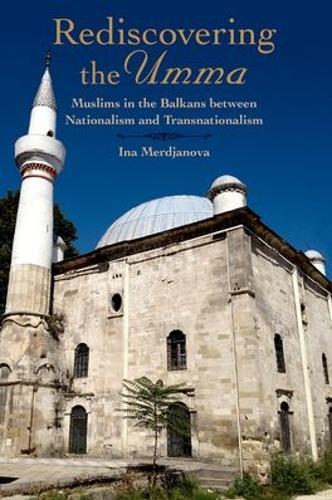
In Rediscovering the Umma, Ina Merdjanova discusses the conditions and role of Islam in relation to post-Ottoman nation-building, the communist period, and post-communist developments in the Balkans, focusing in particular on the remarkable transformations experienced by Muslim communities after the end of the Cold War. Amidst multiple structural and cultural transitions, they sought to renegotiate their place and reclaim their Islamic identities in formally secular legal and normative environments, mostly as minorities in majority-Christian societies. The rising political and cultural self-awareness of Muslims in Southeast Europe was frequently expressed by recourse to two frames of reference: the national and the transnational. Despite a certain level of tension between those two perspectives, they were closely intertwined. Moreover, transnational Islamic influences often reinforced Muslim ethnonational identities rather than prompting a radical redefinition of religious allegiances in the key of a ""universalist"" Islam. Merdjanova explores the transformations of Muslim identities in the region under the influence of national and transnational, domestic and global factors, while also looking at the historical legacies that inform present complexities. Furthermore, she examines the evolving status and roles of Muslim women both in their religious communities and in the larger societies. The book challenges representations of Islam and Muslims as alien to Europe, which overlook the fact that Europe has considerable indigenous Muslim populations in its southeastern part as well as societies that have developed certain models of negotiating cultural differences.
Full Product Details
Author: Ina Merdjanova (Marie Curie Fellow, Irish School of Ecumenics/Trinity College Dublin)
Publisher: Oxford University Press Inc
Imprint: Oxford University Press Inc
Dimensions:
Width: 23.10cm
, Height: 1.80cm
, Length: 15.50cm
Weight: 0.318kg
ISBN: 9780190462505
ISBN 10: 0190462507
Pages: 218
Publication Date: 07 April 2016
Audience:
College/higher education
,
Postgraduate, Research & Scholarly
,
Postgraduate, Research & Scholarly
Format: Paperback
Publisher's Status: Active
Availability: To order

Stock availability from the supplier is unknown. We will order it for you and ship this item to you once it is received by us.
Reviews
This clear and innovative work offers an important view from the Balkans on European Islam. Ina Merdjanova traces changes and continuities from the Ottoman period to the present, and pulls off the difficult feat of both showcasing Balkan specifics and examining important differences in religion and politics across distinct communities. Required reading for anyone interested in comparative Islamic studies. John R. Bowen, Dunbar-Van Cleve Professor in Arts & Sciences, Washington University in St. Louis Muslims in contemporary Europe are generally assumed to be recent immigrants from Turkey, South Asia, or North Africa, but Merdjanova's excellent book challenges this stereotype by investigating European Muslim communities that have lived on the continent for centuries. This nuanced examination of the varieties of Muslim belief and practice in Southeastern Europe is a must read for anyone interested in understanding the complicated history and heterogeneity of European Islam. Kristen Ghodsee, author of Muslim Lives in Eastern Europe: Gender, Ethnicity, and the Transformation of Islam in Postsocialist Bulgaria Based on an extensive original research and a critical engagement with the existing scholarship, Ina Merdjanova's study presents a rich and diverse map of Islam in the Balkans and analyzes different factors and players involved in its shaping. Rediscovering the Umma will compel a more nuanced debate about the presence of Islam in Europe, which is sorely lacking in contemporary discourse on European religious and cultural identities. It will also serve as a useful textbook for anyone interested in this region's religious mosaic. Amila Buturovic, Religious Studies and Humanities, York University, Toronto Rediscovering the Umma wonderfully captures the development of Muslim Balkan identities at the intersection of national and transnational forces. To be Albanian or Bosnian or indeed European, at the same time as Muslim, poses a challenge to communities, not least to women within them, who are seeking to integrate religious practices with evolving economic, cultural, and political circumstances. Ina Merdjanova provides a comprehensive and timely guide to the reclaiming of Muslim faith and practice in both the post-Communist societies of Southeast Europe and beyond. James Piscatori, Durham University The book provides an interesting overview of a very important topic related to different tendencies in the religiousness and identities of Balkan Muslims. It contributes for the better understanding of religious struggle and coexistence in Europe in 20th and early 21st centuries. The book will be very useful and informative for historians, social sciences researchers, students, and policy makers. Journal of Muslims in Europe The book is a crucial contribution to scholarship on the Balkans, Islam, as well as for European nationalism and women's studies. Julianne Funk, Europe-Asia Studies
The detail-rich comparative account of Islam as a flexible religion adopting to the 'spirit of times' makes it an interesting reading * Dr Arolda Elbasani, Southeast European and Black Sea Studies * The book is a crucial contribution to scholarship on the Balkans, Islam, as well as for European nationalism and women's studies. * Julianne Funk, Europe-Asia Studies * The book provides an interesting overview of a very important topic related to different tendencies in the religiousness and identities of Balkan Muslims. It contributes for the better understanding of religious struggle and coexistence in Europe in 20th and early 21st centuries. The book will be very useful and informative for historians, social sciences researchers, students, and policy makers. * Journal of Muslims in Europe * Rediscovering the Umma wonderfully captures the development of Muslim Balkan identities at the intersection of national and transnational forces. To be Albanian or Bosnian or indeed European, at the same time as Muslim, poses a challenge to communities, not least to women within them, who are seeking to integrate religious practices with evolving economic, cultural, and political circumstances. Ina Merdjanova provides a comprehensive and timely guide to the reclaiming of Muslim faith and practice in both the post-Communist societies of Southeast Europe and beyond. * James Piscatori, Durham University * Based on an extensive original research and a critical engagement with the existing scholarship, Ina Merdjanova's study presents a rich and diverse map of Islam in the Balkans and analyzes different factors and players involved in its shaping. Rediscovering the Umma will compel a more nuanced debate about the presence of Islam in Europe, which is sorely lacking in contemporary discourse on European religious and cultural identities. It will also serve as a useful textbook for anyone interested in this region's religious mosaic. * Amila Buturovic, Religious Studies and Humanities, York University, Toronto * Muslims in contemporary Europe are generally assumed to be recent immigrants from Turkey, South Asia, or North Africa, but Merdjanova's excellent book challenges this stereotype by investigating European Muslim communities that have lived on the continent for centuries. This nuanced examination of the varieties of Muslim belief and practice in Southeastern Europe is a must read for anyone interested in understanding the complicated history and heterogeneity of European Islam. * Kristen Ghodsee, author of Muslim Lives in Eastern Europe: Gender, Ethnicity, and the Transformation of Islam in Postsocialist Bulgaria * This clear and innovative work offers an important view from the Balkans on European Islam. Ina Merdjanova traces changes and continuities from the Ottoman period to the present, and pulls off the difficult feat of both showcasing Balkan specifics and examining important differences in religion and politics across distinct communities. Required reading for anyone interested in comparative Islamic studies. * John R. Bowen, Dunbar-Van Cleve Professor in Arts & Sciences, Washington University in St. Louis *
"""Far from adopting a monolithic, one-size-fits-all historical narrative, [Merdjanova] shows the different historical paths undertaken by the Muslims of the region in the Age of Nationalism."" -- Orel Beilinson, Insight Turkey ""This clear and innovative work offers an important view from the Balkans on European Islam. Ina Merdjanova traces changes and continuities from the Ottoman period to the present, and pulls off the difficult feat of both showcasing Balkan specifics and examining important differences in religion and politics across distinct communities. Required reading for anyone interested in comparative Islamic studies.""--John R. Bowen, Dunbar-Van Cleve Professor in Arts & Sciences, Washington University in St. Louis ""Muslims in contemporary Europe are generally assumed to be recent immigrants from Turkey, South Asia, or North Africa, but Merdjanova's excellent book challenges this stereotype by investigating European Muslim communities that have lived on the continent for centuries. This nuanced examination of the varieties of Muslim belief and practice in Southeastern Europe is a must read for anyone interested in understanding the complicated history and heterogeneity of European Islam.""--Kristen Ghodsee, author of Muslim Lives in Eastern Europe: Gender, Ethnicity, and the Transformation of Islam in Postsocialist Bulgaria ""Based on an extensive original research and a critical engagement with the existing scholarship, Ina Merdjanova's study presents a rich and diverse map of Islam in the Balkans and analyzes different factors and players involved in its shaping. Rediscovering the Umma will compel a more nuanced debate about the presence of Islam in Europe, which is sorely lacking in contemporary discourse on European religious and cultural identities. It will also serve as a useful textbook for anyone interested in this region's religious mosaic.""--Amila Buturovic, Religious Studies and Humanities, York University, Toronto ""Rediscovering the Umma wonderfully captures the development of Muslim Balkan identities at the intersection of national and transnational forces. To be Albanian or Bosnian or indeed European, at the same time as Muslim, poses a challenge to communities, not least to women within them, who are seeking to integrate religious practices with evolving economic, cultural, and political circumstances. Ina Merdjanova provides a comprehensive and timely guide to the reclaiming of Muslim faith and practice in both the post-Communist societies of Southeast Europe and beyond.""--James Piscatori, Durham University ""The book provides an interesting overview of a very important topic related to different tendencies in the religiousness and identities of Balkan Muslims. It contributes for the better understanding of religious struggle and coexistence in Europe in 20th and early 21st centuries. The book will be very useful and informative for historians, social sciences researchers, students, and policy makers."" --Journal of Muslims in Europe"
This clear and innovative work offers an important view from the Balkans on European Islam. Ina Merdjanova traces changes and continuities from the Ottoman period to the present, and pulls off the difficult feat of both showcasing Balkan specifics and examining important differences in religion and politics across distinct communities. Required reading for anyone interested in comparative Islamic studies. John R. Bowen, Dunbar-Van Cleve Professor in Arts & Sciences, Washington University in St. Louis Muslims in contemporary Europe are generally assumed to be recent immigrants from Turkey, South Asia, or North Africa, but Merdjanova's excellent book challenges this stereotype by investigating European Muslim communities that have lived on the continent for centuries. This nuanced examination of the varieties of Muslim belief and practice in Southeastern Europe is a must read for anyone interested in understanding the complicated history and heterogeneity of European Islam. Kristen Ghodsee, author of Muslim Lives in Eastern Europe: Gender, Ethnicity, and the Transformation of Islam in Postsocialist Bulgaria Based on an extensive original research and a critical engagement with the existing scholarship, Ina Merdjanova's study presents a rich and diverse map of Islam in the Balkans and analyzes different factors and players involved in its shaping. Rediscovering the Umma will compel a more nuanced debate about the presence of Islam in Europe, which is sorely lacking in contemporary discourse on European religious and cultural identities. It will also serve as a useful textbook for anyone interested in this region's religious mosaic. Amila Buturovic, Religious Studies and Humanities, York University, Toronto Rediscovering the Umma wonderfully captures the development of Muslim Balkan identities at the intersection of national and transnational forces. To be Albanian or Bosnian or indeed European, at the same time as Muslim, poses a challenge to communities, not least to women within them, who are seeking to integrate religious practices with evolving economic, cultural, and political circumstances. Ina Merdjanova provides a comprehensive and timely guide to the reclaiming of Muslim faith and practice in both the post-Communist societies of Southeast Europe and beyond. James Piscatori, Durham University The book provides an interesting overview of a very important topic related to different tendencies in the religiousness and identities of Balkan Muslims. It contributes for the better understanding of religious struggle and coexistence in Europe in 20th and early 21st centuries. The book will be very useful and informative for historians, social sciences researchers, students, and policy makers. Journal of Muslims in Europe
Author Information
Ina Merdjanova is a senior researcher and an adjunct assistant professor at the Irish School of Ecumenics, Trinity College Dublin. She is the author of Religion, Nationalism, and Civil Society-The Postcommunist Palimpsest, and Religion as a Conversation Starter: Interreligious Dialogue for Peacebuilding in the Balkans (with Patrice Brodeur).