|
|
|||
|
||||
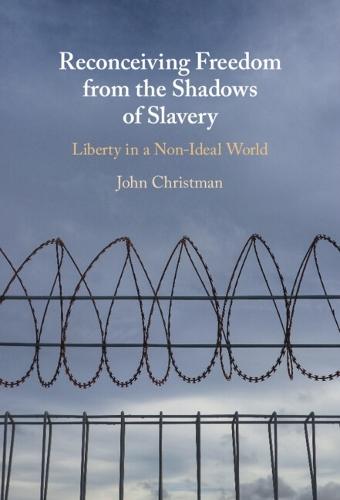
OverviewIn a departure from standard approaches to the concept of liberty, in this book John Christman locates and defends the concept of freedom as a fundamental social value that arose out of fights against slavery and oppression. Seen in this light, liberty must be understood as requiring more than mere non-interference or non-domination – it requires the capacity for self-government and the capabilities needed to pursue valued activities, practices, and ways of life. Christman analyses the emergence of freedom as a concept through nineteenth- and twentieth-century struggles against slavery and other oppressive social forms, and argues that a specifically positive conception best reflects its origins and is philosophically defensible in its own right. What results is a model of freedom that captures its fundamental value both as central to the theoretical architecture of constitutional democracies and as an aspiration for those striving for liberation. Full Product DetailsAuthor: John Christman (Pennsylvania State University)Publisher: Cambridge University Press Imprint: Cambridge University Press ISBN: 9781009440202ISBN 10: 1009440209 Pages: 264 Publication Date: 09 January 2025 Audience: College/higher education , Postgraduate, Research & Scholarly Format: Hardback Publisher's Status: Active Availability: Manufactured on demand We will order this item for you from a manufactured on demand supplier. Table of ContentsIntroduction; Part I. Methodology and a Shift in Perspective: 1. Theorizing freedom in the non-ideal World; 2. Lessons from slavery; Part II. Reconstructing the Concept of Freedom: 3. From History to Philosophy; 4. Freedom and social practices; 5. Freedom and capabilities; 6. Self-Government; 7. Social recognition; Part III. Conclusions and Applications: 8. Freedom, value, justice; Conclusion: liberty, democracy, and the persistence of unfreedom; Bibliography; Index.Reviews'John Christman, a leading philosopher of autonomy and positive liberty, offers a powerful and persuasive argument for viewing freedom as deeply situated in historical and social contexts. Seeing free acts as socially constituted by practices and forms of life, Christman combines rigorous conceptual analysis with attentive social and legal history to construct a theory of freedom informed by the lived experience of US slavery. A valuable and welcome contribution to the political philosophy of freedom.' Nancy J. Hirschmann, University of Pennsylvania Author InformationJohn Christman is Professor of Philosophy, Political Science, and Women's, Gender and Sexuality Studies at Pennsylvania State University. He is the author of The Politics of Persons: Individual Autonomy for Socio-historical Selves (Cambridge, 2009). Tab Content 6Author Website:Countries AvailableAll regions |
||||