Overview
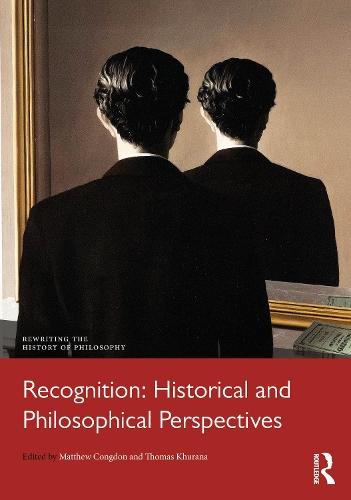
The concept of recognition has moved to the forefront of philosophical research in recent decades, particularly in political and social philosophy but also related areas, including philosophy of race and gender, philosophy of mind and language, ethics and aesthetics. It is a concept with deep roots from at least Rousseau and Hegel to contemporary social theory. In this outstanding volume, an international roster of contributors expands our perspective on recognition beyond the standard story, providing a thought-provoking reassessment of the concept and its history. Covering the fundamental figures and themes, while also going beyond them, the twenty-nine chapters explore the full scope of recognition in four sections: Aesthetic recognition, including chapters on Kant, Simmel, Murdoch, and the relationship between recognition, art, and film, including Boorman’s Deliverance and the Dardenne brothers’ Rosetta Recognition in philosophy of mind and language, including chapters on mind-reading, psychoanalysis, the logic and language of recognition, and its relation to epistemic agency The ethics of recognition, including chapters on Homer, Plato, classical yoga, F. Schlegel, Beauvoir, the Anthropocene, and recognition in the ethics of cognitive disability The social and political philosophy of recognition, including chapters on property and gift-giving, Hegel’s aftermath, slavery and liberation, colonialism, Arendt, and alterity With a lucid introduction by the editors detailing the standard story of recognition and what lies beyond, Recognition: Historical and Philosophical Perspectives provides an authoritative and multifaceted exploration of this fascinating concept, expanding its relevance considerably. It will be important reading for those in philosophy as well as related disciplines such as political theory, sociology, social psychology, and psychoanalysis.
Full Product Details
Author: Matthew Congdon (Vanderbilt University - Nashville, USA) ,
Thomas Khurana (University of Potsdam, Germany)
Publisher: Taylor & Francis Ltd
Imprint: Routledge
Weight: 1.000kg
ISBN: 9781032304915
ISBN 10: 103230491
Pages: 442
Publication Date: 12 December 2025
Audience:
College/higher education
,
Tertiary & Higher Education
Format: Hardback
Publisher's Status: Active
Availability: Not yet available

This item is yet to be released. You can pre-order this item and we will dispatch it to you upon its release.
Reviews
'Since path-breaking work on the theme in the 1990’s and early 2000’s, recognition theory has developed into a major research approach, perhaps even paradigm, in philosophy and related disciplines. Certain limiting assumptions about recognition are widely associated with this approach—assumptions concerning the history of the idea, the legitimate areas of application of the approach, the paradigmatic structure of recognition-relations, and their possible relata. This superb collection of new essays shakes these associations and paves way for understanding recognition as having a much wider significance than often thought—universally human and perhaps even crossing the boundary between the human and the non-human. It is essential reading for anyone interested in the theme of recognition.' - Heikki Ikäheimo, University of New South Wales, Australia 'Since path-breaking work on the theme in the 1990’s and early 2000’s, recognition theory has developed into a major research approach, perhaps even paradigm, in philosophy and related disciplines. Certain limiting assumptions about recognition are widely associated with this approach—assumptions concerning the history of the idea, the legitimate areas of application of the approach, the paradigmatic structure of recognition-relations, and their possible relata. This superb collection of new essays shakes these associations and paves way for understanding recognition as having a much wider significance than often thought—universally human and perhaps even crossing the boundary between the human and the non-human. It is essential reading for anyone interested in the theme of recognition.' - Heikki Ikäheimo, University of New South Wales, Australia
'Since path-breaking work on the theme in the 1990’s and early 2000’s, recognition theory has developed into a major research approach, perhaps even paradigm, in philosophy and related disciplines. Certain limiting assumptions about recognition are widely associated with this approach—assumptions concerning the history of the idea, the legitimate areas of application of the approach, the paradigmatic structure of recognition-relations, and their possible relata. This superb collection of new essays shakes these associations and paves way for understanding recognition as having a much wider significance than often thought—universally human and perhaps even crossing the boundary between the human and the non-human. It is essential reading for anyone interested in the theme of recognition.' - Heikki Ikäheimo, University of New South Wales, Australia 'Since path-breaking work on the theme in the 1990’s and early 2000’s, recognition theory has developed into a major research approach, perhaps even paradigm, in philosophy and related disciplines. Certain limiting assumptions about recognition are widely associated with this approach—assumptions concerning the history of the idea, the legitimate areas of application of the approach, the paradigmatic structure of recognition-relations, and their possible relata. This superb collection of new essays shakes these associations and paves way for understanding recognition as having a much wider significance than often thought—universally human and perhaps even crossing the boundary between the human and the non-human. It is essential reading for anyone interested in the theme of recognition.' - Heikki Ikäheimo, University of New South Wales, Australia 'A rich philosophical discussion has been initiated in the 1990s by the seminal works of Charles Taylor, Axel Honneth and Nancy Fraser. This fascinating collection provides new directions for this discussion. It demonstrates that contemporary theories of recognition offer a novel and unanticipated perspective on certain philosophies of the past, including those of Plato and classical Yoga. Furthermore, it addresses issues that have hitherto been neglected, such as aesthetics and the philosophy of language. And finally, this collection sheds light on new dimensions of the politics of recognition. It very convincingly shows that the concept of recognition offers a fundamental resource for individuals and groups who seek to address contemporary challenges, social and political, through a philosophical lens.' - Emmanuel Renault, University Paris Nanterre, France
Author Information
Matthew Congdon is an Assistant Professor of Philosophy at Vanderbilt University, USA, specializing in ethics, social philosophy, and aesthetics. His book, Moral Articulation: On the Development of New Moral Concepts, was published in 2024. Thomas Khurana is Professor of Philosophy at the University of Potsdam, Germany, and Director of the Center for Post-Kantian Philosophy. He is the editor of a special issue of the European Journal of Philosophy (2021) on Recognition and the Second Person and the author of The Life of Freedom in Kant and Hegel (2026).