Overview
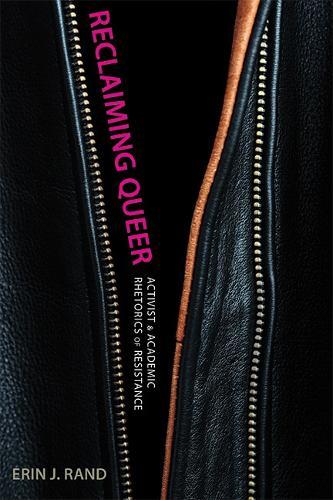
Focuses on the kinds of rhetorical agency that are enabled by the linkage of queer theory to the radical practises of queer activists. The 1980s and 1990s were marked by dramatic upheavals and groundbreaking shifts in both queer activism and queer theory in the United States. Indeed, it was not until the late 1980s that the word ""queer"" - as a newly reclaimed signifier of proud, confrontational sexual identity - could be linked meaningfully with either activism or theory. Queer Unfixed focuses on the kinds of rhetorical agency that are enabled by the linkage of queer theory to the radical practises of queer activists. Erin Rand studies the queer community's responses to the oppressive, frightening, and violent conditions facing gay groups in the 1980s and 1990s. Many of those responses were angry and militant in nature, with the formation of groups such as the Gay Men's Health Crisis (GMHC), AIDS Coalition to Unleash Power (ACT UP), Sex Panic!, Queer Nation, the Pink Panthers, the Lesbian Avengers, and many others. Activism was not intended merely to promote acceptance or tolerance, but to reclaim loudly and forcefully the rights to safety and humanity and to forge identity and strength from victimisation. But the ""changing reality"" facing gay communities was not limited to AIDS, homophobia, and anti-gay violence. It also included the sudden proliferation and popularity of academic work that questioned not only categories of gendered and sexual identity, but also the relationships of these categories to political action, liberalism, history, and truth. In short, as queer activists were mobilising in the streets in the 1980s and 1990s, queer theorists were producing a similar foment in the halls and publications of academia. The relationship between queer activism and theory was by no means self-evident and natural though. This study takes as its primary object the linkage of queer theory in the acaddemy with street-level queer activism, and seeks to understand and reformulate rhetorical agency through this strategic conjuncture. By examining the kinds of queer activist discourses taken up by queer theorists - as well as those they refute or ignore - Rand seeks to defie the specific kinds of opportunities and constraints that shape the contours of queer agency in activist and academic contexts, opposing the common practise of defining queerness in terms of simple resistance and instead positing queerness as an economy of ambiguity from which agency emerges.
Full Product Details
Author: Erin J. Rand
Publisher: The University of Alabama Press
Imprint: The University of Alabama Press
Edition: 2nd
Dimensions:
Width: 16.30cm
, Height: 2.00cm
, Length: 24.00cm
Weight: 0.505kg
ISBN: 9780817318284
ISBN 10: 0817318283
Pages: 240
Publication Date: 19 May 2014
Audience:
College/higher education
,
Postgraduate, Research & Scholarly
Format: Hardback
Publisher's Status: Active
Availability: Temporarily unavailable

The supplier advises that this item is temporarily unavailable. It will be ordered for you and placed on backorder. Once it does come back in stock, we will ship it out to you.
Reviews
Reclaiming Queer makes a persuasive case for the importance of queer theory as a form of queer activism with a relationship to it. Rand's style is lucid and accessible, and I recommend this text to scholars of rhetoric, queer theorists and activists, feminist scholars, and to undergraduates in classes exploring queer theory, history, and community. QED Book Review Rand has made an argument about the nature of rhetorical agency as queer, one that will be of substantial interest to the rhetoricians in the traditions of communication and composition studies, and will add to the toolbox of concepts available for theorizing rhetorical agency. Her careful historical, textual and archival work makes her project one critical to the interests of scholars in gender and sexuality studies who have an eye for the effects of the emergence of queer theory on more traditional feminist, gender based, and gay and lesbian studies. Christian O. Lundberg, author of Lacan in Public
Erin Rand's Reclaiming Queer constitutes a compelling queering of Rhetorical Studies by theorizing the fundamental and inextricable queerness--economy, paradox, style, risk--of rhetorical agency itself. Rand's deft engagements also provocatively and insightfully deepen our understanding of the rhetorical agency of Queer Theory's institutionalization, and she sounds a renewed call for pursuing the promise of undecidability, which is to say a queer rhetorical future. -- Charles E. Morris III, Co-Editor, QED: A Journal in GLBTQ Worldmaking
Erin Rand's Reclaiming Queer constitutes a compelling queering of Rhetorical Studies by theorizing the fundamental and inextricable queerness--economy, paradox, style, risk--of rhetorical agency itself. Rand's deft engagements also provocatively and insightfully deepen our understanding of the rhetorical agency of Queer Theory's institutionalization, and she sounds a renewed call for pursuing the promise of undecidability, which is to say a queer rhetorical future. --Charles E. Morris III, coeditor, QED: A Journal in GLBTQ Worldmaking
Reclaiming Queer is a well-argued, fluidly composed text that makes a significant intervention into conversations concerning communication studies, queer theory, and questions of rhetorical agency. Rand offers an insightful look into the dialectical relationship between activist practices and academia, exploring instances where agency and resistance can be innovatively pursued. The case studies are especially provocative, offering insightful critical readings of Larry Kramer's polemics, the productive antics of the Lesbian Avengers, and the affective possibilities of remembering ACT UP. --Jeffrey A. Bennett, author of Banning Queer Blood: Rhetorics of Citizenship, Contagion, and Resistance Reclaiming Queer makes a persuasive case for the importance of queer theory as a form of queer activism with a relationship to it. Rand's style is lucid and accessible, and I recommend this text to scholars of rhetoric, queer theorists and activists, feminist scholars, and to undergraduates in classes exploring queer theory, history, and community. --QED Book Review Rand has made an argument about the nature of rhetorical agency as 'queer, ' one that will be of substantial interest to the rhetoricians in the traditions of communication and composition studies, and will add to the toolbox of concepts available for theorizing rhetorical agency. Her careful historical, textual and archival work makes her project one critical to the interests of scholars in gender and sexuality studies who have an eye for the effects of the emergence of queer theory on more traditional feminist, gender based, and gay and lesbian studies. --Christian O. Lundberg, author of Lacan in Public Erin Rand's Reclaiming Queer constitutes a compelling queering of Rhetorical Studies by theorizing the fundamental and inextricable queerness--economy, paradox, style, risk--of rhetorical agency itself. Rand's deft engagements also provocatively and insightfully deepen our understanding of the rhetorical agency of Queer Theory's institutionalization, and she sounds a renewed call for pursuing the promise of undecidability, which is to say a queer rhetorical future. --Charles E. Morris III, coeditor, QED: A Journal in GLBTQ Worldmaking
Author Information
Erin J. Rand is an Assistant Professor of Communication and Rhetorical Studies.