Overview
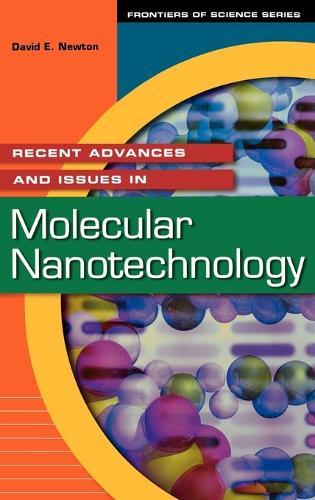
Molecular nanotechnology involves the manipulation of individual atoms and molecules to produce materials and devices with very precise, predictable properties. This is the first volume to cover this new and exciting field. The book's 13 chapters feature:^L^DBLThe nature of nanotechnology^L^DBLDifferences between top-down and bottom-up research approaches^L^DBLPotential benefits and threats to society from future developments in nanotechnology^L^DBLCurrent nanotechnology research^L^DBLBrief biographical sketches of key individuals^L^DBLA chronology of important events^L^DBLSignificant documents^L^DBLCareers in nanotechnology^L^DBLData and statistics, especially in relation to President Clinton's National Nanotechnology Initiative of 2000^L^DBLA list of relevant organizations, research associations, corporations, and academic institutions^L^DBL A list of print and nonprint resources^L^DBLA glossary of commonly used terms
Full Product Details
Author: David E. Newton
Publisher: Bloomsbury Publishing Plc
Imprint: Greenwood Press
Dimensions:
Width: 15.60cm
, Height: 1.90cm
, Length: 23.40cm
Weight: 0.623kg
ISBN: 9781573563079
ISBN 10: 1573563072
Pages: 320
Publication Date: 30 October 2002
Recommended Age: From 7 to 17 years
Audience:
College/higher education
,
Professional and scholarly
,
Undergraduate
,
Postgraduate, Research & Scholarly
Format: Hardback
Publisher's Status: Active
Availability: Manufactured on demand

We will order this item for you from a manufactured on demand supplier.
Reviews
[N]ewton offers a creditable survey; especially valuable is his list of journals and Web-based resources to which the reader may turn for the most recent information....this is a good basic reference for students interested in pursuing the field, as well as scientifically curious general readers. Recommended. General readers; lower-division undergraduates through graduate students. -Choice �N�ewton offers a creditable survey; especially valuable is his list of journals and Web-based resources to which the reader may turn for the most recent information....this is a good basic reference for students interested in pursuing the field, as well as scientifically curious general readers. Recommended. General readers; lower-division undergraduates through graduate students. -Choice ?[N]ewton offers a creditable survey; especially valuable is his list of journals and Web-based resources to which the reader may turn for the most recent information....this is a good basic reference for students interested in pursuing the field, as well as scientifically curious general readers. Recommended. General readers; lower-division undergraduates through graduate students.?-Choice
"?[N]ewton offers a creditable survey; especially valuable is his list of journals and Web-based resources to which the reader may turn for the most recent information....this is a good basic reference for students interested in pursuing the field, as well as scientifically curious general readers. Recommended. General readers; lower-division undergraduates through graduate students.?-Choice ""ÝN¨ewton offers a creditable survey; especially valuable is his list of journals and Web-based resources to which the reader may turn for the most recent information....this is a good basic reference for students interested in pursuing the field, as well as scientifically curious general readers. Recommended. General readers; lower-division undergraduates through graduate students.""-Choice ""[N]ewton offers a creditable survey; especially valuable is his list of journals and Web-based resources to which the reader may turn for the most recent information....this is a good basic reference for students interested in pursuing the field, as well as scientifically curious general readers. Recommended. General readers; lower-division undergraduates through graduate students.""-Choice"
?[N]ewton offers a creditable survey; especially valuable is his list of journals and Web-based resources to which the reader may turn for the most recent information....this is a good basic reference for students interested in pursuing the field, as well as scientifically curious general readers. Recommended. General readers; lower-division undergraduates through graduate students.?-Choice
Author Information
DAVID E. NEWTON is an independent author. He has written over 400 books and articles in the field of mathematics, science, social issues of science and technology, and other fields. He has taught at the high school level, was Professor of Chemistry and Physics at Salem State College for 13 years, and was also Adjunct Professor at the University of San Francisco for 10 years.