Overview
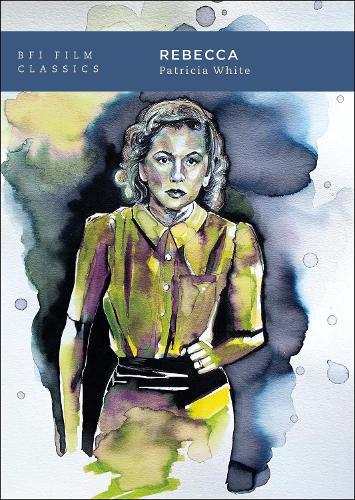
The 1940 film adaptation of Daphne du Maurier’s gothic romance Rebecca begins by echoing the novel’s famous opening line, ‘Last night I dreamt I went to Manderley again.’ Patricia White takes the theme of return as her starting point for an exploration of the film’s enduring power. Drawing on archival research, she shows how the production and reception history of Rebecca, the first fruit of the collaboration between Hollywood movie producer David O. Selznick and British director Alfred Hitchcock, is marked by the traces of women’s contributions. White provides a rich analysis of the film, addressing the gap between perception and reality that is constantly in play in the gothic romance, and highlighting the queer erotics circulating around ‘I’ (the heroine), Mrs Danvers, and the dead but ever-present Rebecca. Her discussion of the film’s afterlives emphasizes the lasting aesthetic impact of this dark masterpiece of memory and desire, while her attention to its remakes and sequels speaks to the ongoing relevance of its vision of gender and power.
Full Product Details
Author: Patricia White (Swarthmore College, USA)
Publisher: Bloomsbury Publishing PLC
Imprint: BFI Publishing
Dimensions:
Width: 13.40cm
, Height: 1.20cm
, Length: 18.80cm
Weight: 0.180kg
ISBN: 9781911239437
ISBN 10: 1911239430
Pages: 120
Publication Date: 06 May 2021
Audience:
General/trade
,
General
Format: Paperback
Publisher's Status: Active
Availability: In Print

This item will be ordered in for you from one of our suppliers. Upon receipt, we will promptly dispatch it out to you. For in store availability, please contact us.
Reviews
White pays ample and poetic attention to the film's aesthetic dimensions, beautifully highlighting both Hitchcock's style and cinematic experience ... White's marvelously observed, meticulous monograph offers fitting tribute. * Hitchcock Annually * This in-depth look at... [the] celebrated 1940 film adaptation of Daphne du Maurier's gothic romance draws on archival research to consider themes of returning and appearance and reality. * Choice * Patricia White's study of the 1940 goth romance turns a salutary spotlight on the women who steered it to the screen. Ben Wheatley's re-do gets a nod, but there's a more fruitful comparison with Paul Thomas Anderson's Phantom Thread. * Total Film * [Patricia White has found] an autonomous and brilliant path in the wide range of readings of the film that have accumulated over the years, managing to provide an original contribution and to open up further interpretative possibilities. (Bloomsbury Translation) * Imago: Studi di cinema e media (Bloomsbury Translation) * In Rebecca, Patricia White lends her voice to the women-among them, Daphne du Maurier, Irene Selznick, Joan Harrison, and Alma Reville, as well the film's critics-who have contributed extensively to the making and understanding of Hitchcock's classic film. In a sense White brilliantly stages yet one more return of the dead woman, Rebecca, who haunts the unnamed heroine and so many fans of the novel and the film, and in lucid and compelling prose testifies to the undying appeal of the ghostly character and her magnificent maleficence. * Tania Modleski, University of Southern California, USA *
This in-depth look at... [the] celebrated 1940 film adaptation of Daphne du Maurier's gothic romance draws on archival research to consider themes of returning and appearance and reality. * Choice * In Rebecca, Patricia White lends her voice to the women-among them, Daphne du Maurier, Irene Selznick, Joan Harrison, and Alma Reville, as well the film's critics-who have contributed extensively to the making and understanding of Hitchcock's classic film. In a sense White brilliantly stages yet one more return of the dead woman, Rebecca, who haunts the unnamed heroine and so many fans of the novel and the film, and in lucid and compelling prose testifies to the undying appeal of the ghostly character and her magnificent maleficence. * Tania Modleski, University of Southern California, USA *
This in-depth look at... [the] celebrated 1940 film adaptation of Daphne du Maurier's gothic romance draws on archival research to consider themes of returning and appearance and reality. * Choice * Patricia White's study of the 1940 goth romance turns a salutary spotlight on the women who steered it to the screen. Ben Wheatley's re-do gets a nod, but there's a more fruitful comparison with Paul Thomas Anderson's Phantom Thread. * Total Film * In Rebecca, Patricia White lends her voice to the women-among them, Daphne du Maurier, Irene Selznick, Joan Harrison, and Alma Reville, as well the film's critics-who have contributed extensively to the making and understanding of Hitchcock's classic film. In a sense White brilliantly stages yet one more return of the dead woman, Rebecca, who haunts the unnamed heroine and so many fans of the novel and the film, and in lucid and compelling prose testifies to the undying appeal of the ghostly character and her magnificent maleficence. * Tania Modleski, University of Southern California, USA *
In Rebecca, Patricia White lends her voice to the women-among them, Daphne du Maurier, Irene Selznick, Joan Harrison, and Alma Reville, as well the film's critics-who have contributed extensively to the making and understanding of Hitchcock's classic film. In a sense White brilliantly stages yet one more return of the dead woman, Rebecca, who haunts the unnamed heroine and so many fans of the novel and the film, and in lucid and compelling prose testifies to the undying appeal of the ghostly character and her magnificent maleficence. -- Tania Modleski, University of Southern California, USA
Author Information
Patricia White is Professor of Film and Media Studies at Swarthmore College, USA. She is author of Women’s Cinema/World Cinema: Projecting Contemporary Feminisms (2015) and Uninvited: Classical Hollywood Cinema and Lesbian Representability (1999), and is a member of the Camera Obscura editorial collective.