|
|
|||
|
||||
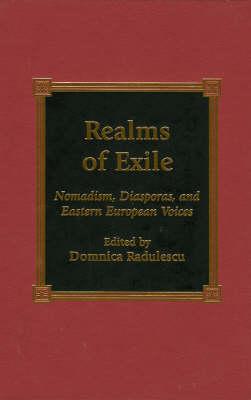
OverviewRealms of Exile brings together authors writing on diverse themes of Eastern European exile. The book defines the experiential and linguistic peculiarities of exiled people who share similar cultural, geographical, and mythological backgrounds and who have suffered under totalitarian rule. The contributions discuss a variety of media—from the soulful melodies of the Russian gypsies to the delicate sensuousness of Kieslowski's films—as the authors treat some of the most crucial issues of our times, such as political dissent and resistance, the fractured self, alienation, and émigré consciousness. Realms of Exile is interdisciplinary and cross-cultural scholarship at its best, casting new light on the many nuances and variations of many of the cultures and ethnic groups of Eastern Europeans. Full Product DetailsAuthor: Domnica Radulescu , Maria Louise Ascher , Anna Brodsky , Johannes F. EveleinPublisher: Bloomsbury Publishing Plc Imprint: Lexington Books Dimensions: Width: 15.90cm , Height: 1.90cm , Length: 23.40cm Weight: 0.431kg ISBN: 9780739103333ISBN 10: 0739103334 Pages: 220 Publication Date: 29 January 2002 Audience: General/trade , General Format: Hardback Publisher's Status: Out of Print Availability: Awaiting stock Table of Contents"Chapter 1 Introduction Chapter 2 Ethics, Consciousness, and the Potentialities of Literature - Teaching Narratives of Exile Chapter 3 Telling Gypsy Exile: Pushkin, India, and Romani Diaspora Chapter 4 Nabokov's Lolita and the Post-War Émigré Consciousness Chapter 5 The Exile as Autobiographer: Nabokov's Homecoming Chapter 6 The Rhetoric of Andrei Codrescu: a Reading in Exilic Fragmentation Chapter 7 Exile and Polish Cinema: from Mickiewicz and Slowacki to Kieslowski Chapter 8 Alienations of Exilic Return: Russian Immigrants and ""Ingathering"" in Hebron Chapter 9 Memory in Exile: Notes on Milosz, Identity, and Writing Chapter 10 Binarism versus Sythesis: Eastern European and Generic Exile Chapter 11 Theorizing Exile"ReviewsRealms of Exile presents a fascinating mosaic of inquiries into an experience that turns out to be all too characteristic of the twentieth century. The ten essays Radulescu has gathered examine exile in its theoretical and experiential modes and in its metaphysical and political dimensions, as experienced by individuals as well as by entire displaced peoples across the map of eastern Europe. Collectively, the essays show just how influential the concept of exile remains in our culture. This volume makes a significant contribution to exile studies and recommends itself to anyone interested in what our recent past means.--Thomas Seifrid Author InformationDomnica Radulescu is Associate Professor of Romance Languages at Washington and Lee University. Tab Content 6Author Website:Countries AvailableAll regions |
||||