Overview
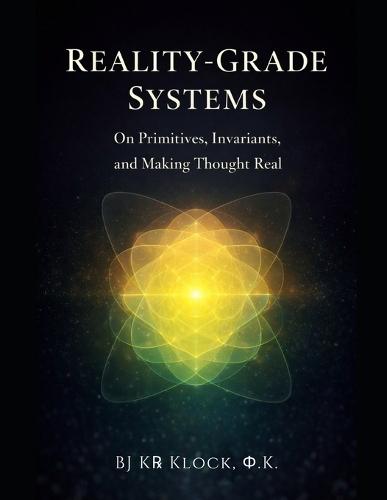
REALITY-GRADE SYSTEMS On Primitives, Invariants, and Making Thought RealMost ideas collapse on contact with reality. Why? Because they were never reality-grade. REALITY-GRADE SYSTEMS is a blueprint for designing systems that survive contact with the real world. It explains why most institutions fail, why policies drift, why financial systems roll forward instead of terminate, and why most ""solutions"" are narrative-not structural. This is not a motivational book. This is not a political book. This is a systems book. What Does ""Reality-Grade"" Mean? A system is reality-grade if it: - Terminates obligations instead of extending them - Enforces invariants instead of narratives - Allows exit without coercion - Can be independently verified - Does not depend on trust to function Most modern systems fail at least three of these. What This Book Covers Primitives The foundational building blocks that determine whether a system is stable or fragile. Invariants The non-negotiable constraints that must hold for a system to remain legitimate. Termination vs Rollover Why unbounded extension is the root of systemic failure. Verification vs Authority Why ""official"" is not the same as true. Time as an Enforcement Layer How deferred settlement reshapes incentives. System Drift Why institutions gradually become extractive. Who This Book Is For Engineers building infrastructure Founders designing platforms Economists studying structural risk Policy designers Investors evaluating long-term viability Anyone thinking in first principles If you read systems theory, complexity science, institutional economics, or engineering philosophy - this book connects those threads into one architecture. Why This Book Is Different Most books describe problems. This one defines invariants. Most books argue about policy. This one analyzes structure. Most books critique systems. This one shows what must exist for systems to be legitimate at all. Core Questions This Book Forces You To Ask If a system cannot terminate, is it consent-based? If a system cannot be independently verified, is it legitimate? If a system requires perpetual extension, is it stable? If incentives drift, who benefits? This is a book about structural clarity. Once you see the invariants, you cannot unsee them. Natural Search Keywords Embeddedsystems thinking engineering philosophy institutional design complex systems economic systems analysis first principles reasoning invariants verification systems structural economics decision theory infrastructure design If you build systems... If you invest in systems... If you live inside systems... You should understand what makes them reality-grade.
Full Product Details
Author: Bj Klock Φ.K
Publisher: Independently Published
Imprint: Independently Published
Dimensions:
Width: 21.60cm
, Height: 1.20cm
, Length: 27.90cm
Weight: 0.594kg
ISBN: 9798248431687
Pages: 180
Publication Date: 15 February 2026
Audience:
General/trade
,
General
Format: Paperback
Publisher's Status: Active
Availability: In Print

This item will be ordered in for you from one of our suppliers. Upon receipt, we will promptly dispatch it out to you. For in store availability, please contact us.