Overview
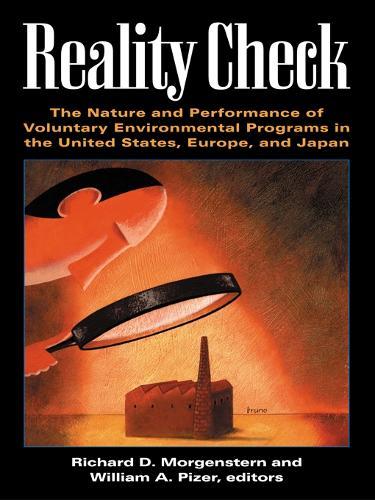
Since the early 1990s, voluntary programs have played an increasingly prominent role in environmental management in the U.S. and other industrialized countries. Programs have attempted to address problems ranging from climate change and energy efficiency, to more localized air and water pollution problems. But do they work? Despite a growing theoretical literature, there is limited empirical evidence on their success or the situations most conducive to the approaches. Even less is known about their cost-effectiveness. Getting credible answers is important. Research to date has been largely limited to individual programs. This innovative book seeks to clarify what is known by looking at a range of program types, including different approaches adopted in different nations. The focus is on assessing actual performance via seven case studies, including the U.S. Climate Wise program, the U.S. EPA's 33/50 program on toxic chemicals, the U.K. Climate Change Agreements, and the Keidanren Voluntary Action Plan in Japan. The central goals of Reality Check are understanding outcomes and, more specifically, the relationship between outcomes and design. By including in-depth analyses by experts from the U.S., Europe, and Japan, the book advances scholarship and provides practical information for the future design of voluntary programs to stakeholders and policymakers on all sides of the Atlantic and Pacific.
Full Product Details
Author: Richard D. Morgenstern ,
William A. Pizer
Publisher: Taylor & Francis Inc
Imprint: Resources for the Future Press (RFF Press)
Edition: annotated edition
Dimensions:
Width: 15.60cm
, Height: 1.90cm
, Length: 23.40cm
Weight: 0.486kg
ISBN: 9781933115368
ISBN 10: 193311536
Pages: 204
Publication Date: 15 February 2007
Audience:
Professional and scholarly
,
Professional & Vocational
Format: Hardback
Publisher's Status: Active
Availability: In Print

This item will be ordered in for you from one of our suppliers. Upon receipt, we will promptly dispatch it out to you. For in store availability, please contact us.
Reviews
'Cuts through the rhetorical fog that surrounds voluntary environmental programs ... Policymakers should take heed of the book s central conclusion - voluntary programs can work but cannot produce major change - and the editors thoughts on the design of these programs.' Richard Schmalensee, Massachusetts Institute of Technology 'A thoughtful and thorough analysis. It shows how voluntary approaches and corporate leadership can help mobilize the effort against climate change, but, in the end, are not substitutes for concerted government action.' Eileen Claussen, President, Pew Center on Global Climate Change
'Cuts through the rhetorical fog that surrounds voluntary environmental programs ... Policymakers should take heed of the booki? s central conclusion - voluntary programs can work but cannot produce major change - and the editorsi? thoughts on the design of these programs.' Richard Schmalensee, Massachusetts Institute of Technology 'A thoughtful and thorough analysis. It shows how voluntary approaches and corporate leadership can help mobilize the effort against climate change, but, in the end, are not substitutes for concerted government action.' Eileen Claussen, President, Pew Center on Global Climate Change
'Cuts through the rhetorical fog that surrounds voluntary environmental programs ... Policymakers should take heed of the book's central conclusion - voluntary programs can work but cannot produce major change - and the editors' thoughts on the design of these programs.' Richard Schmalensee, Massachusetts Institute of Technology 'A thoughtful and thorough analysis. It shows how voluntary approaches and corporate leadership can help mobilize the effort against climate change, but, in the end, are not substitutes for concerted government action.' Eileen Claussen, President, Pew Center on Global Climate Change
Author Information
Richard D. Morgenstern is a senior fellow at Resources for the Future. He has been involved in the design and analysis of voluntary programs for more than 15 years, initially while serving in various high level positions at the U.S. Environmental Protection Agency. William A. Pizer is a senior fellow at Resources for the Future. He has published in subjects ranging from the measurement of regulatory costs to the design of environmental policy, and was involved in the planning and evaluation of voluntary environmental programs while serving at the White House Council of Economic Advisers.