Overview
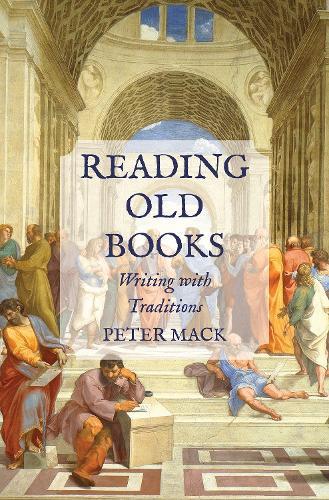
Peter Mack offers a wide-ranging exploration of the creative power of literary tradition, from the middle ages to the 21st century, revealing in new ways how it helps writers and readers make new works and meanings. Reading Old Books argues that the best way to understand tradition is by examining the moments when a writer takes up an old text and writes something new out of a dialogue with that text and the promptings of the present situation. The book examines Petrarch as a user, instigator, and victim of tradition. It shows how Chaucer became the first great English writer by translating and adapting a minor poem by Boccaccio. It investigates how Ariosto, Tasso, and Spenser made new epic meanings by playing with assumptions, episodes, and phrases translated from their predecessors. It analyses how the Victorian novelist Elizabeth Gaskell drew on tradition to address the new problem of urban deprivation in Mary Barton. And, finally, it looks at how the Kenyan writer Ngg wa Thiong'o, in his 2004 novel Wizard of the Crow, reflects on biblical, English literary, and African traditions. Drawing on key theorists, critics, historians, and sociologists, and stressing the international character of literary tradition, Reading Old Books illuminates the not entirely free choices readers and writers make to create meaning in collaboration and competition with their models.
Full Product Details
Author: Professor Peter Mack
Publisher: Princeton University Press
Imprint: Princeton University Press
ISBN: 9780691194004
ISBN 10: 0691194009
Pages: 256
Publication Date: 24 September 2019
Audience:
General/trade
,
Professional and scholarly
,
General/trade
,
General
,
Professional & Vocational
Format: Hardback
Publisher's Status: Active
Availability: Temporarily unavailable

The supplier advises that this item is temporarily unavailable. It will be ordered for you and placed on backorder. Once it does come back in stock, we will ship it out to you.
Reviews
Exploring the advantages and disadvantages of tradition as a tool for thinking about literature, this humane, intelligent, and valuable book reveals Peter Mack's deep understanding of literary systems, and it is written with great lucidity. --Colin Burrow, All Souls College, University of Oxford In this enlightening and compelling book, Peter Mack energizes our assessment of the importance of literary tradition with a sophisticated discussion of its creative power. The result is a lovely, elegant book. --Marjorie Curry Woods, University of Texas at Austin
""Mack treats complicated matters with an easy clarity that makes the book a delight to read. His discussions are at once enthusiastic and well-reasoned—focused on exactly what makes each of the texts so effective.""---D.L. Patey, Choice ""Lucid, thorough case studies.""---Faye Hammill, Times Literary Supplement ""An idiosyncratic collection of case studies… [attended to] with lucidity, energy, and detail.—Timothy D. Crowley, Renaissance Quarterly""
In this enlightening and compelling book, Peter Mack energizes our assessment of the importance of literary tradition with a sophisticated discussion of its creative power. The result is a lovely, elegant book. Marjorie Curry Woods, University of Texas at Austin Exploring the advantages and disadvantages of tradition as a tool for thinking about literature, this humane, intelligent, and valuable book reveals Peter Mack's deep understanding of literary systems, and it is written with great lucidity throughout. Colin Burrow, All Souls College, University of Oxford
Author Information
Peter Mack is professor of English at the University of Warwick. His books include A History of Renaissance Rhetoric, 13801620; Rhetoric and Reading in Montaigne and Shakespeare; and Elizabethan Rhetoric. He is a fellow of the British Academy, a former director of the Warburg Institute, and (with Rita Copeland) general editor of the forthcoming five-volume Cambridge History of Rhetoric.