Overview
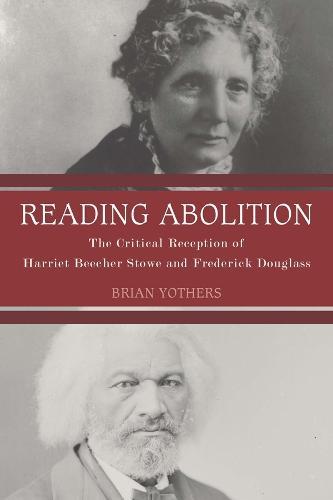
A pathbreaking consideration of the intertwined critical responses to Harriet Beecher Stowe and Frederick Douglass, giants of abolitionist literature. Harriet Beecher Stowe and Frederick Douglass represent a crucial strand in nineteenth-century American literature: the struggle for the abolition of slavery. Yet there has been no thoroughgoing discussion of the critical receptionof these two giants of abolitionist literature. Reading Abolition narrates and explores the parallels between Stowe's critical reception and Douglass's. The book begins with Stowe's Uncle Tom's Cabin, considering its initial celebration as a work of genius and conscience, its subsequent dismissal in the early twentieth century as anti-Southern and in the mid-twentieth century as racially stereotypical, and finally its recent recovery as a classic of women's, religious, and political fiction. It also considers the reception of Stowe's other, less well-known novels, non-fictional works, and poetry, and how engaging the full Stowe canon has changed the shape of Stowe studies. The second half of the study deals with the reception of Douglass both as a writer of three autobiographies that helped to define the contours of African American autobiography for later writers and critics and as an extraordinarily eloquent and influential orator and journalist. Reading Abolition shows that Stowe's and Douglass's critical destinies have long been intertwined, with questions about race, gender, nationalism, religion, and thenature of literary and rhetorical genius playing crucial roles in critical considerations of both figures. Brian Yothers is Frances Spatz Leighton Endowed Distinguished Professor and Associate Chair of the Department ofEnglish at the University of Texas at El Paso.
Full Product Details
Author: Brian Yothers (Series Editor)
Publisher: Boydell & Brewer Ltd
Imprint: Camden House Inc
Dimensions:
Width: 15.20cm
, Height: 2.10cm
, Length: 22.90cm
Weight: 0.454kg
ISBN: 9781571135773
ISBN 10: 1571135774
Pages: 196
Publication Date: 01 December 2016
Audience:
College/higher education
,
Undergraduate
,
Postgraduate, Research & Scholarly
Format: Hardback
Publisher's Status: Active
Availability: In Print

This item will be ordered in for you from one of our suppliers. Upon receipt, we will promptly dispatch it out to you. For in store availability, please contact us.
Reviews
This reevaluation of Douglass and Stowe allows readers to see them as transatlantic figures who operated within networks of affiliations that range from Romanticism to the Civil Rights Movement and whose works embody crucial intersections of gender, race, and national identity. Highly recommended. Upper-level undergraduates through faculty. CHOICE
Author Information
BRIAN YOTHERS is a professor of English and chair of the Department of English at Saint Louis University.