Overview
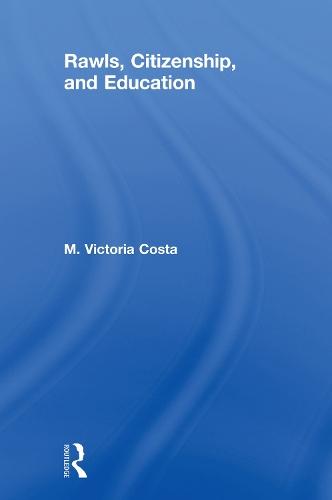
This book develops and applies a unified interpretation of John Rawls’ theory of justice as fairness in order to clarify the account of citizenship that Rawls relies upon, and the kind of educational policies that the state can legitimately pursue to promote social justice. Costa examines the role of the family as the ""first school of justice"" and its basic contribution to the moral and political development of children. It also argues that schools are necessary to supplement the education that families provide, teaching the political virtues that support just social institutions. The book also examines the questions of whether civic education should aim at cultivating patriotic feelings, and how it should respond to the deep cultural pluralism of contemporary democratic societies.
Full Product Details
Author: M. Victoria Costa (Florida State University, USA)
Publisher: Taylor & Francis Ltd
Imprint: Routledge
Volume: 21
Dimensions:
Width: 15.20cm
, Height: 1.50cm
, Length: 22.90cm
Weight: 0.249kg
ISBN: 9780415754385
ISBN 10: 0415754380
Pages: 168
Publication Date: 09 April 2014
Audience:
College/higher education
,
Tertiary & Higher Education
,
Undergraduate
Format: Paperback
Publisher's Status: Active
Availability: In Print

This item will be ordered in for you from one of our suppliers. Upon receipt, we will promptly dispatch it out to you. For in store availability, please contact us.
Reviews
While contemporary philosophical work on the importance of education has often resorted to Rawls's theory to argue for one type or another of educational policy, most of it has done so by reading Rawls in a rather selective and piecemeal manner. Costa's aim, in contrast, is to develop an integrated and systematic exploration of the implications that the theory of `justice as fairness' has for education for citizenship. ... Costa's book is a valuable addition to both Rawlsian and civic education scholarship. - Mihaela Georgieva, Maastricht University, Journal of Applied Philosophy
While contemporary philosophical work on the importance of education has often resorted to Rawls's theory to argue for one type or another of educational policy, most of it has done so by reading Rawls in a rather selective and piecemeal manner. Costa's aim, in contrast, is to develop an integrated and systematic exploration of the implications that the theory of 'justice as fairness' has for education for citizenship. ... Costa's book is a valuable addition to both Rawlsian and civic education scholarship. - Mihaela Georgieva, Maastricht University, Journal of Applied Philosophy
"""While contemporary philosophical work on the importance of education has often resorted to Rawls’s theory to argue for one type or another of educational policy, most of it has done so by reading Rawls in a rather selective and piecemeal manner. Costa’s aim, in contrast, is to develop an integrated and systematic exploration of the implications that the theory of ‘justice as fairness’ has for education for citizenship. ... Costa’s book is a valuable addition to both Rawlsian and civic education scholarship.""– Mihaela Georgieva, Maastricht University, Journal of Applied Philosophy"
Author Information
Victoria Costa is Assistant Professor of Philosophy at Illinois State University.