|
|
|||
|
||||
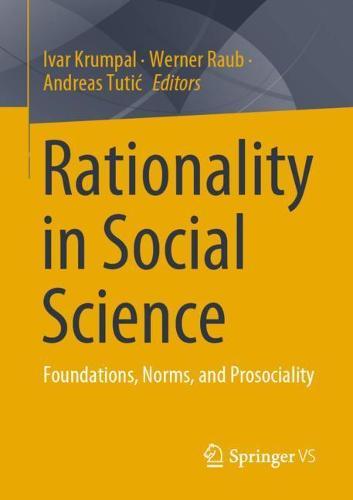
OverviewThe concept of rationality and its significance for theory and empirical research in social science are key topics of scholarly discussion. In the tradition of an analytical as well as empirical approach in social science, this volume assembles novel contributions on methodological foundations and basic assumptions of theories of rational choice. The volume highlights the use of rational choice assumptions for research on fundamental problems in social theory such as the emergence, dynamics, and effects of social norms and the conditions for cooperation and prosociality. Full Product DetailsAuthor: Ivar Krumpal , Werner Raub , Andreas TutićPublisher: Springer Fachmedien Wiesbaden Imprint: Springer VS Edition: 1st ed. 2021 Dimensions: Width: 14.80cm , Height: 1.60cm , Length: 21.00cm Weight: 0.400kg ISBN: 9783658335359ISBN 10: 3658335351 Pages: 292 Publication Date: 03 September 2021 Audience: Professional and scholarly , Professional & Vocational Format: Paperback Publisher's Status: Active Availability: Manufactured on demand We will order this item for you from a manufactured on demand supplier. Table of ContentsRationality in Social Science: Introduction.- From Pascal to Ellsberg: Paradoxes of Rationality Stimulate the Progress of Decision Theory.- Rationology, Rationality and Reason.- “Das Modell ist dafür nicht geeignet!” (“The Model is not Suitable for This!”): The Model of Frame Selection and a Corrective Replication of the Findings in the Fehr-Gächter Experiments on the Development of Cooperation in Public Good Situations.- Sociology in Times of Pandemic: Metatheoretical Considerations and the Example of the Covid-19 Crisis.- When Do People Follow the Behavior of Others? The Effects of Descriptive and Injunctive Norms, and the Werther Effect.- Revenge and Gratitude in Trust-Based Encounters. Experimental Evidence on Process-Based Reciprocity.- How More Severe Punishment Generates Less Norm Enforcement. Further Evidence of Paradoxical Effects of Norm Enforcement in Inspection Games.- Balancedness. Emerson’s theory in the Upanishads, in Cooperative Game Theory, and beyond.- Endogenizing Conditions for Cooperation of Rational Egoists.- Opposing Effects of Objective and Subjective Social Status on Prosociality: Theory and Quasi-Experiment.- Green Homeowners? An Empirical Application of Fischel’s Homevoter Hypothesis.- How can Employers Signal Trustworthiness to Job Seekers? Determinants of Employer Reputation.ReviewsAuthor InformationIvar Krumpal, Assistant Professor, Department of Sociology, University of LeipzigWerner Raub, Professor of Sociology, Department of Sociology and Interuniversity Center for Social Science Theory and Methodology (ICS), Utrecht UniversityAndreas Tutić, Heisenberg Fellow of the German Research Foundation, Department of Sociology, University of Leipzig Tab Content 6Author Website:Countries AvailableAll regions |
||||