|
|
|||
|
||||
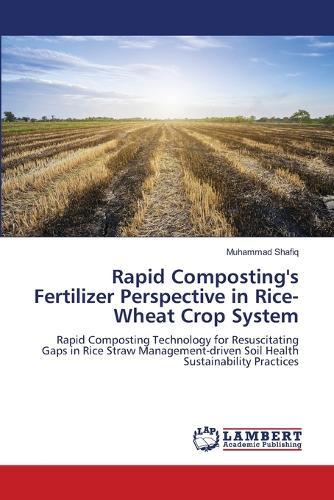
OverviewThe rice-wheat cropping system (RWCS) spans over >1.7 mha in Pakistan's Indo-Gangetic Plains, with yields (5 Mg ha⁻¹) remaining suboptimal due to degraded soil and water resources. Surveys of 11 Punjab rice-wheat belt cities revealed >90% of soils being deficient in SOM, SOC, PMN, and microbial biomass, with poor physical traits and suboptimal pH and EC. SOM and PMN losses particularly strongly correlated with reduced crop yields. Rice straw (RS), being a major RW residue and a key soil health sustainability driver, is commonly burned due to low feed value and fellow crop time constraints, contributing to air pollution and nutrient loss. This study developed rapid compost from RS using indigenous microorganisms (IMOs), producing mature rice straw compost (RSC). Field trials compared RSC, chemical fertilizer (CF), their combination (C+CF), and control. C+CF matched CF yields in first year and outperformed it by study end (3rd year)-achieving 6.415 and 4.545 t ha⁻¹ for rice and wheat, nearly double control. The approach reduced CF use by 40-50%, confirming that RSC improved soil health enhances productivity and supports sustainable intensification for Punjab's farmers. Full Product DetailsAuthor: Muhammad ShafiqPublisher: LAP Lambert Academic Publishing Imprint: LAP Lambert Academic Publishing Dimensions: Width: 15.20cm , Height: 1.00cm , Length: 22.90cm Weight: 0.231kg ISBN: 9786208449193ISBN 10: 6208449197 Pages: 168 Publication Date: 16 June 2025 Audience: General/trade , General Format: Paperback Publisher's Status: Active Availability: Available To Order We have confirmation that this item is in stock with the supplier. It will be ordered in for you and dispatched immediately. Table of ContentsReviewsAuthor InformationTab Content 6Author Website:Countries AvailableAll regions |
||||