Overview
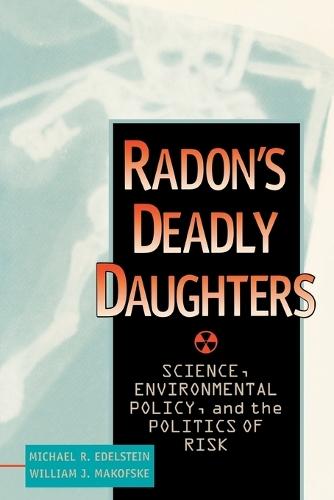
Five years after Three Mile Island awakened Americans to the dread of radioactive release, a new and potentially more consequential radioactive threat was discovered in a Pennsylvania home. Touted as the second major cause of lung cancer, the radon problem was prominent as a leading environmental risk. However, widespread acceptance of this risk has never materialized. In this vibrant account, Edelstein and Makofske unveil the complex mix of social and scientific factors that have led to public and official misunderstanding of the geologic radon issue. The lessons of radon have great relevance in a contaminated world where people are increasingly surrounded by invisible environmental hazards, where uncertainty and controversy shroud a clear understanding of the threat, and where one can choose apathetic acceptance or attempt to discern how to actively protect oneself and one's family.
Full Product Details
Author: Michael R. Edelstein ,
William J. Makofske
Publisher: Bloomsbury Publishing Plc
Imprint: Rowman & Littlefield
Dimensions:
Width: 14.90cm
, Height: 2.10cm
, Length: 22.70cm
Weight: 0.513kg
ISBN: 9780847683345
ISBN 10: 0847683346
Pages: 380
Publication Date: 18 December 1997
Audience:
College/higher education
,
Professional and scholarly
,
Undergraduate
,
Postgraduate, Research & Scholarly
Format: Paperback
Publisher's Status: Active
Availability: Manufactured on demand

We will order this item for you from a manufactured on demand supplier.
Reviews
As its subtitle promises, this is a book on radon policy, not radon psychology. Yet in another sense Radon's Deadly Daughters is very much a book about health psychology. How radon came to be framed as it did, and how the way it was framed affected policy and thus public health, are essentially questions of health psychology, questions that Edelstein and Makofske address with authority and insight. Journal Of Health Psychology The authors provide a persuasive, well-written case study in which radon policy is seen as a model of a failing, decentralized, free market approach to environmental hazards. The book provides a succesful weave of science, policy, and culture. This is a thought provoking book for those interested in understanding radon or risk assessment and for environmental planning faculty looking for a well written, comprehensive case study. Journal Of The American Planning Association
Author Information
Michael R. Edelstein is professor of environmental psychology at Ramapo College in New Jersey and the author of Contaminated Communities. William J. Makofske is professor of environmental physics at Ramapo College and the author of Technology and Global Environmental Issues. Both previously collaborated on Radon and the Environment.