|
|
|||
|
||||
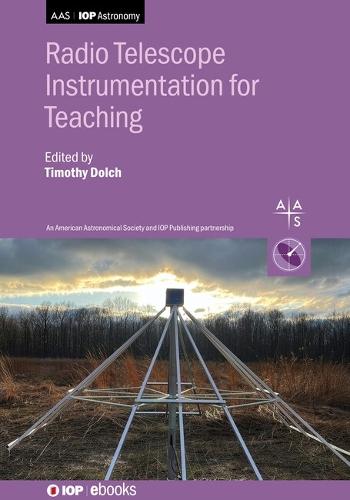
OverviewRadio Telescope Instrumentation for Teaching is designed for undergraduate physics instructors seeking to integrate radio astronomy into their courses. After optical astronomy, radio astronomy is the only ground-based method accessible with modest equipment, yet classroom projects can be challenging to implement. This book offers a range of projects, from introductory to advanced, covering standalone classroom systems, networked stations, and larger facilities involving student participation. Activities include observing Galactic hydrogen, Cygnus A, Cassiopeia A, solar bursts, Jovian emissions, and pulsars. Instrumentation options span online setups, small-scale equipment, and permanent small-dish telescopes, with advanced techniques like interferometry now feasible using affordable tools such as field-programmable gate arrays. Chapters are authored by experienced educators. Key Features: First book dedicated to developing radio astronomy projects in the classroom Gives the instructor a starting point for a variety of classroom projects Describes how rapid advances in computing have enabled locally-built radio telescopes to be accessible to undergraduate students Full Product DetailsAuthor: Timothy Dolch (Hillsdale College (United States))Publisher: Institute of Physics Publishing Imprint: Institute of Physics Publishing ISBN: 9780750356015ISBN 10: 0750356014 Pages: 244 Publication Date: 29 December 2025 Audience: Professional and scholarly , Professional & Vocational Format: Hardback Publisher's Status: Active Availability: In Print This item will be ordered in for you from one of our suppliers. Upon receipt, we will promptly dispatch it out to you. For in store availability, please contact us. Table of ContentsReviewsAuthor InformationTimothy Dolch is Associate Professor of Physics at Hillsdale College. He received his BS from the California Institute of Technology and his PhD in Physics & Astronomy from the Johns Hopkins University in 2012. Before joining the faculty of Hillsdale College, he held postdoctoral positions at Oberlin College and Cornell University, both with the North American Nanohertz Observatory for Gravitational Waves (NANOGrav) collaboration. In NANOGrav he has chaired the Education and Public Outreach Working Group. He is also a research scientist with Eureka Scientific, Inc. Tab Content 6Author Website:Countries AvailableAll regions |
||||