Overview
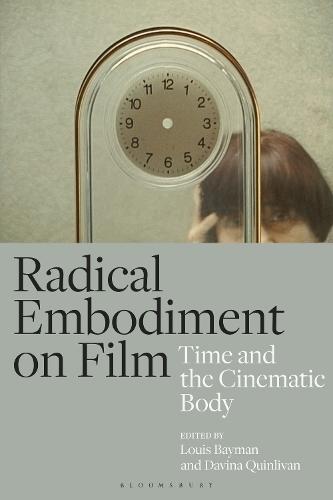
This innovative volume demonstrates the embodiment of time to be a vital part of the aesthetic experience of cinema. Analysing a broad range of films including Beasts of the Southern Wild (USA, 2012), Talk to Her (Spain, 2002), Millennium Actress (Japan, 2001), Jab Tak Hai Jaan (India, 2012), and Jinpa (China, 2018), contributors examine key questions of embodied time as represented on screen. They explore how cinematic time can be a way of rethinking the centrality of the individual, of depicting gendered differences, of decentring western perspectives to represent a widened global context, and of expanding what embodiment means in post-human narratives. The volume not only highlights specific discourses of radical, lived experience in film, but also considers how distinctions of race and class, gender and sexuality, migration, religion, and indigeneity affect these depictions of embodied subjectivity. Contributors: Emma Ben Ayoun, Louis Bayman, Andrés Buesa, Mariana Cunha, MaoHui Deng, Felipe Espinoza Garrido, Victor Fan, Sahika Erkonan, Joseph Jenner, Nick Jones, Kayla Meyers, Salma Monani, Davina Quinlivan, Francesca Sobande and Pinar Yildiz
Full Product Details
Author: Louis Bayman (Southampton University, UK) , Davina Quinlivan (University of Exeter)
Publisher: Bloomsbury Publishing PLC
Imprint: Bloomsbury Academic
Dimensions:
Width: 16.00cm
, Height: 1.60cm
, Length: 23.60cm
Weight: 0.500kg
ISBN: 9781350370623
ISBN 10: 1350370622
Pages: 232
Publication Date: 05 February 2026
Audience:
College/higher education
,
Tertiary & Higher Education
Format: Hardback
Publisher's Status: Forthcoming
Availability: Manufactured on demand 
Table of Contents
Section I: Embodying time and vulnerability 1. Beyond Victimhood: Childhood and Vulnerability in Contemporary Cinema - Andrés Buesa (University of Zaragoza, Spain) 2. On the Verge - Emma Ben Ayoun (University of Southern California, USA) 3. Ageing, Cinema, and the Hesitant Weight of Time - MaoHui Deng (University of Manchester, UK) 4. Cinema, Senses, Ethics: A Political and Artistic Analysis of Forgetting - Louis Bayman (University of Southampton, UK), Sahika Erkonan (Loughborough University, UK) and Pinar Yildiz (Berlin Freie University, Germany) Section II: Embodying gendered time 5. From She's All That to He's All That: Representing and reimagining time, beauty ideals, and gendered body norms - Francesca Sobande (Cardiff University, UK) 6. Moderating Glamour: Class, Race and the Femme Fatale in Consumer Culture - Katherine Farrimond (University of Sussex, UK) 7. Queer Visibility, Trans History and the Film Career of Robert Allen - Chris O’Rourke (University of Lincoln, UK) Section III: Embodying time in a global context 8. Mobility, Belonging and Bollywood’s London in Jab Tak Hai Jaan (Yash Chopra, 2012) - Kulraj Phullar (independent scholar, UK) 9. Buddhism as a technology of recognition: Pema Tseden’s Jinpa - Victor Fan (King’s College, London, UK) 10. Indigenous Cinema Times: Embodying Seven Generations - . Salma Monani (Gettysburg College, Pennsylvania, USA) Section IV: Embodying time beyond the Human 11. Exhausted Bodies, Exhausted Worlds: Trauma, Illness and Temporalities of Nature in Amazonian Films - Mariana Cunha (Federal University of Pernambuco/UFPE/CAPES, Brazil) 12. Total White-Out: The Temporality of Extinction in Anthropocene Filmmaking - Joseph Jenner (King’s College, London, UK) 13. Becoming Laika (Kapadia, 2021): Ambiguities of Time and the Body in Virtual Reality - . Davina Quinlivan (University of Bristol, UK) 14. Me2: Personifications of the Systemic Glitch - Nick Jones (University of York, UK) Bibliography Index
Reviews
In this diverse and thoughtfully curated collection, Bayman and Quinlivan have brought together a set of original and provocative chapters that delve deeply into how time is imbricated into our experience of cinema. Challenging the reader to examine what we may take for granted, Radical Embodiment demonstrates how the concept of embodied time is a way to focus on film’s political, environmental, and philosophical possibilities. A genuinely valuable evolution of film thinking on time and the body. -- Lucy Bolton, Professor of Film Philosophy, Queen Mary University of London, UK
Author Information
Louis Bayman is Associate Professor of Film Studies at the University of Southampton, UK. He is author of The Operatic and the Everyday in Postwar Italian Film Melodrama (2014) and co-editor of Folk Horror on Film: Return of the British Repressed (2023). Davina Quinlivan is a researcher, writer and curator, currently teaching at the University of Exeter, UK. She is author of Shalimar: A Story of Place and Migration (2022) and Filming the Body in Crisis: Trauma, Healing and Hopefulness (2015).
Tab Content 6
Author Website:
Countries Available
All regions
|