Overview
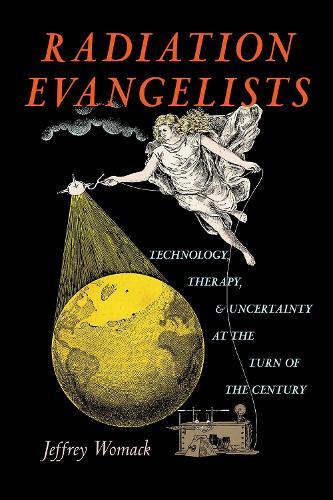
Radiation Evangelists explores X-ray and radium therapy in the United States and Great Britain during a crucial period of its development, from 1896 to 1925. It focuses on the pioneering work of early advocates in the field, the “radiation evangelists” who—motivated by their faith in a new technology, trust in new energy sources, and hope for future breakthroughs—turned a blind eye to the dangers of radiation exposure. Although ionizing radiation effectively treated diseases like skin infections and cancers, radiation therapists—who did not need a medical education to develop or administer procedures or sell tonics containing radium—operated in a space of uncertainty about exactly how radiation worked or would affect human bodies. And yet radium, once a specialized medical treatment, would eventually become a consumer health product associated with the antibacterial properties of sunlight. In this cautionary tale of technological medical progress, Jeffrey Womack reveals how practitioners and their patients accepted uncertainty as a condition of their therapy in an attempt to alleviate human suffering. In this cautionary tale of technological medical progress, Jeffrey Womack reveals how practitioners and their patients accepted uncertainty as a condition of their therapy in an attempt to alleviate human suffering.
Full Product Details
Author: Jeffrey Womack
Publisher: University of Pittsburgh Press
Imprint: University of Pittsburgh Press
ISBN: 9780822968092
ISBN 10: 0822968096
Pages: 288
Publication Date: 17 March 2026
Audience:
Professional and scholarly
,
Professional & Vocational
Format: Paperback
Publisher's Status: Active
Availability: In Print

This item will be ordered in for you from one of our suppliers. Upon receipt, we will promptly dispatch it out to you. For in store availability, please contact us.
Language: English
Reviews
Womack's book presents a captivating account of the early history of the contentious practice of radiation medical practitioners in Britain and America between 1895 and 1925. * British Journal for the History of Science * Womack provides a portrait of a technology that inspired optimism and enthusiasm, while killing some of its primary proponents. His engaging study effectively conveys the processes whereby medical innovations are often applied before they are understood. It is a story not so much of failure—radiation therapies have been effectively used for more than a century—but of the tangled path to success. * Isis * This is a very readable book. There are plenty of quirky characters, absorbing plot-lines, and riddles to solve. Womack takes clear delight in his subject matter, and he is an engaging writer. His real skill, however, and the thing that will make this book invaluable for undergraduate and graduate-level courses alike, is his ability to take a narrow slice of medical history and use it to unpack big, thorny problems such as medical professionalization and specialization, the boundary line between orthodoxy and quackery in nineteenth-century healthcare, and why certain technologies prove popular when others do not. You do not need to have a special interest in radiation therapies to find this book illuminating. * Journal of the History of Medicine and Allied Sciences * Although much has been written about the history of X-ray diagnosis, relatively little has been written about early radiation therapy. This impressive book helps to fill that gap. Drawing from a rich array of sources, Jeffrey Womack shows how early adopters navigated an uncertain world and used their experiences to argue for skepticism in the face of new technology. -- Joel D. Howell, University of Michigan “This careful and clever study of radiation's evangelists casts a penetrating light on everything from geopolitics to medical professionalization. Womack has found voices from the struggle for acceptance of radiation therapy both familiar and underappreciated, and put them in service to a narrative that will be of great interest to historians of science, medicine, and technology.” -- Matthew Lavine, author of The First Atomic Age: Scientists, Radiations and the American Public, 1845–1945
""This careful and clever study of radiation's evangelists casts a penetrating light on everything from geopolitics to medical professionalization. Womack has found voices from the struggle for acceptance of radiation therapy both familiar and underappreciated, and put them in service to a narrative that will be of great interest to historians of science, medicine, and technology.""--Matthew Lavine, author of The First Atomic Age: Scientists, Radiations and the American Public, 1845-1945 Although much has been written about the history of X-ray diagnosis, relatively little has been written about early radiation therapy. This impressive book helps to fill that gap. Drawing from a rich array of sources, Jeffrey Womack shows how early adopters navigated an uncertain world and used their experiences to argue for skepticism in the face of new technology.--Joel D. Howell, University of Michigan This is a very readable book. There are plenty of quirky characters, absorbing plot-lines, and riddles to solve. Womack takes clear delight in his subject matter, and he is an engaging writer. His real skill, however, and the thing that will make this book invaluable for undergraduate and graduate-level courses alike, is his ability to take a narrow slice of medical history and use it to unpack big, thorny problems such as medical professionalization and specialization, the boundary line between orthodoxy and quackery in nineteenth-century healthcare, and why certain technologies prove popular when others do not. You do not need to have a special interest in radiation therapies to find this book illuminating.-- ""Journal of the History of Medicine and Allied Sciences"" Womack provides a portrait of a technology that inspired optimism and enthusiasm, while killing some of its primary proponents. His engaging study effectively conveys the processes whereby medical innovations are often applied before they are understood. It is a story not so much of failure--radiation therapies have been effectively used for more than a century--but of the tangled path to success.-- ""Isis"" Womack's book presents a captivating account of the early history of the contentious practice of radiation medical practitioners in Britain and America between 1895 and 1925.-- ""British Journal for the History of Science""
Author Information
Jeffrey Womack earned his PhD in history from the University of Houston in 2016. He regularly collaborates with the College of Physicians of Philadelphia’s Historical Medical Library and Mütter Museum. He resides and teaches in Philadelphia.