Overview
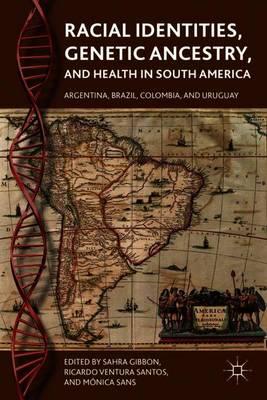
The edited collection brings together social and biological anthropology scholars, biologists, and geneticists to examine the interface between Genetic Admixture, Identity and Health, directly contributing to an emerging field of 'bio-cultural anthropology.
Full Product Details
Author: S. Gibbon ,
R. Santos ,
Kenneth A. Loparo
Publisher: Palgrave Macmillan
Imprint: Palgrave Macmillan
Dimensions:
Width: 14.00cm
, Height: 2.10cm
, Length: 21.60cm
Weight: 0.475kg
ISBN: 9780230110618
ISBN 10: 0230110614
Pages: 256
Publication Date: 15 November 2011
Audience:
College/higher education
,
Postgraduate, Research & Scholarly
Format: Hardback
Publisher's Status: Active
Availability: In Print

This item will be ordered in for you from one of our suppliers. Upon receipt, we will promptly dispatch it out to you. For in store availability, please contact us.
Reviews
This is an exceedingly original, interesting, and very important work for anthropology. Its major strength is its conceptual sophistication and the potential to make a substantial, groundbreaking contribution in anthropology, science studies, and global health. This is bio-cultural anthropology at its best. --Jonathan Marks, Department of Anthropology, UNC-Charlotte For those working in the field of medical/population genetics and bioethics in Brazil, this book is more than welcome. It raises sensitive issues daily present in our South American population, namely, the question of genetic admixture, its consequences for social and political life, and implications for health. <br>--Lavinia Schuler-Faccini, Genetics Department, Universidade Federal do Rio Grande do Sul, Brazil and Jose Roberto Goldim, head of the Bioethics Division at the Hospital de Clinicas, Porto Alegre, Brasil<br><br>
This is an exceedingly original, interesting, and very important work for anthropology. Its major strength is its conceptual sophistication and the potential to make a substantial, groundbreaking contribution in anthropology, science studies, and global health. This is bio-cultural anthropology at its best. - Jonathan Marks, Department of Anthropology, UNC-Charlotte For those working in the field of medical/population genetics and bioethics in Brazil, this book is more than welcome. It raises sensitive issues daily present in our South American population, namely, the question of genetic admixture, its consequences for social and political life, and implications for health. <br> - Lavinia Schuler-Faccini, Genetics Department, Universidade Federal do Rio Grande do Sul, Brazil and Jose Roberto Goldim, head of the Bioethics Division at the Hospital de Clinicas, Porto Alegre, Brasil<br><br>
Author Information
SAHRA GIBBON has a Lectureship at University College London, UK. MÓNICA SANS is Director in the Biological Anthropology Department at Universidad de la República, Uruguay. RICARDO VENTURA SANTOS is Professor at Federal University of Rio de Janeiro, Brazil.