Overview
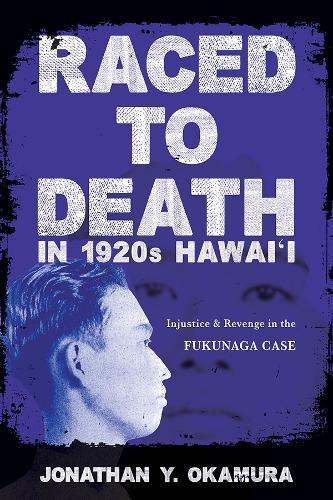
On September 18, 1928, Myles Yutaka Fukunaga kidnapped and brutally murdered ten-year-old George Gill Jamieson in Waikîkî. Fukunaga, a nineteen-year-old nisei, or second-generation Japanese American, confessed to the crime. Within three weeks, authorities had convicted him and sentenced him to hang, despite questions about Fukunaga's sanity and a deeply flawed defense by his court-appointed attorneys. Jonathan Y. Okamura argues that officials ""raced"" Fukunaga to death—first viewing the accused only as Japanese despite the law supposedly being colorblind, and then hurrying to satisfy the Haole (white) community's demand for revenge. Okamura sets the case against an analysis of the racial hierarchy that undergirded Hawai'ian society, which was dominated by Haoles who saw themselves most threatened by the islands' sizable Japanese American community. The Fukunaga case and others like it in the 1920s reinforced Haole supremacy and maintained the racial boundary that separated Haoles from non-Haoles, particularly through racial injustice. As Okamura challenges the representation of Hawai i as a racial paradise, he reveals the ways Haoles usurped the criminal justice system and reevaluates the tense history of anti-Japanese racism in Hawai i.
Full Product Details
Author: Jonathan Y Okamura
Publisher: University of Illinois Press
Imprint: University of Illinois Press
Dimensions:
Width: 15.20cm
, Height: 1.80cm
, Length: 22.90cm
Weight: 0.340kg
ISBN: 9780252084430
ISBN 10: 0252084438
Pages: 252
Publication Date: 06 August 2019
Audience:
Professional and scholarly
,
Professional & Vocational
Format: Paperback
Publisher's Status: Active
Availability: Manufactured on demand

We will order this item for you from a manufactured on demand supplier.
Reviews
The color line in the United States has historically been and continues to be White vs. Black, yet the salient strength of Raced to Death is to make evident that the color line is, more accurately, White vs. Non-White. --Karen L. Ishizuka, author of Serve the People: Making Asian America in the Long Sixties Okamura's work opens the door for further reflection on how this history fits into larger patterns of U.S. race relations. --Nichi Bei Weekly A fascinating account linking racism to colonialism, labor, and criminal justice in an unexpected setting. Okamura's book makes it impossible to forget Hawai i when studying comparative race and ethnic relations. --Lon Kurashige, author of Two Faces of Exclusion: The Untold History of Anti-Asian Racism in the United States
A fascinating account linking racism to colonialism, labor, and criminal justice in an unexpected setting. Okumura's book makes it impossible to forget Hawai i when studying comparative race and ethnic relations.--Lon Kurashige, author of Two Faces of Exclusion: The Untold History of Anti-Asian Racism in the United States The color line in the United States has historically been and continues to be White vs. Black, yet the salient strength of Raced to Death is to make evident that the color line is, more accurately, White vs. Non-White.--Karen L. Ishizuka, author of Serve the People: Making Asian America in the Long Sixties
A fascinating account linking racism to colonialism, labor, and criminal justice in an unexpected setting. Okamura's book makes it impossible to forget Hawai i when studying comparative race and ethnic relations.--Lon Kurashige, author of Two Faces of Exclusion: The Untold History of Anti-Asian Racism in the United States The color line in the United States has historically been and continues to be White vs. Black, yet the salient strength of Raced to Death is to make evident that the color line is, more accurately, White vs. Non-White.--Karen L. Ishizuka, author of Serve the People: Making Asian America in the Long Sixties
The color line in the United States has historically been and continues to be White vs. Black, yet the salient strength of Raced to Death is to make evident that the color line is, more accurately, White vs. Non-White. --Karen L. Ishizuka, author of Serve the People: Making Asian America in the Long Sixties Okamura's work opens the door for further reflection on how this history fits into larger patterns of U.S. race relations. --Nichi Bei Weekly A fascinating account linking racism to colonialism, labor, and criminal justice in an unexpected setting. Okamura's book makes it impossible to forget Hawai i when studying comparative race and ethnic relations. --Lon Kurashige, author of Two Faces of Exclusion: The Untold History of Anti-Asian Racism in the United States
A fascinating account linking racism to colonialism, labor, and criminal justice in an unexpected setting. Okamura's book makes it impossible to forget Hawai i when studying comparative race and ethnic relations. --Lon Kurashige, author of Two Faces of Exclusion: The Untold History of Anti-Asian Racism in the United States The color line in the United States has historically been and continues to be White vs. Black, yet the salient strength of Raced to Death is to make evident that the color line is, more accurately, White vs. Non-White. --Karen L. Ishizuka, author of Serve the People: Making Asian America in the Long Sixties
Author Information
Jonathan Y. Okamura is a professor in the Department of Ethnic Studies at the University of Hawai i. He is the author of several books, most recently From Race to Ethnicity: Interpreting Japanese American Experiences in Hawai i.