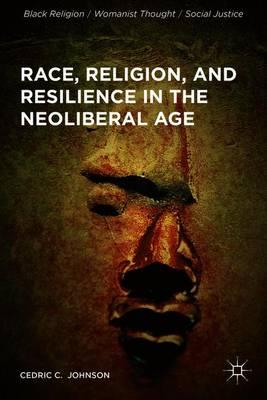
Full Product Details
Author: Cedric C. Johnson
Publisher: Palgrave Macmillan
Imprint: Palgrave Macmillan
Edition: 1st ed. 2016
Dimensions:
Width: 14.00cm
, Height: 1.40cm
, Length: 21.60cm
Weight: 3.992kg
ISBN: 9781137573209
ISBN 10: 1137573201
Pages: 212
Publication Date: 30 November 2015
Audience:
Professional and scholarly
,
Professional & Vocational
Format: Hardback
Publisher's Status: Active
Availability: In Print

This item will be ordered in for you from one of our suppliers. Upon receipt, we will promptly dispatch it out to you. For in store availability, please contact us.
Reviews
Cedric Johnson is the leading theorist and scholar of prophetic soul care in the country. This sophisticated analysis of the neoliberal age and powerful call for spirit-filled resistance confirms this status. Visionary, courageous, and empowering! - Cornel West This work is historical, theological, and radically contextual. Johnson examines many of the favored theories and perspectives appropriated by pastoral theology in its discourse on care and counseling. He insists that the privilege previously afforded pastoral theologies of care have been without regard for the lived realities of those excluded from the center of theological constructive works. We will not read or write pastoral theology the same after seriously considering the implications of this work. - Phillis Isabella Sheppard, Interim Associate Dean for Academic Affairs and Associate Professor of Religion, Psychology, and Culture, Vanderbilt Divinity School, USA In this bold piece of scholarship, Johnson assesses the traumatic impact of neoliberalism upon the African American community. Unlike many cultural criticisms that stop at socio-political analysis, he passionately moves to a praxis approach with keen analytical insight and the hope of transformation. This book presents counter-cultural congregational rituals of soul care for healing the traumas and devastations experienced by African Americans. - Lee H. Butler, Jr., Interim Vice President for Academics and Academic Dean, Professor of Theology and Psychology, and Founder, Center for the Study of Black Faith and Life, Chicago Theological Seminary, USA This book showcases twenty-first century pastoral theology at its very best. Johnson adopts an inter-disciplinary methodology to address the inter-locking challenges of our day. - Emmanuel Y. Lartey, L. Bevel Jones III, Chair of Pastoral Theology, Care and Counseling, Candler School of Theology, Emory University, USA
Cedric Johnson is the leading theorist and scholar of prophetic soul care in the country. This sophisticated analysis of the neoliberal age and powerful call for spirit-filled resistance confirms this status. Visionary, courageous, and empowering! - Cornel West This work is historical, theological, and radically contextual. Johnson examines many of the favored theories and perspectives appropriated by pastoral theology in its discourse on care and counseling. He insists that the privilege previously afforded pastoral theologies of care have been without regard for the lived realities of those excluded from the center of theological constructive works. We will not read or write pastoral theology the same after seriously considering the implications of this work. - Phillis Isabella Sheppard, Interim Associate Dean for Academic Affairs and Associate Professor of Religion, Psychology, and Culture, Vanderbilt Divinity School, USA In this bold piece of scholarship, Johnson assesses the traumatic impact of neoliberalism upon the African American community. Unlike many cultural criticisms that stop at socio-political analysis, he passionately moves to a praxis approach with keen analytical insight and the hope of transformation. This book presents counter-cultural congregational rituals of soul care for healing the traumas and devastations experienced by African Americans. - Lee H. Butler, Jr., Interim Vice President for Academics and Academic Dean, Professor of Theology and Psychology, and Founder, Center for the Study of Black Faith and Life, Chicago Theological Seminary, USA This book showcases twenty-first century pastoral theology at its very best. Johnson adopts an inter-disciplinary methodology to address the inter-locking challenges of our day. - Emmanuel Y. Lartey, L. Bevel Jones III, Chair of Pastoral Theology, Care and Counseling, Candler School of Theology, Emory University, USA Lee H. Butler, Jr. Caring for the Souls of Black Folk: Race, Religion, and Resilience in the Neoliberal Age is an intriguing study of an under-represented topic within pastoral theology. We are living in a time that has been marked by the haves and the have-nots. One of the responses of the faith community that has attempted to address the disparity of resources is the Prosperity Gospel Movement. This movement, however, was not critical of culture. Instead, it has been critical of individual performances of faith. Johnson proposes the rise of neoliberalism as the appropriate place to look to evaluate suffering that has resulted from disparity, in which he identifies race as an implicit feature of neoliberalism's ideological structure. He seems to be suggesting that neoliberalism is institutional racism reconstructed. Johnson intends to probe African American life to assess the traumatic impact of neoliberalism upon the African American community and to explore the religious rituals he contends are forms of African American soul care. He believes that concurrent with the rise of neoliberalism, African American congregations developed therapeutic rituals to counter the negative influences of neoliberalism. To the extent that he is calling neoliberalism a cultural expression, he is proposing that there are counter-cultural religious rituals that African American pastoral theology needs to examine more carefully. He further believes that congregational rituals of soul care are indigenous rituals that are communally, rather than individually, directed. Consequently, he is suggesting that pastoral theology, broadly conceived, could benefit by incorporating the variety of African American therapeutic traditions and practices into the work of soul care and the talking cure. I find his contextual identification of 'neoliberal age in the aftermath of the modern Civil Rights and Black Power movements' intriguing and find it to be an important shift for analyzing contemporary African American life. There is a generation of African Americans who interpret socio-political activities through the lenses of the Civil Rights movement. There is also a younger generation within African America who, in this post-Civil Rights era, does not relate to the stories nor appeal to the legacy of Civil Rights for interpreting socio-political activities. There is, therefore, a generational divide and differing assessments on community life. It is essential that new categories of analysis be developed that do not alienate either the Civil Rights or the post-Civil Rights critiques of social phenomena. Johnson's reflection will offer a new lens for assessment that neither diminishes nor neglects the stories of either generation. Johnson's voice is clear regarding scholarship on neoliberalism. He seems to be covering the terrain of the texts in the field. As I read his proposal, I have not heard anyone in the field of pastoral theology speak more comprehensively on the subject than Johnson. Because the only bibliographic information provided was contained in footnotes, I cannot comment on whether he makes full usage of the scholarship available. I wonder, for instance, how he understands the work of Manning Marable, who was critical of capitalism with regards to the underdevelopment of the Black community. Since Johnson's pastoral theological critique seems to be leaning toward the same claim, hearing his assessment of Marable will be interesting. The strength of Johnson's proposal is the new direction and reflection that he offers. The weakness of his proposal is that the descriptions of where he plans to go are more general than specific. It would have been helpful to see a Table of Contents to have a better sense of where he intends to go in each chapter. Yes, he provides chapter descriptions, which he notes as 'provisional,' yet working titles might have provided some of the details missing from the descriptions. For example, what are the 'commemorative rituals' and 'African diasporic religious practices' that he is examining? This work has great potential, but I would have appreciated more details. After he moves from his critical assessment of the neoliberal age to the traumas caused and experienced by the age, he makes a pastoral theological turn within his argument that presents his unique contribution to the discourse and practices of soul care and healing. I think he is headed down a great path with fruitful possibilities, yet without more details on the specific rituals he will reflect upon, I do not know if he is looking at the very best examples from the community. I can say, however, that I am intrigued by his placing African American Pentecostalism and Rastafarianism in dialogue to examine therapeutic ritual spaces. I do not think I have experienced such a dialogue, and I look forward to learning more from his reflections. This book will be perfect for the 'Black Religion/Womanist Thought/Social Justice Series.' The series has already published cutting edge Womanist pastoral theology. Johnson's work will add to the discussion and make a great contribution to the growing library of published works by the new generation of African American pastoral theologians. Because pastoral theology is an interdisciplinary field, his reflections cut across disciplines and fields. I suspect this book will not only make an impact on the ways neoliberalism is interpreted, it will also be profoundly informative for ritual studies scholars. Furthermore, due to the fact that pastoral theologians are now more constructive theologians in our reflections, Johnson's work will re-present the scholarly shift and direct attention to the healing resources within African and African American religious spaces that have been denied as being efficacious for the human experience. I recommend publication of this book. After the manuscript has undergone the usual editorial process, the book will make a valuable contribution to the field of African American pastoral theology, the academy, and the church. Once the book is ready to go into production, I will be happy to endorse the book.
Author Information
Cedric C. Johnson is Assistant Professor of Pastoral Theology and Congregational Care at Wesley Theological Seminary, USA. He joined Wesley's faculty after working over fifteen years in the field of community mental health, as a psychotherapist, clinical supervisor, and clinical director. His research interests include pastoral care and neoliberal globalization, postcolonial theory, trauma theory, and African American pastoral care.