Overview
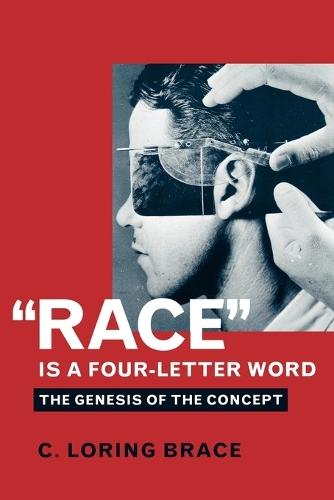
A tour de force work by a leading scholar, ""Race"" Is a Four-Letter Word explores the history of the concept of race in America, the reasons why the concept has no biological validity, and the ways in which it grew to become accepted as an idea that virtually everyone regards as self-evident. An ardent and eloquent opponent of typology, essentialism, and stereotyping, C. Loring Brace has based this engaging study on the ""Problems of Race"" course that he has taught at the University of Michigan for the past thirty-five years. Opening with an explanation of why the concept of race is biologically indefensible, ""Race"" Is a Four-Letter Word shows how the major elements of human biological variation have unrelated distributions and cannot be understood if the existence of ""races"" is assumed as a starting point. The book then examines the course of events that created the concept of race, journeying through time from Herodotus through Marco Polo; to the Renaissance and the role of the New World; on up to the American Civil War, the curious results of the alliance switch in World War I, Arthur Jensen, The Bell Curve, J. Philippe Rushton, and the Pioneer Fund in the twenty-first century. Ideal as a supplementary text in anthropology courses, ""Race"" Is a Four-Letter Word can also be used in history of science courses and sociology courses. It is captivating reading for professionals and anyone else who seeks enlightenment on the socially debatable issue of ""race.""
Full Product Details
Author: Brace
Publisher: Oxford University Press Inc
Imprint: Oxford University Press Inc
Dimensions:
Width: 15.50cm
, Height: 1.60cm
, Length: 23.40cm
Weight: 0.476kg
ISBN: 9780195173512
ISBN 10: 0195173511
Pages: 336
Publication Date: 17 February 2005
Audience:
Professional and scholarly
,
Professional & Vocational
Format: Paperback
Publisher's Status: Active
Availability: To order

Stock availability from the supplier is unknown. We will order it for you and ship this item to you once it is received by us.
Reviews
I found this book coherent, plausible, scholarly, engaging, and entertaining to read. If I were recommending this text to my colleagues, I would point to its thorough historical scope and scholarship, its ingratiating style, its distinctly individual voice, and its unique and valuable insights. This is a good, interesting, well-written book by someone who knows a great deal about both human biology and intellectual history. --Matt Cartmill, Professor of Anthropology, Duke University<br> The Brace manuscript is a tour de force. It represents a major contribution to our understanding of the history of race and racism. --George Armelagos, Professor of Anthropology, Emory University<br> This is a splendid manuscript on a much needed topic. The topic is timely and I have the greatest respect for the erudition and fine writing style that Dr. Brace provides in this original work. Dr. Brace is a highly respected biological anthropologist and this book will attract a wide reading audience of professionals and other readers who seek enlightenment on the socially debatable issue of race. --Kenneth A. R. Kennedy, Professor of Ecology and Evolutionary Biology, Anthropology, and Asian Studies, Cornell University<br> I would recommend this text without reservation to anyone who wants a detailed history of the idea of race in science. If one wants to know what individual scientists were doing and thinking, and one does not have time to read them, then this is THE BOOK. --Alan Goodman, Professor of Biological Anthropology, Hampshire College<br>
I found this book coherent, plausible, scholarly, engaging, and entertaining to read. If I were recommending this text to my colleagues, I would point to its thorough historical scope and scholarship, its ingratiating style, its distinctly individual voice, and its unique and valuable insights. This is a good, interesting, well-written book by someone who knows a great deal about both human biology and intellectual history. --Matt Cartmill, Professor of Anthropology, <em>Duke University</em> The Brace manuscript is a tour de force. It represents a major contribution to our understanding of the history of race and racism. --George Armelagos, Professor of Anthropology, <em>Emory University</em> This is a splendid manuscript on a much needed topic. The topic is timely and I have the greatest respect for the erudition and fine writing style that Dr. Brace provides in this original work. Dr. Brace is a highly respected biological anthropologist and this book will attract a wide reading audience of professionals and other readers who seek enlightenment on the socially debatable issue of race. --Kenneth A. R. Kennedy, Professor of Ecology and Evolutionary Biology, Anthropology, and Asian Studies, <em>Cornell University</em> I would recommend this text without reservation to anyone who wants a detailed history of the idea of race in science. If one wants to know what individual scientists were doing and thinking, and one does not have time to read them, then this is THE BOOK. --Alan Goodman, Professor of Biological Anthropology, <em>Hampshire College</em>