Overview
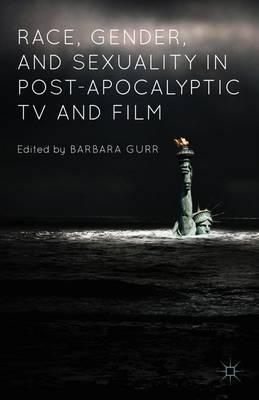
This book offers analyses of the roles of race, gender, and sexuality in the post-apocalyptic visions of early twenty-first century film and television shows. Contributors examine the production, reproduction, and re-imagination of some of our most deeply held human ideals through sociological, anthropological, historical, and feminist approaches.
Full Product Details
Author: Barbara Gurr ,
Brayton Polka
Publisher: Palgrave Macmillan
Imprint: Palgrave Macmillan
Edition: 1st ed. 2015
Dimensions:
Width: 14.00cm
, Height: 1.30cm
, Length: 21.60cm
Weight: 3.501kg
ISBN: 9781137501509
ISBN 10: 1137501502
Pages: 183
Publication Date: 06 October 2015
Audience:
Professional and scholarly
,
Professional & Vocational
Format: Hardback
Publisher's Status: Active
Availability: In Print

This item will be ordered in for you from one of our suppliers. Upon receipt, we will promptly dispatch it out to you. For in store availability, please contact us.
Reviews
Race, Gender, and Sexuality in Post-Apocalyptic TV and Film brings forth a substantial collection of scholars who delve into the social construction of gender and race in fantasy, science fiction and apocalyptic stories. Gurr has put together a collection rooted in cultural production and an examination of the intersectionality present in these worlds. This outstanding text will surely be enjoyed by students and fans alike. - Adrienne Trier-Bieniek, Professor and Chair, Sociology, Valencia College, USA Pop culture is filled with vampires and zombies, undead hipsters, and dubiously alive suburbanites. For this much-needed collection, Gurr has assembled a stellar set of thoughtful and provocative essays on the politics of post-apocalyptic culture. Ranging from the gender-queer possibilities of Battlestar Gallactica and True Blood to the troubling race, class, and gender politics of The Hunger Games and The Walking Dead, these critics range wide and deep through film and television images of a world in crisis. Students of mass media, speculative fiction, and feminist cultural studies will find this a helpful guidebook through the often confusing but always intriguing post-apocalyptic cultural universe. - Suzanna Danuta Walters, Director, Women's, Gender, and Sexuality Studies, Northeastern University, USA and author of The Tolerance Trap: How God, Genes, and Good Intentions are Sabotaging Gay Equality Barbara Gurr has done a fantastic job putting this collection together. The chapters are well-written, highly engaging, and cover a wide array of topics. Race, Gender, and Sexuality in Post-Apocalyptic TV and Film will make a great springboard for reflection and conversation in a range of social science, gender or media studies classes, and students are sure to enjoy reading it. - Patricia Leavy, PhD, author of Fiction as Research Practice and Method Meets Art, www.patricialeavy.com
Race, Gender, and Sexuality in Post-Apocalyptic TV and Film brings forth a substantial collection of scholars who delve into the social construction of gender and race in fantasy, science fiction and apocalyptic stories. Gurr has put together a collection rooted in cultural production and an examination of the intersectionality present in these worlds. This outstanding text will surely be enjoyed by students and fans alike. - Adrienne Trier-Bieniek, Professor and Chair, Sociology, Valencia College, USA Pop culture is filled with vampires and zombies, undead hipsters, and dubiously alive suburbanites. For this much-needed collection, Gurr has assembled a stellar set of thoughtful and provocative essays on the politics of post-apocalyptic culture. Ranging from the gender-queer possibilities of Battlestar Gallactica and True Blood to the troubling race, class, and gender politics of The Hunger Games and The Walking Dead, these critics range wide and deep through film and television images of a world in crisis. Students of mass media, speculative fiction, and feminist cultural studies will find this a helpful guidebook through the often confusing but always intriguing post-apocalyptic cultural universe. - Suzanna Danuta Walters, Director, Women's, Gender, and Sexuality Studies, Northeastern University, USA and author of The Tolerance Trap: How God, Genes, and Good Intentions are Sabotaging Gay Equality
Race, Gender, and Sexuality in Post-Apocalyptic TV and Film brings forth a substantial collection of scholars who delve into the social construction of gender and race in fantasy, science fiction and apocalyptic stories. Gurr has put together a collection rooted in cultural production and an examination of the intersectionality present in these worlds. This outstanding text will surely be enjoyed by students and fans alike. - Adrienne Trier-Bieniek, Professor and Chair, Sociology, Valencia College, USA Pop culture is filled with vampires and zombies, undead hipsters, and dubiously alive suburbanites. For this much-needed collection, Gurr has assembled a stellar set of thoughtful and provocative essays on the politics of post-apocalyptic culture. Ranging from the gender-queer possibilities of Battlestar Gallactica and True Blood to the troubling race, class, and gender politics of The Hunger Games and The Walking Dead, these critics range wide and deep through film and television images of a world in crisis. Students of mass media, speculative fiction, and feminist cultural studies will find this a helpful guidebook through the often confusing but always intriguing post-apocalyptic cultural universe. - Suzanna Danuta Walters, Director, Women's, Gender, and Sexuality Studies, Northeastern University, USA and author of The Tolerance Trap: How God, Genes, and Good Intentions are Sabotaging Gay Equality Barbara Gurr has done a fantastic job putting this collection together. The chapters are well-written, highly engaging, and cover a wide array of topics. Race, Gender, and Sexuality in Post-Apocalyptic TV and Film will make a great springboard for reflection and conversation in a range of social science, gender or media studies classes, and students are sure to enjoy reading it. - Patricia Leavy, PhD, author of Fiction as Research Practice and Method Meets Art, www.patricialeavy.com
Author Information
James Berger, Yale University, USA Robert Booth, University of Connecticut, USA Mary Burke, University of Vermont, USA Andrea Harris, Wright State University, USA Amanda Hobson, Ohio University, USA Sarah L. Jirek, Westmont College, USA Maura Kelly, Portland State University, USA Melissa F. Lavin, State University of New York at Oneonta, USA Brian M. Lowe, State University of New York at Oneonta, USA Kirk Lustila, University of Connecticut, USA Michelle Meagher, University of Alberta, Canada Stacy Missari, Quinnipiac University, USA Brent Strang, State University of New York at Stony Brook, USA Tracey Raney, Ryerson University, Canada J. Edward Sumerau, University of Tampa, USA