Overview
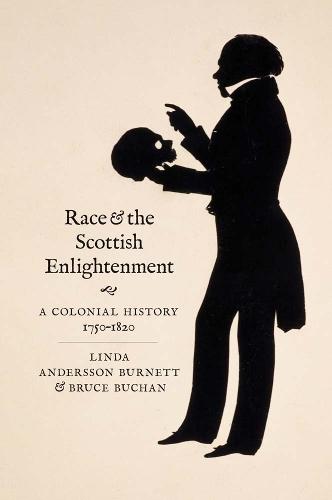
How colonialism shaped the Scottish Enlightenment's conception of race and humanity In the decades after 1750, an increasing number of former medical students from the University of Edinburgh construed humanity as a subject of both intellectual curiosity and colonial interest. They drew on a shared educational background, blending medicine with natural history and moral philosophy, in a range of encounters with non-European and Indigenous peoples across the globe whom they began to classify as races. Focusing on a surprising number of these understudied students, this book reveals the gradual predominance of race in Scottish Enlightenment thought. Teaching provided a toolbox of concepts and theories for students who went on to careers as military and naval surgeons, colonial administrators, and natural historians. While some, such as Mungo Park—who traveled in Africa—are well known, many others such as the long-term residents in the Russian Empire, Matthew Guthrie and his wife, Maria Guthrie, or the Caribbean botanist Alexander Anderson are less remembered. Among this group were those such as the Pacific traveler Archibald Menzies and the circumnavigator of Australia, Robert Brown, who are known primarily as botanists rather than as ethnographers. Together they formed a global network of colonial travelers and natural historians sharing a common educational background and a growing interest in race.
Full Product Details
Author: Linda Andersson Burnett ,
Bruce Buchan
Publisher: Yale University Press
Imprint: Yale University Press
ISBN: 9780300264388
ISBN 10: 0300264380
Pages: 304
Publication Date: 28 October 2025
Audience:
College/higher education
,
Postgraduate, Research & Scholarly
Format: Hardback
Publisher's Status: Active
Availability: Out of stock

The supplier is temporarily out of stock of this item. It will be ordered for you on backorder and shipped when it becomes available.
Reviews
“In this thoughtful and sophisticated account of ‘medicine as a meta-language of empire,’ Burnett and Buchan track the ideas of famed Enlightenment thinkers and their now-forgotten students. A necessary addition to the library of anyone interested in the history of race, imperialism, and healing during the ‘age of reason.’”—Suman Seth, Difference and Disease: Medicine, Race, and the Eighteenth-Century British Empire ""Combining intellectual, institutional, and biographical history in this groundbreaking study, Burnett and Buchan show that Edinburgh's emergence as one of the key centers of eighteenth-century race-making was deeply intertwined with the commercial and colonial imperatives of the era.”—Andrew Curran, author of The Race Makers: A Biographical History of the Most Dangerous Idea Ever Invented: From Louis XIV to Jefferson “This much-needed book reshapes the Scottish Enlightenment’s ‘science of man’ by connecting intellectual history with empire. Focusing on curriculum and colonization, the book explains why Enlightenment ideas of universal humanity became entwined with race. The authors thereby powerfully reassess Enlightenment’s global and colonial dimensions.”—Silvia Sebastiani, author of The Scottish Enlightenment: Race, Gender and the Limits of Progress ""A superb fusion of global history and micro-level analysis alongside a compelling account of the ways various Edinburgh-trained figures – including explorers, doctors, imperial officials – exported racial enquiry to almost every portion of the globe.""— Colin Kidd, University of St Andrews
Author Information
Linda Andersson Burnett is a senior lecturer in the Department of History of Science and Ideas at Uppsala University, Sweden. Bruce Buchan is a professor in the School of Humanities, Languages, and Social Science at Griffith University, Australia.