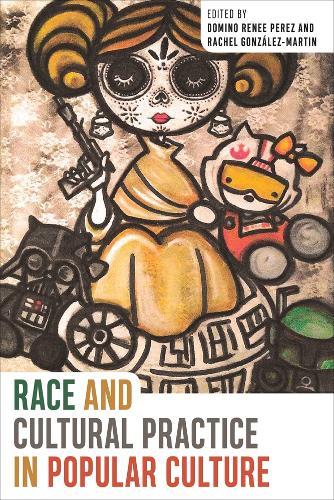
Full Product Details
Author: Domino Renee Perez ,
Rachel González-Martin ,
José Anguiano ,
Marcel Brousseau
Publisher: Rutgers University Press
Imprint: Rutgers University Press
Dimensions:
Width: 15.20cm
, Height: 3.00cm
, Length: 22.90cm
Weight: 0.425kg
ISBN: 9781978801301
ISBN 10: 1978801300
Pages: 308
Publication Date: 17 October 2018
Audience:
College/higher education
,
Professional and scholarly
,
Tertiary & Higher Education
,
Professional & Vocational
Format: Paperback
Publisher's Status: Active
Availability: In Print

This item will be ordered in for you from one of our suppliers. Upon receipt, we will promptly dispatch it out to you. For in store availability, please contact us.
Reviews
The ugly eruptions of racism and resurgent white supremacy in this 'post-racial' time are grim reminders of just how vital it is that we understand and engage the complex and contested logics of race in the United States and other settler states. This volume is an impressive and indeed essential tool for that purpose. The editors have brought together a community of thoughtful, provocative thinkers in conversation at the crossroads of folklore, popular culture, critical theory, political action, and lived experience. Collectively and individually the contributors take race and (self-) representation seriously, in often unexpected, sometimes playful, occasionally fierce, but always compelling ways; they challenge readers to reconsider our own biases and boundaries around knowledge and cultural production, and extend the horizon of what is and can be possible in our critical conversations and embodied understandings. Race and Cultural Practice in Popular Culture offers vital, nourishing intellectual sustenance in these cruel and incurious times. --Daniel Heath Justice author of Why Indigenous Literatures Matter Domino Perez and Rachel Gonz lez-Martin have assembled a dynamic and eclectic collection that urges us to see, hear, and place race and racialized representations beyond stereotypical, silenced, and sedentary subjectivities. Engaging the contemporary social politics of race in television, film, music, and other performative sites, Race and Cultural Practice in Popular Culture deftly reframes, remixes, and resituates discourse on folklore and pop culture to usher in nuanced understandings and challenging conversations befitting who we are and where we may be going as local and global creators, consumers, and critics of the popular. --Dustin Tahmahkera author of Tribal Television: Viewing Native People in Sitcoms
Domino Perez and Rachel Gonzalez-Martin have assembled a dynamic and eclectic collection that urges us to see, hear, and place race and racialized representations beyond stereotypical, silenced, and sedentary subjectivities. Engaging the contemporary social politics of race in television, film, music, and other performative sites, Race and Cultural Practice in Popular Culture deftly reframes, remixes, and resituates discourse on folklore and pop culture to usher in nuanced understandings and challenging conversations befitting who we are and where we may be going as local and global creators, consumers, and critics of the popular. --Dustin Tahmahkera author of Tribal Television: Viewing Native People in Sitcoms The ugly eruptions of racism and resurgent white supremacy in this 'post-racial' time are grim reminders of just how vital it is that we understand and engage the complex and contested logics of race in the United States and other settler states. This volume is an impressive and indeed essential tool for that purpose. The editors have brought together a community of thoughtful, provocative thinkers in conversation at the crossroads of folklore, popular culture, critical theory, political action, and lived experience. Collectively and individually the contributors take race and (self-) representation seriously, in often unexpected, sometimes playful, occasionally fierce, but always compelling ways; they challenge readers to reconsider our own biases and boundaries around knowledge and cultural production, and extend the horizon of what is and can be possible in our critical conversations and embodied understandings. Race and Cultural Practice in Popular Culture offers vital, nourishing intellectual sustenance in these cruel and incurious times. --Daniel Heath Justice author of Why Indigenous Literatures Matter
The ugly eruptions of racism and resurgent white supremacy in this 'post-racial' time are grim reminders of just how vital it is that we understand and engage the complex and contested logics of race in the United States and other settler states. This volume is an impressive and indeed essential tool for that purpose. The editors have brought together a community of thoughtful, provocative thinkers in conversation at the crossroads of folklore, popular culture, critical theory, political action, and lived experience. Collectively and individually the contributors take race and (self-) representation seriously, in often unexpected, sometimes playful, occasionally fierce, but always compelling ways; they challenge readers to reconsider our own biases and boundaries around knowledge and cultural production, and extend the horizon of what is and can be possible in our critical conversations and embodied understandings. Race and Cultural Practice in Popular Culture offers vital, nourishing intellectual sustenance in these cruel and incurious times. --Daniel Heath Justice author of Why Indigenous Literatures Matter Domino Perez and Rachel Gonzalez-Martin have assembled a dynamic and eclectic collection that urges us to see, hear, and place race and racialized representations beyond stereotypical, silenced, and sedentary subjectivities. Engaging the contemporary social politics of race in television, film, music, and other performative sites, Race and Cultural Practice in Popular Culture deftly reframes, remixes, and resituates discourse on folklore and pop culture to usher in nuanced understandings and challenging conversations befitting who we are and where we may be going as local and global creators, consumers, and critics of the popular. --Dustin Tahmahkera author of Tribal Television: Viewing Native People in Sitcoms
Author Information
DOMINO PEREZ is an associate professor of English at the University of Texas in Austin. She is the author of There Was a Woman: La Llorona from Folklore to Popular Culture. RACHEL GONZÁLEZ-MARTIN is an assistant professor of Mexican American and Latina/o studies at the University of Texas.