|
|
|||
|
||||
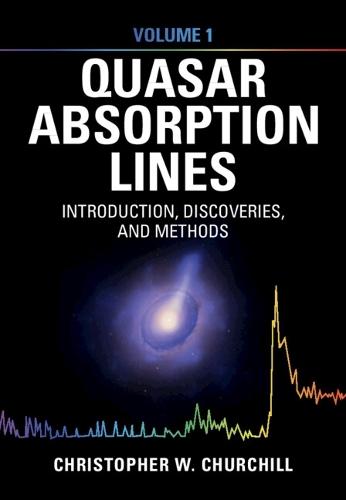
OverviewFull Product DetailsAuthor: Christopher W. Churchill (New Mexico State University)Publisher: Cambridge University Press Imprint: Cambridge University Press Weight: 0.500kg ISBN: 9780521867603ISBN 10: 0521867606 Pages: 838 Publication Date: 18 December 2025 Audience: College/higher education , Tertiary & Higher Education Format: Hardback Publisher's Status: Active Availability: Manufactured on demand We will order this item for you from a manufactured on demand supplier. Table of ContentsForeword Max Pettini; Preface; Part I. Breakthrough Astrophysics: 1. A new science; 2. Modern framework; 3. Introduction to methods; Part II. Intervening Absorbers: 4. Neutral hydrogen absorbers; 5. Deuterium and the big bang; 6. 21-cm absorption; 7. Helium absorption; 8. Low ionization metal-line absorbers; 9. Intermediate ionization metal-line absorbers; 10. The warm/hot diffuse universe; 11. High ionization metal-line absorbers. Part III. Galaxies and Their Gas: 12. Baryons and dark matter halos; 13. Studying the circumgalactic medium; 14. The nature of the circumgalactic medium; 15. Friends of friends and their gas; 16. Groups and clusters; 17. Starbursts, AGN, and quasars; 18. Active black holes and Eddington; 19. BALs, NALs, and QPQs; References; Index.ReviewsFrom the Foreword: 'The story of quasars and their absorption spectra accounts for just the first half of Professor Churchill's extraordinary two book set. [...] To collect all this encyclopedia of relevant knowledge [on quasars] under one assemblage has never been attempted before and is the phenomenal achievement of these two volumes. Students and experts in the field will find them an endless source of information and a much used reference text for many years to come.' Max Pettini, University of Cambridge Author InformationChristopher W. Churchill is a professor in the Department of Astronomy at New Mexico State University, where he leads the Quasar Absorption Line Galaxy Evolution Group, a collaboration between NMSU and several other international institutions. He has studied quasars for 30 years and published around 250 articles. His research has been featured on 'PBS Spacetime' and NPR and in 'New Scientist,' 'Scientific American,' 'The New York Times,' and 'The Washington Post.' He has taught astronomical spectroscopy for twenty years. This two-volume text consolidates these practical experiences. Tab Content 6Author Website:Countries AvailableAll regions |
||||