Overview
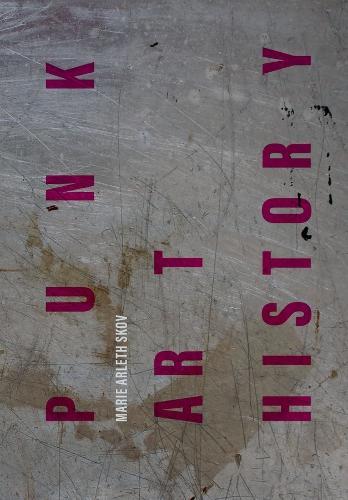
A history of pop, pain, poetry, and presence within a “no future” generation in the 1970s that refused to be the next art world avant-garde. The punk movement emerged during the mid-1970s, as young adults in the United Kingdom and Europe struggled to find steady employment. History was critical to the movement’s ethos. Punks rejected a narrative of supposed progress and prosperity, a rebuke evident in their visual art as well as their music. “No future,” the Sex Pistols sang, “there’s no future for you, no future for me.” Punk Art History examines punk as an art movement, combining archival research, interviews, and art historical analysis. Marie Arleth Skov draws on personal interviews with punk art figures from London, New York, Amsterdam, Copenhagen, and Berlin, including Die Tödliche Doris (The Deadly Doris), members of Værkstedet Værst (The Workshop Called Worst), Nina Sten-Knudsen, Marc Miller, Diana Ozon, and Hugo Kaagman. The book also features email correspondence with Jon Savage, Anna Banana, and Genesis Breyer P-Orridge. Many of these artists shared materials from their private archives with Skov, who examines a wide range of media: paintings, drawings, bricolages, collages, booklets, posters, zines, installations, sculptures, Super 8 mm films, documentation of performances and happenings, body art, and street art. She also discusses scandalous and spectacular public events like the Prostitution exhibition at the Institute of Contemporary Arts in London, which spurred walkouts and political debate with its graphic content, and Die Große Untergangsshow (The Grand Downfall Show) in West Berlin, a festival of “ingenious dilettantes.” Skov’s analysis reveals that punks saw themselves as the “rear-guards,” a rejection of the notion of progress inherent to the term “avant-garde.” After all, why would a “no future” movement want to lead the way for a culture they saw as doomed? Lively and accessible, Punk Art History will captivate students and scholars of art, design, and performance history, as well as readers with an interest in punk, music, fashion, feminism, and urban histories.
Full Product Details
Author: Marie Arleth Skov (Staatliche Museen zu Berlin, Germany)
Publisher: Intellect
Imprint: Intellect Books
Edition: New edition
Weight: 0.557kg
ISBN: 9781789387001
ISBN 10: 1789387000
Pages: 308
Publication Date: 19 May 2023
Audience:
General/trade
,
Professional and scholarly
,
General
,
Professional & Vocational
Format: Paperback
Publisher's Status: Active
Availability: Available To Order 
We have confirmation that this item is in stock with the supplier. It will be ordered in for you and dispatched immediately.
Table of Contents
"Acknowledgements 1 Prelude 1.1 What are we looking at? A punk art movement? 1.2 Negations, conflicts, and swindles: The elusiveness of punk 1.3 Case in point: The first Punk Art exhibition, 1978 1.4 Forty-five years of trying to capture the art in punk 2 Art Origins in the Story of Punk 2.1 The short version: From proto to post 2.2 Art school vs. hard school 2.3 Punk precursors: 1919, 1966, 1968 2.4 DIY: The DNA of punk 3 Pop Multiples, Camp Affirmations 3.1 Andy Warhol: ""Hero of the Punks"" 3.2 Hedonism as attack 3.3 Trash and travesty 4 The Weapons of the Underdog 4.1 Punk propaganda 4.2 Punk poetry 4.3 Crime as art, scandal as art 5 Art with No Future? 5.1 Originality and appropriation 5.2 Modernity in extremis 5.3 Avant-garde vs. rear-guard 6 Children Run Riot: The Art of the Infantile 6.1 Dead end kids 6.2 The Life of Sid Vicious: The sad, dead boy 6.3 ""Infancy conforms to nobody"" 7 Work vs. Play 7.1 Punk's homo ludens 7.2 Ingenious dilletantes 7.3 The Baby Wagner Lullaby, or: Brilliance blackout 8 SEX 8.1 Queer punks and dykes in high heels 8.2 Defiant prostitutes, porn artists & well-dressed whores 8.3 Sadism and submission 8.4 Punk feminism: Vamp up! 9 Pain and Presence 9.1 Performances and punches 9.2 ""It hurts and looks cool!"": Fetish fashion 9.3 Real romance? 10 Dystopian with a Twist 10.1 It's the end of the world 10.2 The Grand Downfall Show 10.3 Broken heroes, aces of failure 11 The Laws of the Lawless List of Interviews and Archives Notes Bibliography Index"
Reviews
“If you have ever wondered why you read about Marcel Duchamp in the morning, visit Kippenberger exhibitions in the afternoon, and listen to Black Flag or Suicide in a club at night, this is your book. It reveals the suspicion we’ve always had about the deep affinity between contemporary art and punk, that appropriation and do-it-yourself are the same, as much as the Sex Pistols’ ‘no future’ and Arthur Danto’s ‘The Death of Art.’ Marie Arleth Skov had that suspicion, because this is also a personal book: a story full of affinities shared in a wild cry that longs to destroy art in order to change life.” -- David G. Torres, art critic, curator, and professor, Barcelona “Punk Art History is an energetic, unique, and engaging exploration of punk’s relationship to both art and the associated discourse of art history. Marie Arleth Skov takes you along on a sometimes chaotic and dangerous journey, working the pressure points of her material focus with great detail, accuracy, and crossdisciplinary analysis.” -- Ian Trowell, independent scholar and writer, Cambridge “As an art historian who is both a fan and a scholar of punk, I have been waiting for someone to write this book! Punk Art History is the first real scholarly survey of both the art-historical influences and visual culture of the artists to emerge from punk in Europe and the United States. Rigorously researched and accessibly written, spanning Duchamp to Divine to Die Tödliche Doris, Marie Arleth Skov has finally written an art history that is truly punk AF.” -- Maria Elena Buszek, curator and professor, University of Colorado Denver
If you have ever wondered why you read about Marcel Duchamp in the morning, visit Kippenberger exhibitions in the afternoon, and listen to Black Flag or Suicide in a club at night, this is your book. It reveals the suspicion we've always had about the deep affinity between contemporary art and punk, that appropriation and do-it-yourself are the same, as much as the Sex Pistols' 'no future' and Arthur Danto's 'The Death of Art.' Marie Arleth Skov had that suspicion, because this is also a personal book: a story full of affinities shared in a wild cry that longs to destroy art in order to change life. -- David G. Torres, art critic, curator, and professor, Barcelona Punk Art History is an energetic, unique, and engaging exploration of punk's relationship to both art and the associated discourse of art history. Marie Arleth Skov takes you along on a sometimes chaotic and dangerous journey, working the pressure points of her material focus with great detail, accuracy, and crossdisciplinary analysis. -- Ian Trowell, independent scholar and writer, Cambridge As an art historian who is both a fan and a scholar of punk, I have been waiting for someone to write this book! Punk Art History is the first real scholarly survey of both the art-historical influences and visual culture of the artists to emerge from punk in Europe and the United States. Rigorously researched and accessibly written, spanning Duchamp to Divine to Die Toedliche Doris, Marie Arleth Skov has finally written an art history that is truly punk AF. -- Maria Elena Buszek, curator and professor, University of Colorado Denver
'I wish this book had been available to me when I was a 16-year-old punk in 2006 who had only ever read or heard of Legs McNeil and Gillian McCain’s Please Kill Me. [...] Indeed, we’re living in an exciting time for a burgeoning wealth of punk studies. The generations that follow will be offered a rich array of research, in part due to researchers like Marie Arleth Skov and Punk Art History for, what is offered in Skov’s monograph is a different view from those typically offered in mainstream punk histories. Skov’s writing is fresh and accessible – the density of her research could be easily overwhelming were it not for her engaging tone. The book exceeded my expectations, in that I assumed I was sitting down for a primer in punk – but was completely wrong. This is a highly academic monograph, written in a way that one might feel as if they’re seated with a close friend explaining a dense international network of ideas, and the artistic movements of which that network pays homage or may have in part, been bred from. Skov offers the research to her reader in delightful bite-sized, but well-written chapter sections. This book is a service to the movement and belongs among the shelves of any self-purported full-time (or, even, to quote Television Personalities, ‘part-time’) punks.' -- Emily Owens, Punk & Post-Punk 'Punk Art History is a dazzling and original exploration of punk’s relationship to contemporary art. Skov has produced a rigorously-researched, engaging, and accessible journey into punk’s art-historical foundations. Drawing on her PhD research, personal history, archival material, and interviews with those active within first-wave punk, Skov creates a tapestry of punk-art-history from Berlin, Copenhagen, Amsterdam, and London throughout the 1970s and 1980s. Her work is so rich it could be examined within a myriad of disciplines – art, music, subcultural studies, history, psychology – however, as a writer and researcher of punk and philosophy I found the philosophical threads running throughout Punk Art History the most fascinating and insightful aspect of her work. [...] Punk’s beauty lies in its ability to simultaneously embody both death and creation, and Skov demonstrates the plentiful ways in which punk-art captured this paradox. Furthermore, she eschews the ‘punk-as-postmodernism’ argument in favour of ‘punk-as-post-historical’, a reading which allows for a more fruitful discussion. [...] There is so much more to this work than I have managed to capture here – you’ll have to read it to find out.' Full review at Loud Women -- Grace Healy, Loud Women 'Capturing the sharp, subversive energy that fueled punk art and music, Punk Art History is a blistering, scintillating chronicle of rebellious brilliance' -- Foreword 'Skov describes incendiary punk artworks in vivid detail and with an eye for humor. The book is equally for scholars and for punk kids in cities with DIY music scenes.' -- Sarah Wolberg, Library Journal 'What Skov has achieved with this book is to shine the light on a much-ignored part of punk, pulling on exemplary research and an insightful vision to illuminate an important art movement. It will be a sourcebook on the subject for many years to come. It is an essential addition to any serious punk library. Skov is a Danish art historian, author and curator based in Berlin. She works on the subjects of music, art and sexuality, with a historical focus on Surrealism and the punk movement of the 1970–80s. She is also an international affiliate of the Punk Scholars Network, and it’s clear from this book that she knows, and loves, her subject well' Full review at Louder Than War -- Mark Ray, Louder Than War “If you have ever wondered why you read about Marcel Duchamp in the morning, visit Kippenberger exhibitions in the afternoon, and listen to Black Flag or Suicide in a club at night, this is your book. It reveals the suspicion we’ve always had about the deep affinity between contemporary art and punk, that appropriation and do-it-yourself are the same, as much as the Sex Pistols’ ‘no future’ and Arthur Danto’s ‘The Death of Art.’ Marie Arleth Skov had that suspicion, because this is also a personal book: a story full of affinities shared in a wild cry that longs to destroy art in order to change life.” -- David G. Torres, art critic, curator, and professor, Barcelona “Punk Art History is an energetic, unique, and engaging exploration of punk’s relationship to both art and the associated discourse of art history. Marie Arleth Skov takes you along on a sometimes chaotic and dangerous journey, working the pressure points of her material focus with great detail, accuracy, and crossdisciplinary analysis.” -- Ian Trowell, independent scholar and writer, Cambridge “As an art historian who is both a fan and a scholar of punk, I have been waiting for someone to write this book! Punk Art History is the first real scholarly survey of both the art-historical influences and visual culture of the artists to emerge from punk in Europe and the United States. Rigorously researched and accessibly written, spanning Duchamp to Divine to Die Tödliche Doris, Marie Arleth Skov has finally written an art history that is truly punk AF.” -- Maria Elena Buszek, curator and professor, University of Colorado Denver 'Punk Art History, which describes the history of artists, works and exhibitions that consciously stepped aside from the mainstream of art, is a refreshing reading experience precisely because it looks at Art history of the turn of the 1970s and 1980s from a fresh angle. Although the subculture formed around punk rock has already been studied in the 1970s, the areas of interest have recently expanded, as Skov brings out in this book, for example women's agency or scenes outside the Anglo-American context. Punk culture is also studied in new disciplines. Skov also reminds me that art history is a discipline where the study of punk culture is relatively new.' -- Riikka Niemelä, Tahiti - art history as a science [translated from Finnish through Google]
Author Information
Marie Arleth Skov is a Danish art historian and curator living in Berlin and the international affiliate of the Punk Scholars Network in Germany and Denmark. She works at the crossroads of art, sexuality and music, with a main historical focus on surrealism and the punk movement of the 1970s–1980s. Most recently, she co-curated the exhibition Claudia Skoda. Dressed to Thrill at Kulturforum, Berlin. She has previously written several articles as well as book chapters on punk x art.
Tab Content 6
Author Website:
Countries Available
All regions
|