Overview
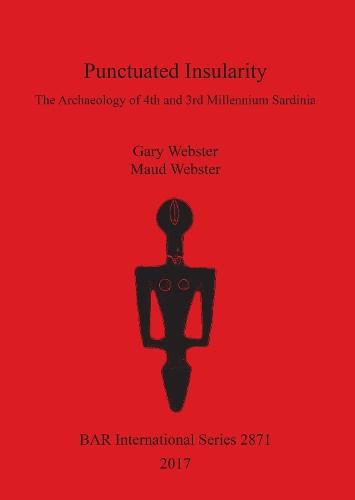
Sardinia preserves an exceptional record of its Final Neolithic and Copper Age cultures, with a diverse crafts repertory, henges and dolmens, statue-menhirs, chamber tombs - and the only known ziggurat in Europe. The present study provides a synthesis in English for a scholarly readership interested in Mediterranean adaptations during this earliest period of metallurgy. As elsewhere, the infusion of metallurgy had profound implications, as island cultures underwent a series of transformations tied directly or indirectly to it. Spanning two millennia, these changes are studied in terms of material cultures known as Ozieri, Sub-Ozieri, Filigosa-Abealzu, Monte Claro and Bell Beaker. A more overarching finding from this review is the periodic engagement between these cultures and geographically distant ones. Such punctuations of the insular condition had long-lasting effects on local expression, and some thoughts on how this might contribute to understandings of concepts like identity formation are presented by way of a conclusion. This book is a companion volume to The Sardinian Neolithic: An Archaeology of the 6th and 5th Millennia BCE by Gary Webster (2019).
Full Product Details
Author: Maud Webster ,
Gary Webster
Publisher: BAR Publishing
Imprint: BAR Publishing
Weight: 0.686kg
ISBN: 9781407316192
ISBN 10: 1407316192
Pages: 172
Publication Date: 31 October 2017
Audience:
Professional and scholarly
,
Professional & Vocational
Format: Paperback
Publisher's Status: Active
Availability: Available To Order

We have confirmation that this item is in stock with the supplier. It will be ordered in for you and dispatched immediately.
Reviews
'Presents an up-to-date overview of our knowledge about the Chalcolithic cultures of Sardinia and tackles several areas of research which are poorly understood and remain areas of debate, in a manner which is not limited to literature review, but includes also constructive critique of different interpretations of various aspects of evidence from the Copper Age Sardinia.' Cezary Namirski, Durham University 'There are no comparable syntheses, either in English or other languages, on the topic of Copper Age Sardinia. This is therefore a welcome addition to the somewhat limited English-speaking academic production on Sardinia, which, moreover, covers a much-neglected phase in the local prehistoric sequence.' Peer Reviewer 'This book reflects, in a very accurate way, the state-of-the-art specialist literature and shows deep knowledge of Sardinian prehistory on the part of the authors. It is a useful synthesis of research, which discusses one of the richest prehistoric cultural contexts of the Mediterranean.' Peer Reviewer
'Presents an up-to-date overview of our knowledge about the Chalcolithic cultures of Sardinia and tackles several areas of research which are poorly understood and remain areas of debate, in a manner which is not limited to literature review, but includes also constructive critique of different interpretations of various aspects of evidence from the Copper Age Sardinia.' Cezary Namirski, Durham University 'There are no comparable syntheses, either in English or other languages, on the topic of Copper Age Sardinia. This is therefore a welcome addition to the somewhat limited English-speaking academic production on Sardinia, which, moreover, covers a much-neglected phase in the local prehistoric sequence.' Peer Reviewer 'This book reflects, in a very accurate way, the state-of-the-art specialist literature and shows deep knowledge of Sardinian prehistory on the part of the authors. It is a useful synthesis of research, which discusses one of the richest prehistoric cultural contexts of the Mediterranean.' Peer Reviewer
'Presents an up-to-date overview of our knowledge about the Chalcolithic cultures of Sardinia and tackles several areas of research which are poorly understood and remain areas of debate, in a manner which is not limited to literature review, but includes also constructive critique of different interpretations of various aspects of evidence from the Copper Age Sardinia.' Cezary Namirski, Durham University 'There are no comparable syntheses, either in English or other languages, on the topic of Copper Age Sardinia. This is therefore a welcome addition to the somewhat limited English-speaking academic production on Sardinia, which, moreover, covers a much-neglected phase in the local prehistoric sequence.' Peer Reviewer 'This book reflects, in a very accurate way, the state-of-the-art specialist literature and shows deep knowledge of Sardinian prehistory on the part of the authors. It is a useful synthesis of research, which discusses one of the richest prehistoric cultural contexts of the Mediterranean.' Peer Reviewer
'Presents an up-to-date overview of our knowledge about the Chalcolithic cultures of Sardinia and tackles several areas of research which are poorly understood and remain areas of debate, in a manner which is not limited to literature review, but includes also constructive critique of different interpretations of various aspects of evidence from the Copper Age Sardinia.' Cezary Namirski, Durham University 'There are no comparable syntheses, either in English or other languages, on the topic of Copper Age Sardinia. This is therefore a welcome addition to the somewhat limited English-speaking academic production on Sardinia, which, moreover, covers a much-neglected phase in the local prehistoric sequence.' Peer Reviewer 'This book reflects, in a very accurate way, the state-of-the-art specialist literature and shows deep knowledge of Sardinian prehistory on the part of the authors. It is a useful synthesis of research, which discusses one of the richest prehistoric cultural contexts of the Mediterranean.' Peer Reviewer
Author Information
Gary Webster is a doctor of anthropology (PhD from Penn State University) and a docent of archaeology (Umeå University). He has published widely on theoretical issues as well as on archaeological field work, especially related to Bronze Age Sardinia. Maud Webster holds an MA in classical archaeology and ancient history from Uppsala University. Her research interests include Sardinian pre- and protohistory, and she has also written widely on Italian history.