Overview
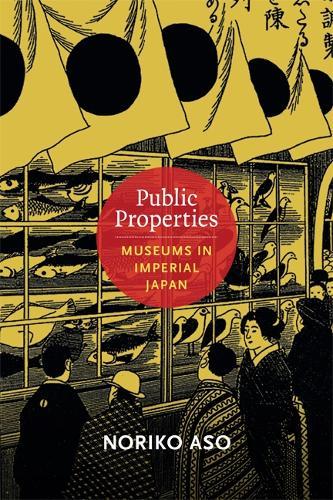
In the late nineteenth century, Japan's new Meiji government established museums to showcase a national aesthetic heritage. Inspired by Western museums and expositions, these institutions were introduced by government officials hoping to spur industrialization and self-disciplined public behavior, and to cultivate an ""imperial public"" loyal to the emperor. Japan's network of museums expanded along with its colonies. By the mid-1930s, the Japanese museum system had established or absorbed institutions in Taiwan, Korea, Sakhalin, and Manchuria. Not surprising, colonial subjects' views of Japanese imperialism differed from those promulgated by the Japanese state. Meanwhile, in Japan, philanthropic and commercial museums were expanding, revising, and even questioning the state-sanctioned aesthetic canon. Public Properties describes how museums in Japan and its empire contributed to the reimagining of state and society during the imperial era, despite vigorous disagreements about what was to be displayed, how, and by whom it was to be seen.
Full Product Details
Author: Noriko Aso
Publisher: Duke University Press
Imprint: Duke University Press
Dimensions:
Width: 15.20cm
, Height: 1.80cm
, Length: 22.90cm
Weight: 0.431kg
ISBN: 9780822354291
ISBN 10: 0822354292
Pages: 320
Publication Date: 27 November 2013
Audience:
College/higher education
,
Professional and scholarly
,
Postgraduate, Research & Scholarly
,
Professional & Vocational
Format: Paperback
Publisher's Status: Active
Availability: In Print

This item will be ordered in for you from one of our suppliers. Upon receipt, we will promptly dispatch it out to you. For in store availability, please contact us.
Reviews
By skillfully juxtaposing her analysis of government and private exhibition spaces, the author offers bold and compelling explanations for how artistic objects were used to create new publics that helped form collective identification with Japan's imperial state in the early twentieth century. No reader will fail to be edified by this thoughtful and instructive study. -- Tom Havens Journal of Japanese Studies [A]n important contribution to the emerging scholarship on museums as public properties in Japan during the Imperial period and is one for those interested in Japanese history, art history and museum studies. -- Eriko Kay Asian Affairs Public Properties demonstrates that Japan's development of museums reflected its growth into a modern nation-state. Yet the book is more than a history of the museum in modern Japan. Noriko Aso offers a comprehensive account of how public and private institutions came together in the formation of national and imperial ideals, pointing out how museums in Japan's colonies were conceived to take advantage of local conditions while emphasizing the larger mission of empire. -Stefan Tanaka, author of New Times in Modern Japan Aso's study is an intriguing, and refreshingly straightforward, examination of the shaping of the Japanese public... This is a remarkably accessible text highlighting a set of ideas with implications and lessons that reach far beyond the case study's time and place and straight into the musings of museum studies today, complete with reproductions of historical photographs, documentation and other ephemera that add a welcome visual touchstone to Aso's detailed accounts. -- Jessica Sattell JQ Magazine ... this book could easily be used as an exciting portal for introducing students to diverse aspects of modern Japanese history and its clever theoretical framework will undoubtedly serve Japan scholars well. -- Charles V. Reed H-Empire, H-Net Reviews Public Properties will be an important book in Japanese history and intersecting fields including colonial studies, public culture, art history, and museum studies. Noriko Aso shows how integral a modern museum culture was to the formation of an 'imperial public' in Japan during the late nineteenth century and early twentieth. She provides original perspectives on questions of collective identity and political culture during the imperial era and sheds new light on key issues in the field of modern Japanese history. -Leslie Pincus, author of Authenticating Culture in Imperial Japan: Kuki Shuzo and the Rise of National Aesthetics [Public Properties is] of interest to Japan and East Asia scholars as well as museum studies specialists... [The] book is a welcome addition to one of the most vibrant recent areas of scholarly attention, the place of aesthetics in the creation of modern Japanese nationalism. -- Mark Jones American Historical Review
Public Properties will be an important book in Japanese history and intersecting fields including colonial studies, public culture, art history, and museum studies. Noriko Aso shows how integral a modern museum culture was to the formation of an 'imperial public' in Japan during the late nineteenth century and early twentieth. She provides original perspectives on questions of collective identity and political culture during the imperial era and sheds new light on key issues in the field of modern Japanese history. --Leslie Pincus, author of Authenticating Culture in Imperial Japan: Kuku Shuzo and the Rise of National Aesthetics
Author Information
Noriko Aso is Associate Professor of History at the University of California, Santa Cruz.