Overview
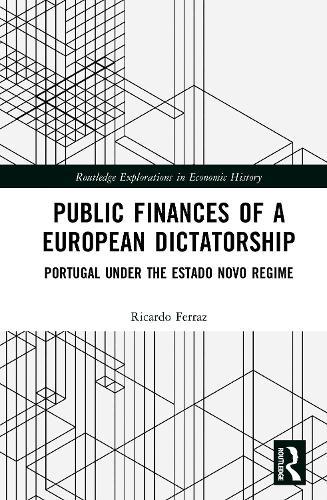
Contributing to the renewed interest in economic history in the role played by peripheral or smaller countries, this book provides a detailed analysis of Portuguese public finances during the Estado Novo regime (1933–1974) – a period marked by dictatorship, industrialization, internationalization, and war. In this book, relevant international comparisons for key macroeconomic indicators are drawn to contextualize the Portuguese case within global settings. Additionally, employing econometric techniques, the sustainability of public finances is assessed across a range of countries, enabling valuable insights for the Portuguese case within a comparative framework. Within Portugal, as the book shows, this period, largely under the dictatorship of Salazar, was characterized by the very first attempt to plan economically in the long term, with the Economic Reconstitution Law (1935–1950). Following the Second World War, and Portugal’s so-called collaborative neutrality, the Portuguese economy experienced a process of industrialization and internationalization, but this culminated in the Colonial War (1961–1974) with blood and tears. The book explores the sources of revenue and expenditure for the Portuguese State during these periods of transformation and crisis and the impact on budget balance and public debt. The book will be of interest to all readers in economic and financial history.
Full Product Details
Author: Ricardo Ferraz (Gabinete de História Económica e Social)
Publisher: Taylor & Francis Ltd
Imprint: Routledge
Weight: 0.530kg
ISBN: 9781032842868
ISBN 10: 1032842865
Pages: 192
Publication Date: 28 November 2025
Audience:
College/higher education
,
Postgraduate, Research & Scholarly
Format: Hardback
Publisher's Status: Active
Availability: Manufactured on demand

We will order this item for you from a manufactured on demand supplier.
Reviews
""With this book, Ricardo Ferraz makes a significant contribution to the fiscal and institutional history of Portugal. It reminds us that public finances are never neutral—they are shaped by ideologies, structured by political constraints, and carry consequences that transcend balance sheets. In tracing the fiscal pathways of a European dictatorship, this book compels us to reflect on the political uses of budgetary discipline and the long shadow that fiscal legacies cast on democratic transitions. I congratulate my dear friend and colleague, Ricardo, on another excellent piece of research and work. I encourage him to continue with his fine work, providing insightful analyses of Portuguese economic history"" Joaquim Miranda Sarmento, Associate Professor (with Agregação), ISEG, Lisbon School of Economics and Management, Universidade de Lisbo, Portugal. ""The present work by Ricardo Ferraz (...) brings to the attention of the international economic historians community the developments of a very interesting case. Not one that strongly influenced the evolution of the world, because of the size of the country. But one that achieved monetary and financial stability in the context of the Great Depression and the Second World War (and later of the Bretton Woods system); and one that achieved one of the most successful take-off processes during the post-Second World War golden age of economic growth. (...) Ricardo Ferraz’s book is certainly the ideal starting point to understand the intricate aspects of managing the public finances in such a process"". Nuno Valério, Full Professor ISEG, Lisbon School of Economics and Management, Universidade de Lisboa, Portugal.
Author Information
Ricardo Ferraz is a researcher at ISEG Research and RCM2+, and also a Visiting Assistant Professor at Lisbon School of Economics & Management (ISEG, University of Lisbon) and Lusófona University.