|
|
|||
|
||||
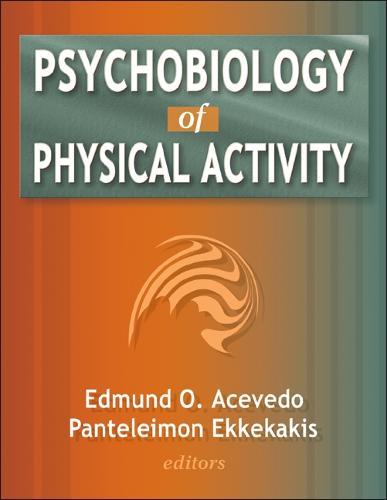
OverviewProfessional reference for exercise scientists, exercise and sport psychologists, and psychophysiologists; textbook for graduate students in psychobiology courses. Full Product DetailsAuthor: Edmund O. Acevedo , Panteleimon EkkekakisPublisher: Human Kinetics Publishers Imprint: Human Kinetics Dimensions: Width: 21.60cm , Height: 2.40cm , Length: 27.90cm Weight: 1.043kg ISBN: 9780736055369ISBN 10: 0736055363 Pages: 296 Publication Date: 16 January 2006 Recommended Age: From 18 to 99 years Audience: Adult education , Professional and scholarly , Further / Higher Education , Professional & Vocational Format: Hardback Publisher's Status: Out of Print Availability: In Print Limited stock is available. It will be ordered for you and shipped pending supplier's limited stock. Table of Contents"Part I: Introduction Chapter 1. Psychobiology of Physical Activity: Integration at Last! Edmund O. Acevedo and Panteleimon Ekkekakis -The Progress of Scientific Investigations -Secondary Ignorance and Dualism -Sport Psychology -Exercise Psychology -The Present Volume -References Chapter 2. Physical Activity and the Neurobiology of Interoception A.D. (Bud) Craig -Research Methods in the Neurobiology of Interoception -Primary Afferent Sensory Fibers From Muscle and Joint -Second-Order Neurons in Lamina I -Physiological Characteristics of Lamina I Neurons -Selective Response of Lamina I Neurons -Forebrain Projections of Lamina I Neurons -Interoception in Humans -Weaknesses and Limitations in the Literature -Directions for Future Investigation -References Chapter 3. Brain Activation During Physical Activity Jon W. Williamson -Central Cardiovascular Modulation -Brain Reorganization -Weaknesses and Limitations in the Literature -Directions for Future Investigation -References Part II: Physical Activity and Cognition Chapter 4. Aging, Physical Activity, and Neurocognitive Function Arthur F. Kramer and Charles H. Hillman -Fitness and Behavioral Indices of Cognition -Fitness Effects on Brain Function and Structure -Potential Mechanisms -Directions for Future Investigation -References Chapter 5. Exercise, Neurogenesis, and Learning in Rodents Henriette van Praag -Environmental Enrichment and Neurogenesis -Exercise and Neurogenesis -Other Anatomical Changes Associated With Exercise -Exercise Improves Learning and Memory in Rodents -Electrophysiological Changes Associated With Exercise -Growth Factor Effects on Neurogenesis and Running -The Role of Neurotransmitters in Running and Neurogenesis -Directions for Future Investigation -References Part III: Physical Activity and Emotion Chapter 6. Exertion and Pleasure From an Evolutionary Perspective Michel Cabanac -Sensations From Muscular Exertion -Hedonicity of Muscular Exertion -Hedonicity in Motivational Conflicts -Conclusions -References Chapter 7. Affective Responses to Acute Exercise Panteleimon Ekkekakis and Edmund O. Acevedo -The Intensity-Affect Relationship -The Inverted-U As a Dose-Response Model and Its Limitations -Previous Dose-Response Findings and Weaknesses in the Literature -The ""Next-Generation"" of Dose-Response Studies -The Dual-Mode Theory -A Putative Neural Pathway -Directions for Future Investigation -Conclusions -References Chapter 8. Physical Activity, Affect, and EEG Studies Steven J. Petruzzello, Panteleimon Ekkekakis, and Eric E. Hall -EEG Changes As a Result of Acute Exercise -A Model for EEG-Exercise-Affect Research -Potential Mechanisms Underlying Asymmetry -Directions for Future Investigation -Conclusions -References Chapter 9. Physical Activity and Neurotransmitter Release Romain Meeusen -Biosynthesis of Brain Monoamines -The Effects of Exercise on Anxiety and Depression -Exercise and Brain Neurotransmitter Concentrations -Central Fatigue -Neurotransmission and Overtraining -Weaknesses and Limitations in the Microdialysis Literature -Directions for Future Investigation -Conclusions -References Part IV: Physical Activity and Psychosomatic Health Chapter 10. The Cross-Stressor Adaptation Hypothesis and Exercise Training Mark S. Sothmann -Evolution of the Cross-Stressor Adaptation Hypothesis -Basic Elements of the Stress Response -Cross-Stressor Adaptation Hypothesis -Psychobiological Testing of the Cross-Stressor Hypothesis in Humans -Weaknesses and Limitations in the Literature -Directions for Future Investigation -Conclusions -References Chapter 11. Psychobiological Reactivity, Exercise, and Cardiovascular Health Stephen H. Boutcher and Mark Hamer -A Multifactorial Model of Cardiovascular Reactivity -Cardiovascular Reactivity Assessment -Reactivity Effects on Health -Chronic Aerobic Exercise and Reactivity -Acute Aerobic Exercise and Reactivity -Directions for Future Investigation -Conclusions -References Chapter 12. Exercise and Psychoneuroimmunology Suzi Hong and Paul J. Mills -The Immune System -Exercise as a Model for Psychoneuroimmunology Research -Enumerative Responses of the Immune System to Exercise -Functional Responses of the Immune System to Exercise -Cytokine Responses to Exercise -Regular Exercise and Psychoneuroimmunology -Directions for Future Investigation -Conclusions -References Chapter 13. Central Regulation of Stress Reactivity and Physical Activity Gregory A. Hand, Kenneth D. Phillips, and Marlene A. Wilson -The Physiological Stress Response -The Practical Significance of Studying Physical Activity and Stress -Measures of Stress Reactivity -Neural and Endocrine Systems That Respond to Stressful Stimulation -Weaknesses and Limitations in the Literature -Directions for Future Investigation -References Chapter 14. Physical Activity and Pain Dane B. Cook -Epidemiology of Musculoskeletal Pain -Neurobiology of Muscle Pain -Measurement of Muscle Pain -Naturally Occurring Muscle Pain -Analgesia During and Following Exercise -Muscle Pain As a Barrier to Physical Activity -Exercise As a Treatment for Chronic Musculoskeletal Pain -Muscle Pain As a Limiting Factor in Sport Performance -Directions for Future Investigation -References Part V: Psychobiology of Human Performance Chapter 15. A Cognitive Neuroscience Perspective on Sport Performance Bradley D. Hatfield, Amy J. Haufler, and Thomas W. Spalding -Regional Cortical Activity in Elite Performers -Contrasts of EEG Activity During Psychomotor Performance -Effects of Training on Cortical Activation -Performance Variation and Cortical Arousal -Networking Between Cortical Association and Motor Regions -Directions for Future Investigation -Conclusions -References Chapter 16. The Psychophysiology of Biofeedback and Sport Performance Dave Collins -Measuring the Physiological Index -Feedback Methods -Selecting the Index -Weaknesses and Limitations in the Literature -Directions for Future Investigation -Conclusions -References Chapter 17. The Psychophysiology of Imagery in Sport Paul S. Holmes -Theoretical Concerns -Functional Equivalence -Influencing Physiological Change -Image Generation -Imagery Modalities and Perspectives -Neuroscientific Implications for Imagery Use by Sport Performers -Indirect Evidence for the Mirror Neuron System -Direct Evidence for the Mirror Neuron System -Weaknesses and Limitations in the Literature -Directions for Future Investigation -Conclusions -References Epilogue. Future Challenges in Understanding Human Behavior Edmund O. Acevedo and Panteleimon Ekkekakis References Index About the Editors"ReviewsThe text puts research into practice and is informative in its approach to the study of human behaviour and physical activity. David R. Broom, PhD British Association of Sport and Exercise Science The text puts research into practice and is informative in its approach to the study of human behaviour and physical activity. <br>David R. Broom, PhD <br> British Association of Sport and Exercise Science <br> The text puts research into practice and is informative in its approach to the study of human behaviour and physical activity. David R. Broom, PhD British Association of Sport and Exercise Science Author InformationEdmund O. Acevedo, PhD, is an associate professor in the department of health, exercise science, and recreation management at the University of Mississippi and serves as director of the Applied Physiology Laboratory. For 20 years he has conducted research in the area of psychobiology of physical activity with a focus on the psychobiology of stress during physical activity. He has published in numerous journals and books and has made scientific presentations throughout the world. Dr. Acevedo is a fellow of the American College of Sports Medicine and a certified exercise specialist. He has served as a reviewer for 9 different journals in exercise and sport psychology, psychobiology, and exercise physiology. He is a member of the American Physiological Society, American Psychological Association, North American Society for the Psychology of Sport and Physical Activity, and Sigma Xi, the Scientific Research Society. In addition, he is a certified consultant of the Association for the Advancement of Applied Sport Psychology and has consulted with athletes and coaches at the professional, collegiate, and youth sport levels. Panteleimon Ekkekakis, PhD, is an assistant professor of exercise and sport psychology at the department of health and human performance at Iowa State University. His research focuses on the affective responses that accompany acute exercise of different intensities, their underlying psychobiological mechanisms, and their implications for exercise adherence over the long haul. His publications span the areas of theoretical and affective psychology, psychometrics, psychophysiology, exercise science, preventive and behavioral medicine, and obesity. Dr. Ekkekakis is a regular reviewer for many scientific journals, is a psychology section editor for Research Quarterly for Exercise and Sport, and serves on the editorial board of Psychology of Sport and Exercise. He is a fellow of the American College of Sports Medicine and a member of the North American Society for the Psychology of Sport and Physical Activity. Tab Content 6Author Website:Countries AvailableAll regions |
||||