Overview
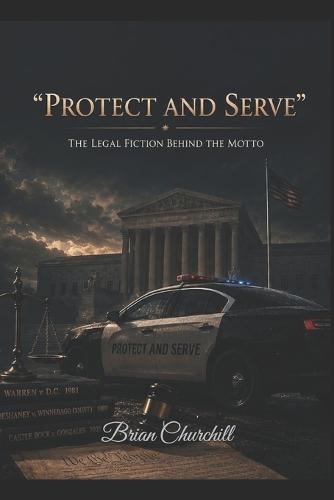
There is a phrase on the side of every police car in America. Most people have never questioned it. They absorbed it as children, heard it from teachers and politicians, watched it reinforced on television for decades, and accepted it as a statement of legal fact. It is not a legal fact. It is a motto. And the courts have been saying so for over forty years. ""Protect and Serve"" The Legal Fiction Behind the Motto examines what American courts have actually said about the government's legal obligation to protect individual citizens - and the answer is not what most Americans believe. Warren v. District of Columbia (1981) established that government has no general duty to provide police protection to any particular individual citizen. Three women called the police twice during a fourteen-hour assault. Officers came, knocked, and left. The court found no duty violated. DeShaney v. Winnebago County (1989) confirmed at the Supreme Court level that the Constitution was designed to protect people from the state - not to require the state to protect them from each other. The state of Wisconsin watched a four-year-old boy get beaten into permanent brain damage for two years and the Supreme Court found no constitutional violation. Castle Rock v. Gonzales (2005) established that even a court-issued restraining order with mandatory enforcement language does not create an individual enforceable right to police action. Three children were murdered while their mother called the police five times and was told to wait. Three courts. Three cases. Forty years. One answer. This book traces the full legal architecture behind that answer - the public duty doctrine, the negative constitution principle, qualified immunity, and the state-created danger exception. It examines the Slaughterhouse Cases of 1873 and the constitutional right to governmental protection that was designed into the Fourteenth Amendment and stripped out before it was ever fully developed. It examines the funding structure that makes police protection a mandatory financial obligation on the citizen's side while leaving the protective service legally discretionary on the government's side. And it examines why, given that the legal record has been clear since 1981, the American public has never been told what it says. This is not an anti-police book. It does not tell readers to distrust or resist law enforcement. It does something more foundational - it presents the legal record accurately, in plain language, so that Americans can understand the actual terms of their relationship with the government that governs them. The motto is on the car. The cases are in the record. The gap between them is what this book closes.
Full Product Details
Author: Brian Churchill
Publisher: Independently Published
Imprint: Independently Published
Volume: 3
Dimensions:
Width: 15.20cm
, Height: 1.30cm
, Length: 22.90cm
Weight: 0.340kg
ISBN: 9798196877339
Pages: 252
Publication Date: 14 May 2026
Audience:
General/trade
,
General
Format: Paperback
Publisher's Status: Active
Availability: Available To Order

We have confirmation that this item is in stock with the supplier. It will be ordered in for you and dispatched immediately.