Overview
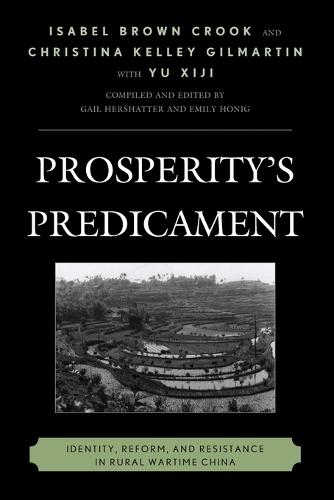
This classic in the annals of village studies will be widely read and debated for what it reveals about China's rural dynamics as well as the nature of state power, markets, the military, social relations, and religion. Built on extraordinarily intimate and detailed research in a Sichuan village that Isabel Crook began in 1940, the book provides an unprecedented history of Chinese rural life during the war with Japan. It is an essential resource for all scholars of contemporary China.
Full Product Details
Author: Isabel Brown Crook ,
Christina Kelley Gilmartin ,
Yu Xiji ,
Gail Hershatter
Publisher: Bloomsbury Publishing Plc
Imprint: Rowman & Littlefield
Dimensions:
Width: 15.10cm
, Height: 2.40cm
, Length: 22.80cm
Weight: 0.503kg
ISBN: 9781442252776
ISBN 10: 1442252774
Pages: 336
Publication Date: 27 October 2015
Audience:
Professional and scholarly
,
Professional & Vocational
Format: Paperback
Publisher's Status: Active
Availability: In Print

This item will be ordered in for you from one of our suppliers. Upon receipt, we will promptly dispatch it out to you. For in store availability, please contact us.
Reviews
Prosperity was a rural West China township of 1,500 households when the originators of this study arrived there in 1940 to conduct a social survey for a 'rural reconstruction' effort launched by Chinese reformers. The two women befriended the locals, gathering data on their livelihoods and many stories of small town life. More than 70 years later, the data and stories have been analyzed and interpreted with the help of three noted scholars of modern Chinese history. The result is a fascinating portrait of a village during a time of much hardship and war. The efforts of the Nationalist Chinese government and its allies to ban opium and gambling and alleviate poverty failed for the most part, the authors argue, due to their inability to dislodge entrenched interests that controlled opium, salt, taxes, and the military conscription process. The working out of power struggles over these issues, as well as women's and men's desperate strategies for surviving in this harsh world, are described with an immediacy that is invaluable. Although the war against Japan was being fought on distant battlefields, Prosperity clearly suffered its ill effects. Summing Up: Highly recommended. All levels/libraries. CHOICE It took seventy years to research, write, and complete this book, and the authors, editors, and various other contributors have illustrated their everlasting devotion to modern China by focusing on a small rural town called Prosperity (Daxing) near Chongqing, southwest China...The history of this book and the scholars that have contributed to it span over half a century and criss-cross the Asia-Pacific region; their observations and insights deliver important messages that we cannot afford to ignore...The value of this book is self-evident and is summed up by Gail Hershatter and Emily Honig in their introduction...The book is extremely readable, filled with many arresting stories...Prosperity's Predicament will be of interest to many world historians. H-Net: Humanities and Social Science Reviews Online This book contributes to the history of Republican China in two significant ways. First, it not only provides a unique case study of rural Han society with Sichuan characteristics, where the intersection of the Paoge, lineages, retired militia men and landlords form the local nexus of power, but also emphasizes the unprecedented Nationalist efforts at nation-building in southwestern China during the war and the ways in which these intensive penetrations triggered tensions between the state and local society...Second, thanks to the methodological orientation of Crook and Yu, this book offers a rare opportunity to look into more nuanced gender dynamics in rural society. The China Journal This a remarkable book, both in its content and in its formation...The result is a nuanced, detailed and sensitive piece of work that provides a model of collaborative scholarship...The book is a magnificent portrait of a small village before and during the war. Its combination of meticulous scholarship, assembled over the decades, with a humane and empathetic approach, means that any reader will be both better informed and deeply moved. Asian Studies Review The publication of this ethnographic material sheds precious light on an almost vanished world. Over seventy years ago, the daughter of Canadian missionaries was sent to study a village in rural Sichuan. Now in her nineties, she has collaborated with younger American scholars to bring out a volume that reconstructs the complexities and the hardships of pre-revolutionary rural China. -- Delia Davin, University of Leeds An extraordinary achievement, Prosperity's Predicament provides a window into a single village in Sichuan as it is thrust suddenly by war into the twentieth century. The book is both a well-told story of a year in the life of a market town and a perceptive microhistory of the failed effort by the state and well-meaning NGOs to effect reform and extract resources for the war effort. -- Stephen R. MacKinnon, Arizona State University This splendid achievement offers a worm's-eye view of how a Sichuan market community operated in wartime China, and focuses on the efforts of Republican-era reformers to win over local officials to the cause of rural reconstruction. Drawing on richly textured local history, and providing us with vivid snapshots of everyday material life, this presentation of Crook's research sheds light on the workings of a rural society that was not ready to surrender to the state-building plan of the Nationalist government. We owe much to Isabel Crook, as well as to the late Chris Gilmartin, for bringing the history of Prosperity and its predicament to our attention. -- Ralph A. Thaxton Jr., Brandeis University
Prosperity was a rural West China township of 1,500 households when the originators of this study arrived there in 1940 to conduct a social survey for a 'rural reconstruction' effort launched by Chinese reformers. The two women befriended the locals, gathering data on their livelihoods and many stories of small town life. More than 70 years later, the data and stories have been analyzed and interpreted with the help of three noted scholars of modern Chinese history. The result is a fascinating portrait of a village during a time of much hardship and war. The efforts of the Nationalist Chinese government and its allies to ban opium and gambling and alleviate poverty failed for the most part, the authors argue, due to their inability to dislodge entrenched interests that controlled opium, salt, taxes, and the military conscription process. The working out of power struggles over these issues, as well as women's and men's desperate strategies for surviving in this harsh world, are described with an immediacy that is invaluable. Although the war against Japan was being fought on distant battlefields, Prosperity clearly suffered its ill effects. Summing Up: Highly recommended. All levels/libraries. CHOICE It took seventy years to research, write, and complete this book, and the authors, editors, and various other contributors have illustrated their everlasting devotion to modern China by focusing on a small rural town called Prosperity (Daxing) near Chongqing, southwest China...The history of this book and the scholars that have contributed to it span over half a century and criss-cross the Asia-Pacific region; their observations and insights deliver important messages that we cannot afford to ignore...The value of this book is self-evident and is summed up by Gail Hershatter and Emily Honig in their introduction...The book is extremely readable, filled with many arresting stories...Prosperity's Predicament will be of interest to many world historians. H-Net: Humanities and Social Science Reviews Online This book contributes to the history of Republican China in two significant ways. First, it not only provides a unique case study of rural Han society with Sichuan characteristics, where the intersection of the Paoge, lineages, retired militia men and landlords form the local nexus of power, but also emphasizes the unprecedented Nationalist efforts at nation-building in southwestern China during the war and the ways in which these intensive penetrations triggered tensions between the state and local society...Second, thanks to the methodological orientation of Crook and Yu, this book offers a rare opportunity to look into more nuanced gender dynamics in rural society. The China Journal The publication of this ethnographic material sheds precious light on an almost vanished world. Over seventy years ago, the daughter of Canadian missionaries was sent to study a village in rural Sichuan. Now in her nineties, she has collaborated with younger American scholars to bring out a volume that reconstructs the complexities and the hardships of pre-revolutionary rural China. -- Delia Davin, University of Leeds An extraordinary achievement, Prosperity's Predicament provides a window into a single village in Sichuan as it is thrust suddenly by war into the twentieth century. The book is both a well-told story of a year in the life of a market town and a perceptive microhistory of the failed effort by the state and well-meaning NGOs to effect reform and extract resources for the war effort. -- Stephen R. MacKinnon, Arizona State University This splendid achievement offers a worm's-eye view of how a Sichuan market community operated in wartime China, and focuses on the efforts of Republican-era reformers to win over local officials to the cause of rural reconstruction. Drawing on richly textured local history, and providing us with vivid snapshots of everyday material life, this presentation of Crook's research sheds light on the workings of a rural society that was not ready to surrender to the state-building plan of the Nationalist government. We owe much to Isabel Crook, as well as to the late Chris Gilmartin, for bringing the history of Prosperity and its predicament to our attention. -- Ralph A. Thaxton Jr., Brandeis University
Prosperity was a rural West China township of 1,500 households when the originators of this study arrived there in 1940 to conduct a social survey for a 'rural reconstruction' effort launched by Chinese reformers. The two women befriended the locals, gathering data on their livelihoods and many stories of small town life. More than 70 years later, the data and stories have been analyzed and interpreted with the help of three noted scholars of modern Chinese history. The result is a fascinating portrait of a village during a time of much hardship and war. The efforts of the Nationalist Chinese government and its allies to ban opium and gambling and alleviate poverty failed for the most part, the authors argue, due to their inability to dislodge entrenched interests that controlled opium, salt, taxes, and the military conscription process. The working out of power struggles over these issues, as well as women's and men's desperate strategies for surviving in this harsh world, are described with an immediacy that is invaluable. Although the war against Japan was being fought on distant battlefields, Prosperity clearly suffered its ill effects. Summing Up: Highly recommended. All levels/libraries. * Choice Reviews * This book contributes to the history of Republican China in two significant ways. First, it not only provides a unique case study of rural Han society with Sichuan characteristics, where the intersection of the Paoge, lineages, retired militia men and landlords form the local nexus of power, but also emphasizes the unprecedented Nationalist efforts at nation-building in southwestern China during the war and the ways in which these intensive penetrations triggered tensions between the state and local society. . . .Second, thanks to the methodological orientation of Crook and Yu, this book offers a rare opportunity to look into more nuanced gender dynamics in rural society. * The China Journal * This a remarkable book, both in its content and in its formation. . . .The result is a nuanced, detailed and sensitive piece of work that provides a model of collaborative scholarship. . . .The book is a magnificent portrait of a small village before and during the war. Its combination of meticulous scholarship, assembled over the decades, with a humane and empathetic approach, means that any reader will be both better informed and deeply moved. * Asian Studies Review * It took seventy years to research, write, and complete this book, and the authors, editors, and various other contributors have illustrated their everlasting devotion to modern China by focusing on a small rural town called Prosperity (Daxing) near Chongqing, southwest China. . . .The history of this book and the scholars that have contributed to it span over half a century and criss-cross the Asia-Pacific region; their observations and insights deliver important messages that we cannot afford to ignore. . . .The value of this book is self-evident and is summed up by Gail Hershatter and Emily Honig in their introduction. . . .The book is extremely readable, filled with many arresting stories. . . .Prosperity's Predicament will be of interest to many world historians. * H-Net: Humanities and Social Science Reviews Online * The publication of this ethnographic material sheds precious light on an almost vanished world. Over seventy years ago, the daughter of Canadian missionaries was sent to study a village in rural Sichuan. Now in her nineties, she has collaborated with younger American scholars to bring out a volume that reconstructs the complexities and the hardships of pre-revolutionary rural China. -- Delia Davin, University of Leeds An extraordinary achievement, Prosperity’s Predicament provides a window into a single village in Sichuan as it is thrust suddenly by war into the twentieth century. The book is both a well-told story of a year in the life of a market town and a perceptive microhistory of the failed effort by the state and well-meaning NGOs to effect reform and extract resources for the war effort. -- Stephen R. MacKinnon, Arizona State University This splendid achievement offers a worm's-eye view of how a Sichuan market community operated in wartime China, and focuses on the efforts of Republican-era reformers to win over local officials to the cause of rural reconstruction.Drawing on richly textured local history, and providing us with vivid snapshots of everyday material life, this presentation of Crook's research sheds light on the workings of a rural society that was not ready to surrender to the state-building plan of the Nationalist government. We owe much to Isabel Crook, as well as to the late Chris Gilmartin, for bringing the history of Prosperity and its predicament to our attention. -- Ralph A. Thaxton Jr., Brandeis University
Author Information
Isabel Brown Crook is professor emerita at Beijing Foreign Studies University. Christina Kelley Gilmartin (1946–2012) was professor of history at Northeastern University. Yu Xiji (1914–2006) was professor emerita of child psychology at Teachers’ Training College in Beipei, Sichuan. Gail Hershatter is professor of history at the University of California, Santa Cruz, and past president of the Association for Asian Studies. Emily Honig is professor of history at the University of California, Santa Cruz.