|
|
|||
|
||||
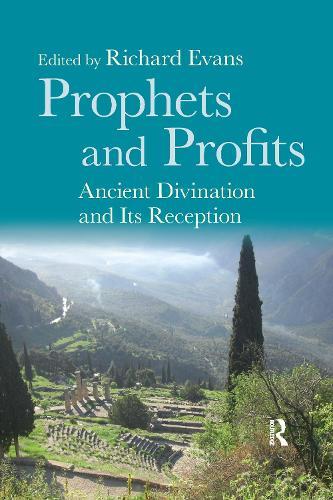
OverviewThis volume examines the ways in which divination, often through oracular utterances and other mechanisms, linked mortals with the gods, and places the practice within the ancient sociopolitical and religious environment. Whether humans sought knowledge by applying to an oracle through which the god was believed to speak or used soothsayers who interpreted specific signs such as the flight of birds, there was a fundamental desire to know the will of the gods. In many cases, pragmatic concerns – personal, economic or political – can be deduced from the context of the application. Divination and communication with the gods in a post-pagan world has also produced fascinating receptions. The presentation of these processes in monotheistic societies such as early Christian Late Antiquity (where the practice continued through the use of curse tablets) or medieval Europe, and beyond, where the role of religion had changed radically, provides a particular challenge and this topic has been little discussed by scholars. This volume aims to rectify this desideratum by providing the opportunity to address questions related to the reception of Greco-Roman divination, oracles and prophecy, in all media, including literature and film. Several contributions in this volume originated in the 2015 Classics Colloquium held at the University of South Africa and the volume has been augmented with additional contributions. Full Product DetailsAuthor: Richard EvansPublisher: Taylor & Francis Ltd Imprint: Routledge Weight: 0.385kg ISBN: 9780367594619ISBN 10: 0367594617 Pages: 254 Publication Date: 14 August 2020 Audience: College/higher education , Tertiary & Higher Education Format: Paperback Publisher's Status: Active Availability: In Print This item will be ordered in for you from one of our suppliers. Upon receipt, we will promptly dispatch it out to you. For in store availability, please contact us. Table of ContentsChapter 1: Introduction Daniel Ogden Chapter 2: Was Didyma (Branchidae) a False Prophet? Richard Evans Chapter 3: ‘Who Wrote Greek Curse Tablets?’ Olivier Dufault Chapter 4: A Story of Blood, Guts and Guesswork: Synthetic Reasoning in Classical Greek Divination Ralph Anderson Chapter 5: Value-Added Divination at Dodona Philip Bosman Chapter 6: Divination and Profit in the Roman World Federico Santangelo Chapter 7: Profiting from Prophecy: Q. Marcius Rex and the Construction of the Aqua Marcia Alex Nice Chapter 8: Valerius Maximus and the Language of Stars Jeffrey Murray Chapter 9: ""Arrows Fletched from Our Own Wings"": Discovering a ‘Delphi of the Mind’ in the Writings of the Early Church Fathers Daniel Crosby Chapter 10: Egyptian Necromancy in Heliodorus Aethiopica (6.12-15) and The Witch of Endor Narrative (1 Sam 28) John Hilton Chapter 11: Sosipatra: Prophetess, Philosopher and Theurgist: Reflections on Divination and Epistemology in Late Antiquity Crystal Addey Chapter 12: One Oracle too Many? Corippus and Procopius on Female Prophecy in North Africa Martine de Marre Chapter 13: Deconstructing Divination: Superstition, Anticlericalism, and Cicero’s De Divinatione in Enlightenment England Katherine East Chapter 14: Prophecy and Paul Kruger: Robert Grendon’s Appropriation of Greco-Roman Prophets and Prophetic Devices in his South African Epic, Paul Kruger’s Dream Szerdi Nagy Chapter 15: Cassandra Prophesies Back: Marion Zimmer Bradley’s Firebrand Elke SteinmeyerReviewsAuthor InformationRichard Evans has taught at the Universities of South Africa and Cardiff. His research has focused on the political and military history of Greece and Rome, and the ancient topography of Sicily and Magna Graecia. He is currently an Honorary Research Fellow in the Department of Biblical and Ancient Studies at the University of South Africa. Tab Content 6Author Website:Countries AvailableAll regions |
||||