Overview
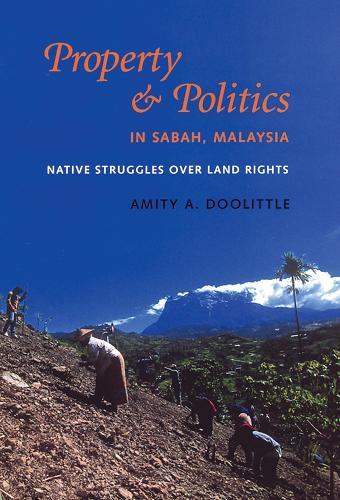
In 1990, shortly after a Malaysian politician announced that the boundaries of Kinabalu Park, a primary tourist destination, were to be expanded to include the species-rich tropical forest known locally as Bukit Hempuen, most of the area was burned to the ground, allegedly by local people. What would motivate the people who had for generations hunted and gathered forest products there to act so destructively? In this volume, Amity Doolittle illuminates this and other contemporary land-use issues by examining how resources were used historically in Sabah from 1881 to 1996 and what customary rights of access to land and resources were enjoyed by local people. Drawing upon anthropology, political science, environmental history, and political ecology, she looks at how control over and access to resources have been defined, negotiated, and contested by colonial state agents, the postcolonial Malaysian state, and local people. The study is grounded in methodological and theoretical advances in the field of political ecology, merging the traditions of human ecology and political economy and looking at environmental conflicts in terms of the particulars of place, culture, and history.Doolittle assumes that environmental problems have causes that are complex and changing and that solutions must be specific to time and place. Using a political ecology perspective allows her to focus on the root causes of environmental degradation, exposing the underlying political, economic, and social forces at work. The challenge in the twenty-first century, she writes, is to move beyond blaming local people for resource degradation and to find ways to achieve equitable access to natural resources and more sustainable land use practices. Property and Politics in Sabah, Malaysia has great relevance to development studies, political ecology, environmental planning, anthropology, and legal studies in natural resource management.
Full Product Details
Author: Amity A. Doolittle ,
K. Sivaramakrishnan
Publisher: University of Washington Press
Imprint: University of Washington Press
Dimensions:
Width: 15.20cm
, Height: 2.00cm
, Length: 22.90cm
Weight: 0.499kg
ISBN: 9780295985398
ISBN 10: 0295985399
Pages: 240
Publication Date: 17 August 2005
Audience:
Professional and scholarly
,
Professional & Vocational
Format: Hardback
Publisher's Status: Active
Availability: In Print

This item will be ordered in for you from one of our suppliers. Upon receipt, we will promptly dispatch it out to you. For in store availability, please contact us.
Reviews
Property and Politics in Sabah, Malaysia presents solid empirical research on a relatively under-researched geographical area (northern Borneo), addresses key issues surrounding property rights, discourse, and unequal power relations, and adopts a pertinent theoretical framework. Raymond Bryant, Kings College London Property and Politics in Sabah, Malaysia has important lessons for NGOs and others working with or representing the interests of peoples marginalized by resource expropriation. The case study is specific, but the themes it brings out have much wider significance. Philip Hirsch, University of Sydney
Author Information
Amity A. Doolittle is program director of the Tropical Resources Institute at the Yale School of Forestry and Environmental Studies.