|
|
|||
|
||||
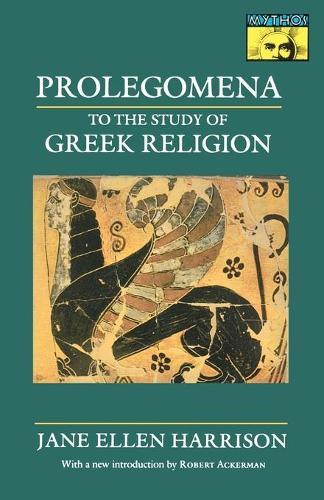
OverviewJane Harrison examines the festivals of ancient Greek religion to identify the primitive ""substratum"" of ritual and its persistence in the realm of classical religious observance and literature. In Harrison's preface to this remarkable book, she writes that J. G. Frazer's work had become part and parcel of her ""mental furniture"" and that of others studying primitive religion. Today, those who write on ancient myth or ritual are bound to say the same about Harrison. Her essential ideas, best developed and most clearly put in the Prolegomena, have never been eclipsed. Full Product DetailsAuthor: Jane Ellen HarrisonPublisher: Princeton University Press Imprint: Princeton University Press Edition: New edition Volume: 43 Dimensions: Width: 14.00cm , Height: 4.00cm , Length: 21.60cm Weight: 0.879kg ISBN: 9780691015149ISBN 10: 0691015147 Pages: 720 Publication Date: 25 June 1991 Audience: Professional and scholarly , College/higher education , Professional & Vocational , Tertiary & Higher Education Format: Paperback Publisher's Status: Active Availability: Manufactured on demand We will order this item for you from a manufactured on demand supplier. Language: English Table of ContentsReviewsHarrison's Prolegomena to the Study of Greek Religion is a book that breathes life. It is an exciting, deeply felt intellectual quest, with a broad view of the role of religion in life, ancient and modern. Harrison is not afraid to look for relevance in archaic cult, and doesn't flinch on finding it. From a study of Greek anthropomorphism, she can conclude, like a seeress looking beyond the early twentieth century: 'to be human is not necessarily to be humane.' -Richard Martin, Princeton University A big, bustling cornucopia of facts marshalled into an impassioned argument, Harrison's book offers the pleasures of an intellectual chase, sweeping in all kinds of arcane information along the way. Her mission was to topple the Olympian gods from their pedestal in Greek studies and replace them with a welter of local rituals and mystery cults. This, she argued, was where the Greek ethos came from, not Homer at all. Her book is massive, encrusted with detail, a monument to a forgotten kind of scholarship. (Kirkus UK) Author InformationTab Content 6Author Website:Countries AvailableAll regions |
||||