Overview
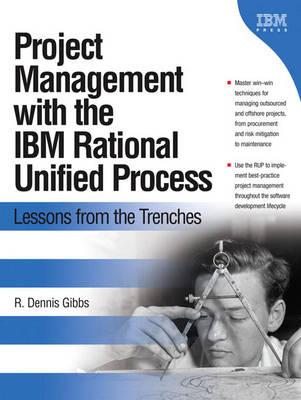
· Master win–win techniques for managing outsourced and offshore projects, from procurement and risk mitigation to maintenance · Use RUP to implement best-practice project management throughout the software development lifecycle · Overcome key management challenges, from changing requirements to managing user expectations The Hands-On, Start-to-Finish Guide to Managing Software Projects with the IBM® Rational Unified Process® This is the definitive guide to managing software development projects with the IBM Rational Unified Process (RUP®). Drawing on his extensive experience managing projects with the RUP, R. Dennis Gibbs covers the entire development lifecycle, from planning and requirements to post-mortems and system maintenance. Gibbs offers especially valuable insights into using the RUP to manage outsourced projects and any project relying on distributed development teams—outsourced, insourced, or both. This “from the trenches” guidebook is invaluable for anyone interested in best practices for managing software development: project managers, team leaders, procurement and contracting specialists, quality assurance and software process professionals, consultants, and developers. If you’re already using the RUP, Gibbs will help you more effectively use it. Whatever your role or the RUP experience, you’ll learn ways to · Simplify and streamline the management of any large-scale or outsourced project · Overcome the challenges of using the RUP in software project management · Optimize software procurement and supplier relationships, from Request for Proposals (RFPs) and contracts to delivery · Staff high-performance project teams and project management offices · Establish productive, consistent development environments · Run effective project kickoffs · Systematically identify and mitigate project risks · Manage the technical and business challenges of changing requirements · Organize iterations and testing in incremental development processes · Transition new systems into service: from managing expectations to migrating data · Plan system maintenance and implement effective change control · Learn all you can from project post-mortems—and put those lessons into practice
Full Product Details
Author: R. Dennis Gibbs
Publisher: Pearson Education (US)
Imprint: IBM Press
Dimensions:
Width: 17.80cm
, Height: 1.60cm
, Length: 23.40cm
Weight: 0.458kg
ISBN: 9780321336392
ISBN 10: 0321336399
Pages: 312
Publication Date: 10 August 2006
Audience:
College/higher education
,
Tertiary & Higher Education
Format: Paperback
Publisher's Status: Out of Print
Availability: Out of print, replaced by POD

We will order this item for you from a manufatured on demand supplier.
Author Information
R. Dennis Gibbs has been immersed in a variety of roles since beginning his career in the software industry in the early 1980s, including roles in programming, software technical support, quality assurance, systems engineering, software engineering, project and program management, and consulting and mentoring. His customers have been a mix of commercial and government clients, particularly centered on the civilian federal government and Department of Defense sectors. He currently is a software architect with Electronic Data Systems (EDS) in Herndon, Virginia.